
Last Tuesday, a homeowner in the Byron Shire received a council notice regarding their ageing septic system, sparking immediate anxiety about environmental fines and the cost of a replacement. It's a common story across Northern NSW. The transition from traditional septics to a modern waste treatment plant often feels like a bureaucratic minefield. You likely already know that keeping your property compliant is essential for protecting our local waterways. However, the sheer variety of Home Sewage Treatment Plants (HSTPs) and conflicting advice from different shires makes it hard to feel certain about your next move.
This guide simplifies the process by explaining exactly how these aerobic systems function to produce high-quality recycled water. You'll learn why modern systems outperform old-fashioned tanks and how to navigate the specific requirements set by councils in Lismore, Ballina, and Tweed. We'll also outline a straightforward maintenance schedule to help you avoid the A$2,000 plus repair bills that often follow system neglect. By the end of this article, you'll have a clear plan to ensure your on-site sewage solution remains reliable, legal, and environmentally sound for years to come.
Key Takeaways
- Understand the fundamental difference between municipal sewage and a self-contained Home Sewage Treatment Plant (HSTP) for your Northern Rivers property.
- Learn how the multi-stage treatment process uses "good bacteria" to break down organic matter and produce high-quality recycled water.
- Discover why a modern waste treatment plant offers superior effluent quality and requires significantly less space for disposal than a traditional septic system.
- Navigate the specific "Approval to Operate" requirements and council regulations for the Byron Shire and Clarence Valley regions.
- Explore Graywater Plumbing’s transparent hourly labour and material markup model for a fair, expert approach to system installation and maintenance.
What is a Residential Waste Treatment Plant?
A residential waste treatment plant, technically referred to as a Home Sewage Treatment Plant (HSTP), functions as a miniature, self-contained version of a municipal utility. For properties across the Northern Rivers that lack a connection to a centralised sewage grid, these systems are essential infrastructure. While a city connection whisks waste away to a distant facility, an HSTP processes everything right where it's produced. This shift toward on-site management is driven by both necessity and a commitment to long-term environmental health.
In regions like Byron and Ballina, these systems are now the mandatory standard for new residential developments. They play a critical role in protecting the local water table. By treating waste to a high standard, we prevent untreated nitrogen and phosphorus from leaching into the soil and eventually reaching our coastal estuaries. This isn't just about compliance; it's about maintaining the integrity of the land you live on. A modern waste treatment plant ensures that your household footprint remains minimal while providing a reliable service that matches the convenience of urban living.
Common Terminology You Need to Know
Understanding the technical side of on-site plumbing requires a basic grasp of the industry terms we use during installations and maintenance. These definitions help clarify what's happening beneath your lawn.
- AWTS vs. HSTP: An Aerated Wastewater Treatment System (AWTS) is a specific category of HSTP. It uses mechanical aeration to support aerobic bacteria that break down organic matter much faster than traditional methods.
- Effluent and Greywater: Effluent is the treated liquid that exits the tank. Greywater specifically refers to waste from your laundry, showers, and basins, which is handled differently than blackwater from toilets.
- Secondary Treatment: This refers to the biological process that follows the initial settling phase. To understand How Sewage Treatment Works, you should view it as a multi-stage cleaning cycle. Secondary treatment ensures the liquid is clear and safe enough for subsurface garden irrigation.
Why Northern Rivers Homeowners are Moving Away from Basic Septics
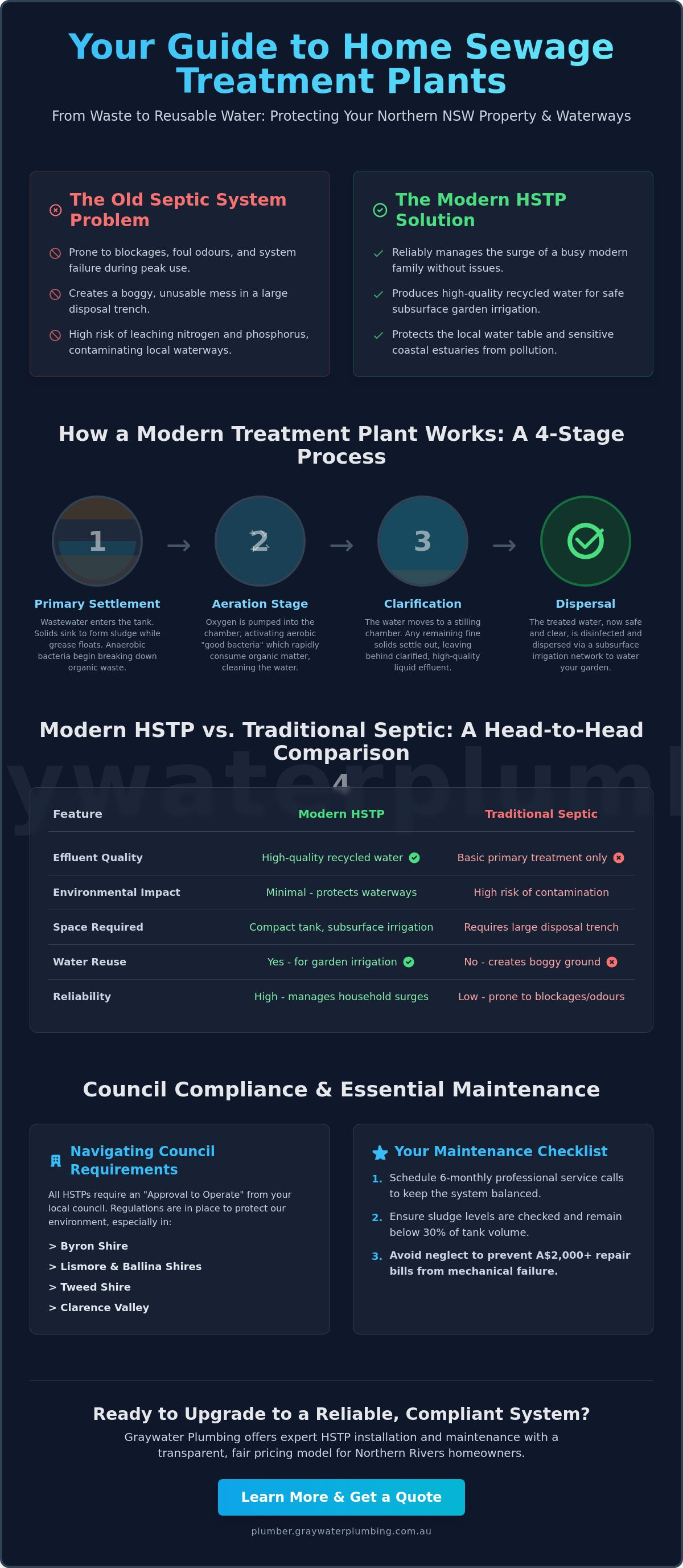
The days of the simple, "set and forget" septic tank are ending. Homeowners in the Northern Rivers are increasingly upgrading to advanced plants because they offer far better reliability. Old septic systems often struggle with the variable loads of a modern family. This frequently leads to blockages or foul odours during peak use times, such as school holidays or when hosting guests.
Modern systems are far more resilient. They manage the surge of a four-bedroom home during a busy weekend without compromising the treatment quality. Another major draw is the ability to reuse water. Instead of creating a boggy mess in a disposal trench, the treated water is distributed through a dedicated subsurface irrigation network. This keeps your gardens healthy and reduces your reliance on external water sources, making it a practical choice for our local climate and soil conditions.
The Science of Clean Water: How a Treatment Plant Works
A modern waste treatment plant operates as a compact, highly efficient version of a large-scale municipal facility. It uses a disciplined, multi-stage process to transform household sewage into recycled water that's safe for your garden. This system relies on a delicate balance of biology and mechanical engineering. By fostering the growth of beneficial bacteria, the plant breaks down organic matter far more quickly than a traditional septic tank ever could. Oxygen plays a vital role here, acting as a catalyst for the purification process.
Stage 1: Primary Settlement and Anaerobic Digestion
Wastewater first flows into the primary settlement chamber where gravity begins the separation process. Heavier solids sink to the floor to form a sludge layer, while oils and grease float to the surface. Anaerobic bacteria, which live in environments without air, start the initial digestion of these organic solids. This stage reduces the strength of the waste before it moves forward. Regular inspections are essential here to monitor sludge levels. If the sludge occupies more than 30% of the tank volume, it can spill into the next chamber and cause mechanical failure. Our team typically checks these levels during routine 6-monthly service calls to ensure the primary chamber isn't overloaded.
Stage 2: Aeration and Biological Filtering
This stage is often called the heart of the plant. A mechanical blower forces air into the water, creating an environment where aerobic bacteria can thrive. Aeration is the method of introducing dissolved oxygen into the effluent to stimulate aerobic microbes that rapidly consume and neutralise organic pollutants. These bacteria often grow on a submerged "media" or "honeycomb" structure that provides a large surface area for cleaning. This intensive biological activity ensures the water meets strict environmental standards. You can find more technical details on these processes in the EPA Wastewater Guidelines regarding secondary treatment. These systems are designed to handle the daily fluctuations of a busy Northern Rivers household while maintaining a steady output of treated water.
Stage 3: Clarification and Disinfection
Before the water leaves the system, it enters a clarification tank where any remaining fine particles settle out. The water then undergoes a final disinfection process to kill remaining pathogens. Most Northern Rivers installations use either ultraviolet (UV) light or slow-release chlorine tablets for this task. UV systems are increasingly popular because they don't require chemical refills, though they do need regular globe cleaning. The final product is a clear, odourless effluent that is pumped to your designated land application area. If you're concerned about your system's performance, we offer reliable maintenance plumbing services to keep your plant operating at peak efficiency and in full compliance with local council regulations.
Waste Treatment Plant vs. Traditional Septic Systems
Choosing between a traditional septic tank and a modern waste treatment plant often depends on your block size and environmental goals. Traditional systems rely on a simple tank where solids settle and liquids flow to a leach field for soil filtration. It's a passive process that has worked for decades. In contrast, a modern waste treatment plant, often called an Aerated Wastewater Treatment System (AWTS), uses mechanical aeration to oxygenate the water. This process speeds up the breakdown of organic matter by aerobic bacteria. The result is "Class B" or even "Class A" recycled water that's significantly cleaner than the effluent from a standard septic tank.
The difference in water quality impacts how much land you need. Because the output is higher quality, Northern Rivers councils often allow for smaller land application areas. If you're building on a tight block in Byron Bay or Lennox Head, this space saving is essential. It also boosts long-term property value. Modern buyers view high-performance systems as an asset rather than a liability. They prefer knowing the system is compliant and efficient rather than worrying about an old tank that might require expensive rectification work in a few years.
Maintenance involves a different set of trade-offs. A traditional tank is low-tech and usually needs a pump-out every 3 to 5 years. A treatment plant requires quarterly servicing by a licensed technician to check pumps, aerators, and chlorine levels. This level of technical oversight is common for many high-end home systems; for instance, The Pool People provide similar professional engineering and maintenance to ensure water-based infrastructure remains reliable. You'll also pay for the electricity to run the system. Most modern aerators are efficient, but the cost is still a factor to consider in your yearly budget.
Environmental Impact and Soil Health
Traditional systems can "sour" the soil over 20 or 30 years. This occurs when the soil becomes clogged with organic matter, which eventually prevents drainage and leads to surface ponding. A treatment plant avoids this by delivering oxygenated water that acts as a liquid fertiliser for your garden. This prevents nitrogen and phosphorus runoff from reaching local waterways. Understanding Septic Systems and Their Maintenance is vital for any homeowner looking to balance a healthy garden with environmental compliance.
Installation and Operational Costs
The initial capital outlay for a treatment plant is higher than a basic septic tank. However, the reliability and flexibility often justify the investment. When planning new home plumbing, you must decide on your system early. This ensures the site levels and drainage pipes align with the plant's requirements from day one. You'll pay for regular servicing, but you avoid the high cost of replacing a failed absorption trench, which can be a major financial burden for older properties.
Council Compliance and Maintenance in Northern NSW
Owning a home on an unsewered block in the Northern Rivers involves more than just installing a tank and forgetting about it. Local authorities, including the Clarence Valley Council and Byron Shire Council, view your waste treatment plant as a mini utility that requires a valid "Approval to Operate." This licence isn't a "set and forget" document. It's a regulatory requirement that ensures your system doesn't contaminate local groundwater or the sensitive Richmond and Clarence River catchments.
A common pitfall for homeowners is failing to account for specific council buffers. For example, Byron Shire often requires larger setback distances from watercourses compared to other regions. If your application doesn't respect these boundaries, council will reject the plans. This leads to costly redesigns and delays in your building schedule. We've seen applications stalled for months because the initial site plan didn't account for the 40-metre setback required from permanent watercourses.
Navigating Local Government Requirements
Before you can install any system, you must commission a Land Capability Assessment (LCA). This technical report, prepared by a geotechnical engineer, tests your soil's absorption rate and nutrient uptake capacity. Council inspectors use the LCA to determine if your land can handle the effluent load. We work closely with these reports to ensure the installation matches the soil profile. Your final certification depends on a licensed plumber signing off on the installation. This confirms it meets the AS/NZS 1547 standards and the specific conditions of your council's consent.
Proactive Maintenance: Keeping the System Healthy
If you operate an aerated wastewater treatment system, NSW Health mandates quarterly servicing by a qualified technician. During a standard service call, we check the air blower, test the chlorine levels, and inspect the submersible pumps. We also monitor the sludge levels in the primary tank to determine when a pump-out is necessary. Ignoring these checks is a recipe for disaster. A failed blower can kill the aerobic bacteria in 48 hours. This turns your clear effluent into raw sewage that will clog your irrigation lines and ruin your disposal area.
Watch for these signs of system distress:
- Audible or visual alarms triggered on the control panel.
- Persistent "rotten egg" odours near the tank or irrigation area.
- Soggy, unusually green patches of grass over the disposal field.
- Slow-draining toilets or gurgling sounds in your internal pipes.
Our straight-shooting approach to maintenance is simple. Regular servicing costs a fraction of a full system failure. We provide transparent billing based on hourly labour and material markup, so you know exactly what you're paying for. Keeping your waste treatment plant healthy protects your property value and the local environment. It's about being a responsible neighbour in our regional community.
Need to book your mandatory quarterly service or discuss a compliance issue? Contact our local plumbing experts for reliable, honest advice.
Expert HSTP Installation with Graywater Plumbing
Graywater Plumbing takes a methodical approach to every waste treatment plant setup. We serve the entire region from Yamba and Grafton up to Ballina and Bangalow. Our process starts with a precise site assessment to ensure the system handles your specific soil type and slope. We don't believe in guesswork. We use a transparent billing model based on hourly labour and a fair material markup. This ensures you only pay for the work performed and the parts used; there are no hidden margins or surprise fees.
Our team prioritises maintenance plumbing. While many installers walk away once the tank is in the ground, we focus on the long-term health of your system. Regular inspections prevent blockages and mechanical failures that could lead to costly emergency repairs. We've found that proactive maintenance can extend the operational life of a waste treatment plant by up to 10 years compared to neglected systems. This approach saves homeowners thousands in premature replacement costs.
Reliable Project Delivery for New Builds
Building a new home requires tight coordination. We work directly with your builders and excavators to ensure the HSTP is installed at the correct stage of construction. We calculate system capacity based on your family's projected growth; a home with 3 bedrooms today might need 5 bedrooms of capacity tomorrow. If you're running a home-based business like a cottage industry kitchen or a small cafe, we also integrate your system with professional grease trap cleaning services to keep your site compliant with local Northern Rivers regulations.
The Graywater Guarantee: Honesty and Precision
We maintain organised and clean worksites across the Northern Rivers. You won't find our team leaving a mess behind. Our upfront disclosure policy means you receive a clear breakdown of all costs before we start. We're proud to be straight-shooting local experts who value your trust. We treat every property as if it were our own, ensuring all pipework is laid with precision and all components are tested thoroughly. If you're ready to organise a reliable on-site wastewater solution for your property, contact our local team today to discuss your project requirements.
Secure Your Property's Future with Reliable On-site Sewage Solutions
Choosing a modern waste treatment plant is a smart move for any Northern Rivers homeowner looking to upgrade from a basic septic system. These advanced systems process household effluent to a much higher standard, which ensures your property stays compliant with NSW wastewater regulations. It's about protecting your land and meeting local council requirements without the stress of outdated technology. Beyond sewage management, ensuring your home is protected from internal leaks and contaminants is vital; you can learn more about Tradewinds Water Filtration for expert advice on safeguarding your property's water systems.
Our team at Graywater Plumbing works as licensed NSW wastewater specialists. We provide a straightforward approach to installation and maintenance. You won't find hidden fees here; we use a transparent billing system based on hourly labour and a fixed material markup. This gives you a clear understanding of where your money goes. With 24/7 emergency support available across the Northern Rivers, you'll have peace of mind knowing a local expert is just a phone call away if a component ever fails.
Book a consultation for your waste treatment plant installation with our local experts
We're ready to help you build a more efficient, reliable home for years to come.
Frequently Asked Questions
Do I need a waste treatment plant if I already have a septic tank?
You don't necessarily need to replace a functional septic tank, but many Northern Rivers homeowners choose to upgrade to a waste treatment plant to meet higher environmental standards. Traditional septic tanks only provide primary treatment, while an Aerated Wastewater Treatment System (AWTS) cleans water to a secondary level. This higher level of processing allows for safer irrigation on your property and is often a requirement for new builds or major renovations on smaller blocks.
How much electricity does a home sewage treatment plant use?
A standard home sewage treatment plant typically consumes between 1.5 and 2.5 kilowatt-hours of electricity per day to power the air blower and discharge pump. This results in an annual consumption of roughly 547 to 912 kWh. Modern systems are designed with energy efficiency in mind, but they require a constant power supply to keep the aerobic bacteria alive and processing waste effectively.
Is it true that I can use the water from my treatment plant on my lawn?
Yes, you can use treated effluent for surface or sub-surface irrigation on your lawn if your system meets secondary treatment standards. In NSW, this water is disinfected using chlorine or UV light to remove 99% of pathogens before it leaves the tank. It's a reliable way to recycle nutrients like nitrogen and phosphorus, provided you keep the irrigation within the designated Land Application Area defined in your council permit.
How often does a waste treatment plant need to be pumped out?
Most systems require a professional pump-out every 3 to 5 years to remove the accumulated sludge and scum from the primary chamber. The exact timeframe depends on the number of people living in your home and the overall capacity of the unit. Regular quarterly servicing by a licensed technician ensures the biological balance remains stable and helps you identify exactly when a pump-out is required.
What happens to the treatment plant during a power failure?
If the power goes out, the air blower and pumps will stop working, which halts the aerobic treatment process and prevents water from being discharged. Most tanks include a 24-hour emergency storage capacity to handle normal household flow during short outages. You should minimise your water usage during this time to prevent the tank from overflowing or triggering a high-level alarm once the electricity is restored.
Can I use standard household cleaners with an HSTP?
You should only use "septic safe" or biodegradable cleaners to avoid killing the beneficial bacteria inside your waste treatment plant. Harsh chemicals like bleach, caustic oven cleaners, or strong antibacterial sprays can destroy the biological colony quickly. We recommend looking for products with low phosphorus levels and ensuring you never pour paints or solvents down the drain, as these will disrupt the entire treatment cycle.
How much space do I need on my block for a treatment plant and irrigation area?
You generally need between 150 and 400 square metres of dedicated space for the Land Application Area, depending on your soil quality and local regulations. While the tank itself only occupies about 5 square metres, it must be positioned with specific setbacks from boundaries and dwellings. For instance, many councils in the Northern Rivers require surface irrigation areas to be at least 6 metres away from property boundaries.
What is the "Approval to Operate" and how do I get it in NSW?
An Approval to Operate is a mandatory permit issued by your local council under Section 68 of the Local Government Act 1993. To obtain this, you must submit a wastewater management report and a formal application to your local authority, such as Byron Shire or Ballina Shire Council. Once the system is installed and inspected, the council issues the certificate, which typically requires renewal every 1 to 5 years based on your maintenance records.