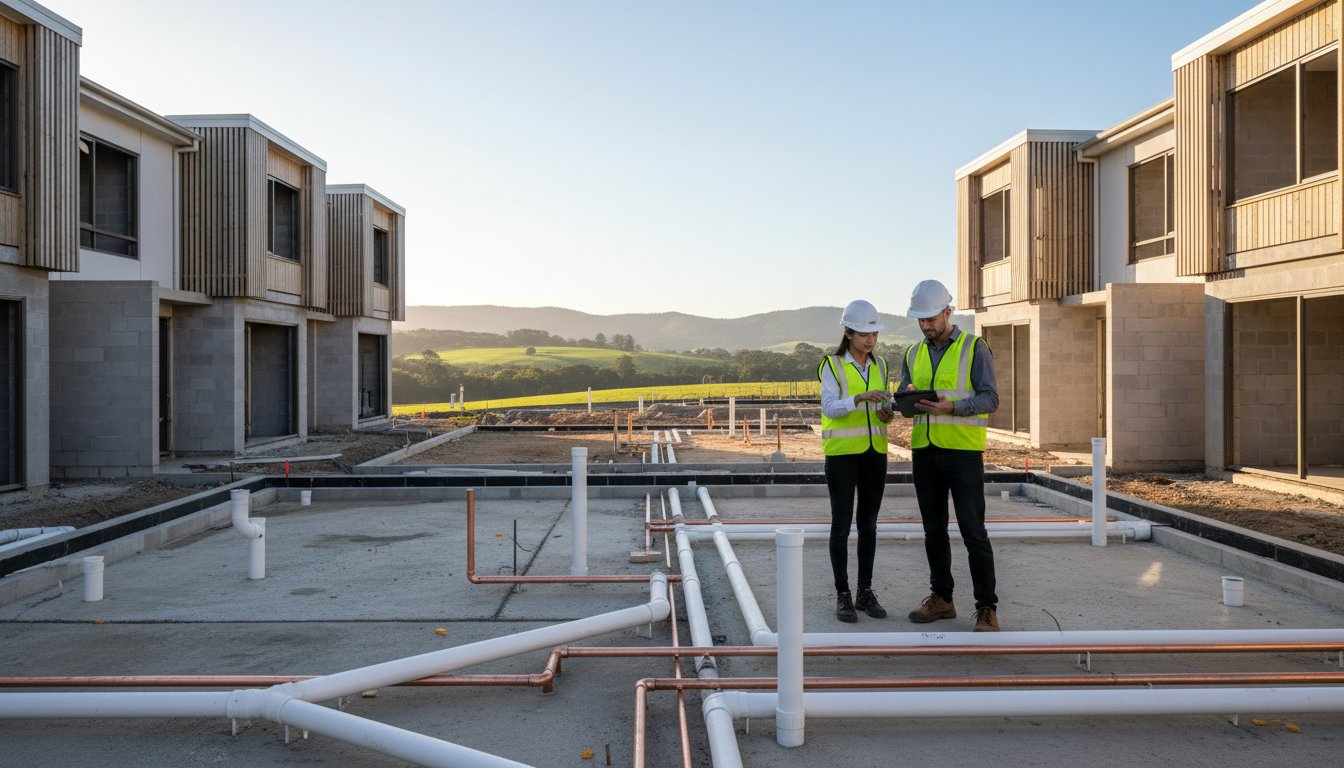
A single plumbing variation on a multi-unit site in the Northern Rivers can erode up to 15% of a project's projected profit margin before the slab is even poured. It's a harsh reality in our regional construction market where hidden costs and council delays often feel like an unavoidable part of the process. You've likely experienced the stress of waiting weeks for drainage approvals or trying to coordinate multiple trades on a cramped site while the budget continues to blow out. We understand that as a developer, you value reliability and straightforward communication over vague estimates and hidden fees.
To help manage these financial complexities and ensure your project remains profitable, you can learn more about Brown Hamilton Partners and their professional business accounting services.
This 2026 guide serves as a comprehensive reference for designing, installing, and maintaining scalable infrastructure for multi-residential developments across Northern NSW. We'll show you how a compliant, high-capacity system is achieved through a transparent hourly labour and material markup model that removes the guesswork from your balance sheet. You'll learn how to navigate local council requirements for septic and drainage, maintain an organised worksite, and implement proactive maintenance that protects your investment long after the final inspection.
Key Takeaways
- Learn how to design scalable plumbing systems that future-proof townhouses and subdivisions against the growing infrastructure demands of the Northern Rivers.
- Understand the critical differences between centralised and individual plumbing models to optimise long-term maintenance costs and strata management.
- Navigate local compliance with ease by mastering BASIX targets and specific council requirements for multi-residential developments in Yamba, Ballina, and Grafton.
- Explore the technical essentials of high-capacity drainage and reticulated gas systems designed to support multiple waste streams within a single project footprint.
- Gain financial certainty through a transparent "Hourly Labour and Material Markup" billing model, ensuring precision workmanship and radical honesty in project budgeting.
Understanding Multi-Residential Plumbing Infrastructure
Multi-residential developments in Northern NSW encompass a broad range of project scales, from dual occupancies and townhouses to large-scale subdivisions. Successful delivery in 2026 depends on early-stage planning that considers the long-term load on local infrastructure. Unlike a single dwelling, these projects require a scalable approach to Plumbing systems to ensure that water pressure and drainage capacity remain consistent across all units. Our approach is built on transparent pricing, using an hourly labour and material markup model that ensures developers pay for exactly what is installed on-site without hidden margins.
The Northern Rivers climate presents unique challenges for high-density construction. Coastal durability is a primary concern for developers in towns like Yamba or Byron Bay. Salt-laden air can corrode standard fixtures in less than five years if they aren't specified correctly. We rely on our local knowledge to select materials that withstand these conditions, prioritising 316-grade stainless steel and UV-stabilised components. For those starting with smaller-scale projects, our guide on new home plumbing provides the foundational concepts required before moving into complex multi-unit builds.
Common Development Typologies in Northern NSW
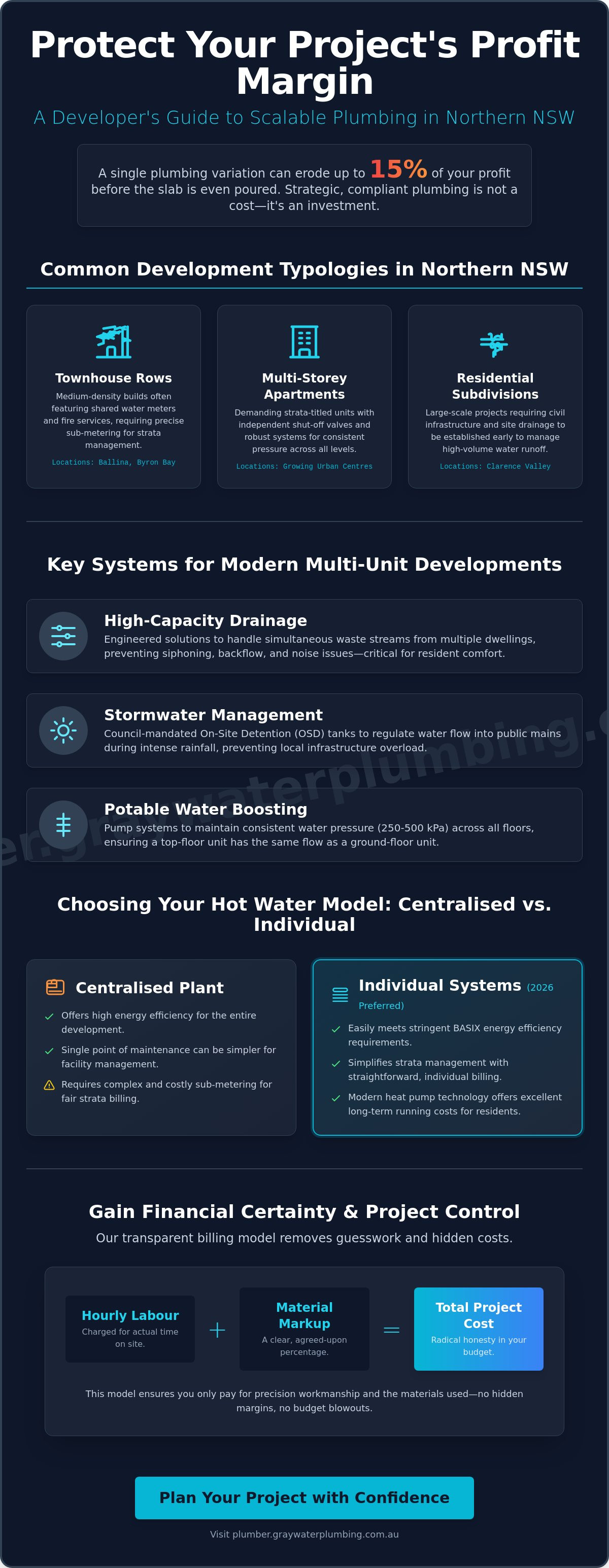
In Ballina and Byron Bay, there is a distinct shift toward medium-density townhouse rows. These projects often share common water meters or fire services, requiring precise sub-metering to satisfy strata requirements. Multi-storey apartment blocks in growing urban centres demand strata-titled units with independent shut-off valves for easier maintenance. Meanwhile, the Clarence Valley is seeing an increase in large-scale residential subdivisions. These require civil infrastructure and site drainage to be established well before any building slabs are poured, ensuring the land can handle high-volume runoff during heavy rain events.
The Role of the Hydraulic Consultant vs. The Plumber
A hydraulic consultant is usually required for multi-storey multi-residential developments to provide formal designs that meet Australian Standards (AS3500). For smaller townhouses or dual occupancies, trade-led planning by an experienced plumber is often sufficient. It's vital to integrate gas fitting and hot water systems during the architectural phase. This prevents costly retrofitting later. We work to ensure plumbing plans align perfectly with civil works. This avoids conflicts between sewer lines and structural piers, keeping the project on schedule and within the agreed budget.
Key Plumbing Systems for Modern Townhouses and Units
Designing plumbing for multi-residential developments in Northern NSW requires a shift away from standard residential thinking. The concentrated footprint of a townhouse complex means drainage systems must handle high-capacity waste streams from multiple dwellings simultaneously. We focus on engineered drainage solutions that prevent siphoning and backflow, ensuring the system remains quiet and functional even during peak usage periods. This is particularly important in high-density builds where acoustic privacy is a primary concern for residents.
Stormwater management is another critical factor for Northern Rivers developers. With the region prone to intense rainfall events, local councils often mandate on-site detention (OSD) tanks. These systems regulate the flow of water into the public mains, preventing local infrastructure from being overwhelmed. For multi-storey units, we also integrate potable water boosting systems. These pumps maintain consistent pressure between 250 and 500 kPa across all levels, so a resident on the top floor doesn't experience a drop in flow when the ground-floor unit starts a laundry cycle. Our transparent maintenance plumbing services ensure these mechanical systems stay operational long after the initial build.
Hot Water System Services for Multi-Unit Sites
Choosing between centralised hot water plants and individual unit systems depends on your site’s specific density and spatial constraints. Centralised plants offer high efficiency but require complex sub-metering for fair billing. Most 2026 developments are moving toward individual heat pump technology to meet the stringent requirements of the BASIX (Building Sustainability Index). Modern heat pumps can reduce energy consumption for water heating by up to 65% compared to traditional electric tanks. We also provide solar-ready configurations, allowing future owners to easily integrate rooftop PV cells into their existing plumbing setup without expensive retrofitting.
Gas Fitting and Fire Protection Requirements
Complex multi-dwelling gas meter clusters require a high level of precision from a licensed gas fitter. We manage the installation of reticulated gas systems for shared cooking and heating, ensuring every meter is clearly tagged and accessible for utility providers. Safety is our priority, which is why we also handle basic fire service plumbing, including the installation of hydrants and hose reels that comply with AS 2419.1 standards.
Material selection is a major part of our strategy for longevity in coastal environments like Ballina or Byron Bay. We prefer specific materials for their durability:
- Coastal-grade copper: Used for exposed pipework to resist salt air corrosion.
- High-density polyethylene (HDPE): Ideal for underground drainage due to its flexibility and resistance to ground movement.
- PEX piping: Used for internal water lines to reduce the number of joints and minimize leak risks.
By sticking to our hourly labour and material markup model, we provide developers with a clear breakdown of where their budget is going. This straight-shooting approach helps you manage project costs while ensuring the build uses high-quality materials that stand up to the Northern NSW climate.
Centralised vs. Individual Plumbing: Choosing the Right Model
Choosing the plumbing model for multi-residential developments involves balancing upfront construction costs against the long-term ease of strata management. Centralised hot water systems can reduce initial capital expenditure by roughly 18% because they require fewer individual units and less complex gas or electrical infrastructure. However, this model places the ongoing maintenance burden directly on the body corporate. Individual systems give owners full control but increase the complexity of the initial build and the number of potential failure points across the site.
Fair billing is a common point of friction in strata living. We recommend installing individual sub-meters for every unit to ensure residents pay only for their own consumption. This level of transparency reduces the administrative load for strata managers and helps identify leaks early. When a single unit's usage spikes by 40% in a month, it is a clear signal that a fixture needs attention before it causes structural damage. Our approach focuses on clear data and transparent billing to keep residents satisfied.
Maintenance Access and Strata Compliance
Smart design places main lines and stack work in common areas or dedicated service risers rather than inside private apartments. This allows our team to perform maintenance without needing to coordinate access with tenants or owners. We focus on maintenance plumbing as a proactive strategy. Scheduling annual backflow prevention testing is a legal requirement under Australian Standard AS 3500. Regular inspections are significantly cheaper than emergency repairs, which often cost three times more when they occur during a weekend or holiday period.
Acoustic and Thermal Comfort Standards
Occupant comfort is a major driver of long-term asset value in multi-residential developments. We use high-quality acoustic lagging on all internal waste pipes to stop the sound of rushing water from disturbing neighbours in shared-wall units. Acoustic lagging is now a standard expectation in Byron Bay luxury units because high-end buyers demand silence from neighbouring plumbing systems.
Thermal lagging on hot water lines is equally vital for energy efficiency. Proper insulation can reduce heat loss by up to 25%, ensuring that residents at the end of the supply line do not wait minutes for hot water to arrive at the tap. This efficiency supports better building energy ratings and lowers utility costs for the life of the development. Our team prioritises these details to ensure the finished building meets modern Australian standards for both comfort and sustainability. Just as plumbing infrastructure must be high-spec, selecting premium interior materials is key; developers can find extensive guidance on quality flooring from Greenhill Timbers to ensure their projects stand out in the market.
Navigating BASIX and Local Council Compliance in Northern NSW
Every multi-residential project in New South Wales must meet Building Sustainability Index (BASIX) requirements to ensure long-term water and energy efficiency. For 2026 developments, the standard water reduction target remains at 40% compared to the state average. Achieving this requires a disciplined approach to fixture selection and system design. We focus on installing 4-star WELS rated taps and 3-star WELS rated showerheads as a baseline. These ratings aren't just suggestions; they're mandatory metrics that dictate whether your development receives its final certificate of occupancy.
Greywater harvesting has become a practical solution for developers in Bangalow and Ballina to meet these targets. By diverting water from shared laundries to irrigate common gardens, you reduce the demand on the local mains supply. This proactive maintenance plumbing mindset ensures the system remains functional for the life of the building. Our transparent approach to hourly labour and material markup means you see exactly where your compliance budget is spent, without hidden fees or ambiguous costs.
Clarence Valley and Byron Shire Drainage Standards
Regional councils like Clarence Valley and Byron Shire have specific expectations for drainage and waste. In Grafton and Yamba, managing stormwater runoff is a priority due to the flood-prone nature of the Northern Rivers. Multi-residential developments must often include onsite detention tanks to slow the flow of water into the municipal system during heavy rain events. For rural-fringe projects near Bangalow that lack sewer access, we install site-specific septic tanks and secondary treatment systems that meet strict environmental health codes. We also handle trade waste considerations for mixed-use developments to ensure fats and oils don't compromise the local sewer network.
The BASIX Certificate Process for Plumbers
The final sign-off for any development depends on the plumber providing accurate evidence of compliance. We document every installed fixture to ensure it matches the specifications outlined in your BASIX report. This includes verifying that hot water systems, whether heat pump or gas-boosted solar, meet the exact energy credits required for your specific climate zone. The plumber’s role involves verifying that all installed fixtures and hot water systems precisely match the flow rates and energy ratings specified in the BASIX certificate during the final inspection.
If you're planning a new project and need a straight-shooting expert to manage your compliance, you can contact Graywater Plumbing for a clear, itemised assessment of your requirements.
Partnering with Graywater Plumbing for Scalable Project Success
Graywater Plumbing delivers precision workmanship and maintains highly organised worksites. We understand that multi-residential developments require a plumbing partner who respects the strict timelines of a construction schedule. Our experience across government, civil, and large-scale residential projects allows us to manage complex hydraulic systems without compromising on site safety or quality. We focus on being a dependable partner rather than just another contractor on the list.
Our "Hourly Labour and Material Markup" model is a core part of how we do business. This structure offers developers radical transparency that is often missing in the trade industry. Instead of inflated margins or hidden fees, you receive a clear breakdown of labour hours and the actual cost of materials. This honest approach helps you manage project feasibility from the early planning stages. We believe fair billing builds the trust necessary for successful, multi-year partnerships.
We don't just walk away once the final tap is installed. Our team provides 24/7 support for post-completion maintenance and emergency plumbing. This ensures that any issues are resolved quickly, protecting the reputation of the developer and the comfort of the new residents. Our commitment to the Northern Rivers community means we're always nearby when you need us.
Our Process: From Design Review to Final Commissioning
We start every project with a thorough design review. This allows us to identify potential hydraulic issues or compliance gaps before they become expensive site delays. Our team maintains direct communication with project managers throughout the build to ensure plumbing works align with other trades. We use our deep local knowledge of Northern NSW suppliers and council inspectors to keep the project moving forward. This ensures all work meets regional regulations and passes inspections the first time. Our methodical approach to commissioning means every system is tested and verified before the keys are handed over.
Get a Quote for Your Next Multi-Residential Project
We're equipped to handle large-scale tenders and provide detailed fixed-price contracts for well-defined scopes of work. Our focus remains on building long-term partnerships with local Northern Rivers builders who value integrity and quality. We aren't interested in one-off high-margin jobs; we want to be the reliable plumbing team you call for every new site. You can discuss your multi-residential plumbing needs with Graywater Plumbing to see how our transparent billing and professional standards can support your next project. We provide the technical expertise and the local accountability you need for a successful development in 2026 and beyond.
Secure Your Project’s Infrastructure for 2026
Successful multi-residential developments in 2026 require more than just pipes in the ground. They demand a strategic approach to BASIX compliance and highly efficient infrastructure models. Choosing between centralised and individual plumbing systems will directly impact your long-term maintenance costs and tenant satisfaction. Our team specialises in navigating the specific local council requirements across Northern NSW, ensuring your project meets every regional standard without the guesswork.
We believe in a straight-shooting approach to project management. That's why we operate with a transparent hourly labour and material markup billing model. You'll see exactly where your budget goes, backed by our commitment to keeping worksites clean and organised from start to finish. We focus on proactive maintenance plumbing to prevent future issues, providing the grounded reliability you need to stay on schedule and within budget.
Ready to move forward with a partner who values integrity as much as craftsmanship? Request a transparent plumbing quote for your development today. We look forward to helping you deliver a high-quality project to the Northern NSW community.
Frequently Asked Questions
Does BASIX apply to all multi-residential developments in NSW?
BASIX applies to all new multi-residential developments in NSW with a total construction cost of A$50,000 or more. Under the 2023 updates to the Building Sustainability Index, developers must meet higher thermal performance and water usage targets. These regulations ensure that new buildings reduce potable water consumption by up to 40% compared to pre-BASIX benchmarks, making compliance a critical part of your initial plumbing design.
What is the best hot water system for a 10-unit townhouse development?
A centralised heat pump system or individual high-efficiency electric heat pumps are the most effective choices for a 10-unit townhouse project in 2026. Since the NSW Government’s Climate Change Fund targets zero emissions, heat pumps offer a Coefficient of Performance of 3.0 or higher. This reduces energy consumption by 60% compared to traditional electric tanks and avoids the need for expensive gas infrastructure.
How is water metered in a strata-titled multi-dwelling building?
Water is metered through a combination of a master meter for the entire property and individual sub-meters for each unit to ensure fair billing. Under NSW Fair Trading guidelines, individual metering is mandatory for all new multi-residential developments to allow residents to pay only for their specific usage. Our team installs these systems using a clear hourly labour and material markup model to keep costs transparent for developers.
Do I need a separate grease trap for multi-residential developments with a shared kitchen?
You must install a grease trap if your multi-residential developments feature a communal commercial-grade kitchen or shared food preparation area to comply with local council trade waste policies. For a shared kitchen serving 20 or more residents, a minimum 1,000-litre grease arrestor is typically required. This prevents fats and oils from entering the local sewer system and causing blockages that lead to expensive maintenance issues later.
Can we use greywater systems for common area gardens in Northern NSW?
You can use greywater systems for common gardens provided the system is NSW Health accredited and meets the Plumbing Code of Australia standards. In Northern NSW, councils like Byron Shire or Tweed Shire require a specific Section 68 approval for these installations. These systems can recycle up to 50% of household wastewater for outdoor irrigation, which significantly helps in meeting BASIX water reduction targets for the site.
How do I ensure adequate water pressure for the top floor of a multi-storey unit?
You ensure adequate pressure by installing a variable speed drive (VSD) booster pump system if the mains pressure is below 300 kPa at the highest fixture. Australian Standard AS 3500 requires a minimum pressure of 50 kPa at each outlet, but we aim for 250 to 350 kPa for resident comfort. A VSD pump adjusts its speed based on demand, which prevents pressure drops when multiple residents use water simultaneously.
What plumbing certifications are required for a multi-dwelling Occupation Certificate?
You must provide a Certificate of Compliance (CoC) and a Sewer Service Diagram (SSD) for all plumbing and drainage works to obtain an Occupation Certificate. In NSW, these documents confirm that the work adheres to the Plumbing Code of Australia and AS/NZS 3500. For multi-residential developments, you also need a final inspection from the Fair Trading plumbing regulator or the local council to verify the installation is safe and compliant.
Is gas fitting still recommended for new multi-residential projects in 2026?
Gas fitting is increasingly discouraged for new multi-residential developments as NSW moves toward full electrification and net-zero targets by 2050. Many local councils in Northern NSW now incentivise all-electric developments to avoid the A$1,000 to A$2,500 per unit cost of gas infrastructure. Choosing electric induction cooktops and heat pumps simplifies the build and ensures the property remains compliant with future environmental regulations and strata bylaws.