
Imagine it is 6:30 pm on a Tuesday in Lismore, and you notice a faint, rotten egg scent near your hot water unit. Your first instinct is likely panic about a potential gas leak. This is often followed by a worry about what an emergency call-out will cost on a weeknight. We know that the fear of a fire or explosion is heavy. This is especially true when you are confused about the different procedures for LPG cylinders versus Natural Gas mains. It is a stressful position to be in, and many homeowners hesitate because they don't want to be hit with high emergency fees for a false alarm.
This guide will debunk the most common myths that cause dangerous delays in Northern NSW homes. You will learn how to identify a genuine emergency and the specific safety steps for your gas type. We are providing a clear, no-nonsense roadmap based on 2026 safety standards to help you manage gas safety with confidence. We will also explain how a transparent hourly labour and material markup structure removes the guesswork from your bill. By the end, you will know exactly when you need to call a professional.
Key Takeaways
- Debunk common myths, such as relying solely on smell, to ensure you can accurately identify potential hazards in your Northern Rivers property.
- Understand the physical differences between natural gas and LPG, specifically how a gas leak may pool or rise depending on your local supply type.
- Learn the essential immediate response steps to take when a leak is suspected, including how to safely isolate your meter or LPG bottles.
- Discover the importance of professional electronic detection and why every gas repair in NSW requires a formal Compliance Certificate for your peace of mind.
The Reality of a Gas Leak in Northern NSW Homes
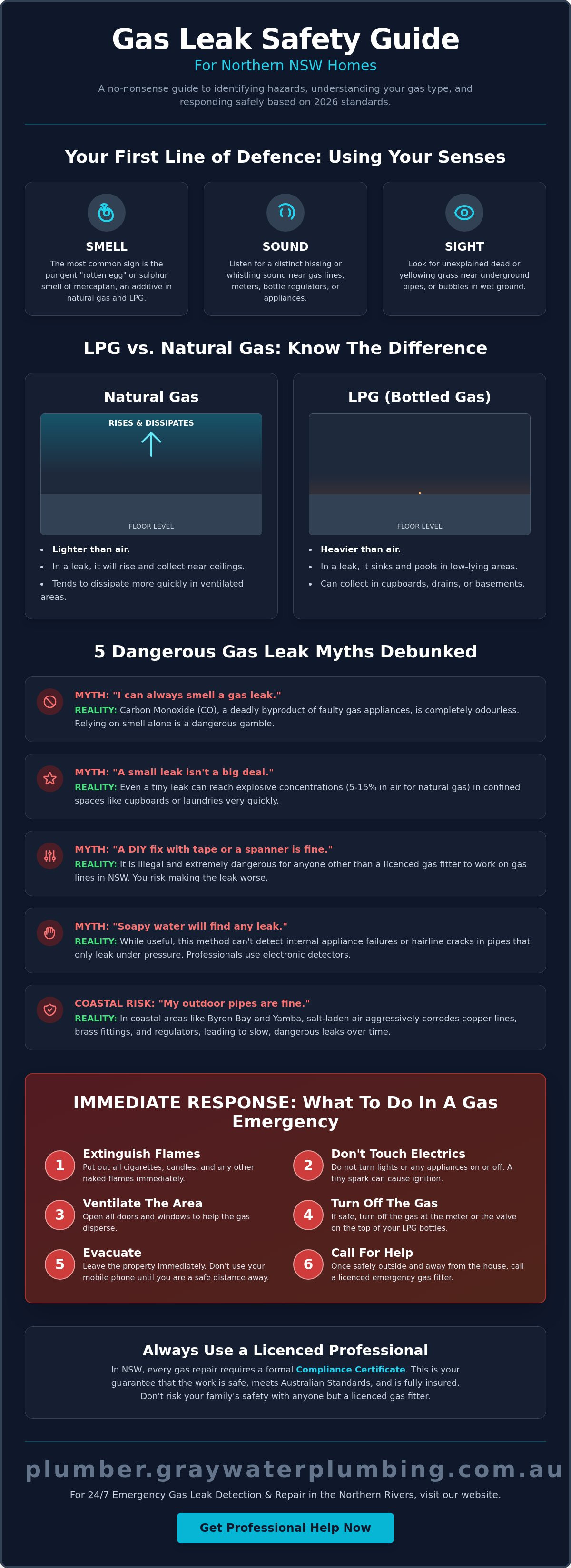
A gas leak occurs when natural gas or LPG escapes from a pipe, fitting, or appliance into your home or the surrounding environment. Understanding the mechanics of What is a gas leak? helps homeowners appreciate why these incidents require professional intervention. In the Northern Rivers, these issues are frequently encountered in coastal towns like Yamba and Ballina, where environmental conditions impact infrastructure. A gas leak is a high-priority plumbing emergency requiring immediate isolation.
Raw natural gas and LPG are naturally odourless and colourless. To make them detectable, suppliers add a chemical odorant called mercaptan. This additive produces the distinctive sulphur or "rotten egg" smell that most people associate with gas. It's a vital safety feature that alerts you to a problem long before the gas reaches a level that could cause a fire or health issues.
Using Your Senses to Detect Trouble
You don't always need specialised tools to identify a potential issue. Your own senses are often the first line of defence in maintaining a safe household. Keep an eye out for these three indicators:
- Smell: Recognising the pungent mercaptan scent is the most reliable way to spot a leak early.
- Sound: Listen for a constant hissing or whistling noise, particularly near your gas meter, bottle regulators, or appliance connections.
- Sight: Look for physical changes in your garden. A leak in an underground pipe can cause bubbles in wet soil or create patches of dead, yellow grass while the surrounding lawn remains green.
Coastal Corrosion: The Hidden Threat in Byron Bay
Properties in Byron Bay and along the coastal fringe face specific risks that inland homes don't. The salt-laden air is incredibly aggressive, accelerating the degradation of external copper gas lines and brass fittings. We often find that outdoor gas bottle regulators and valves suffer from "pitting" corrosion, which can lead to slow, undetected leaks over time.
A "set and forget" mentality is dangerous for beachfront properties. Salt crusting can cause safety valves to seize, preventing them from working when you need them most. Proactive maintenance plumbing is the best way to manage these risks. We believe in radical transparency, which is why we provide a clear breakdown of hourly labour and material costs for every safety inspection. Regular checks ensure your system meets Australian Standards and remains safe in our harsh coastal environment.
5 Dangerous Gas Leak Myths Debunked
Many homeowners in the Northern Rivers rely on outdated advice when it comes to household safety. Misunderstanding how gas behaves creates unnecessary risks for your family and property. We believe in providing clear, honest information so you can make informed decisions about your home's gas leak prevention and maintenance.
The Danger of Odourless Gas
The most common myth is that your nose will always alert you to danger. While natural gas and LPG have an odorant called mercaptan added to them, Carbon Monoxide (CO) does not. CO is a lethal, completely odourless byproduct of faulty or poorly maintained gas appliances like heaters and hot water units. CO poisoning symptoms often mimic the flu, causing headaches and nausea without any distinct smell to warn you. Following the official NSW gas safety guidelines is the only way to ensure your appliances aren't venting this silent killer into your living space.
The Fallacy of the "DIY Fix"
Attempting to repair a gas line yourself isn't just dangerous; it's illegal. Under NSW regulations, all gas work must be performed by a licensed gas fitter. We've seen cases where residents try to tighten a nut or apply hardware-store tape to a joint. This often strips the threads or creates a false sense of security while the gas leak continues behind a wall. Minor leaks in confined spaces, such as a small kitchen cupboard or a 10-square-metre laundry, can reach explosive limits surprisingly quickly. Natural gas, for example, becomes an explosion hazard at concentrations between 5% and 15%.
- Myth: Soapy water is all I need. While bubbles indicate a surface leak, they won't detect internal appliance failures or hairline cracks in aged copper piping that only leak under specific pressures.
- Myth: Natural gas and LPG behave the same way. They don't. Natural gas is lighter than air and rises toward the ceiling. LPG is heavier than air and pools along the floor, in cupboards, or down drains, creating different types of fire hazards.
- Myth: A small leak isn't a big deal. Even a tiny hiss indicates a system failure that will inevitably worsen. Small leaks don't just increase your utility bills; they represent a constant ignition risk in your home.
Our approach to maintenance plumbing focuses on identifying these issues before they become emergencies. We use calibrated electronic leak detectors that find what soapy water misses. If you're worried about a potential issue, our transparent billing model ensures you only pay for the hourly labour and materials required to make your home safe again.
LPG vs Natural Gas: What Northern Rivers Residents Need to Know
Northern Rivers residents typically deal with two different types of gas depending on their location. Towns like Grafton and Ballina have access to reticulated natural gas systems. In contrast, rural areas like Bangalow or the hinterlands rely on bottled LPG. Understanding the physics of these gases is vital during a gas leak. Natural gas consists mostly of methane and is lighter than air. It rises and dissipates if there is enough ventilation. LPG is a mixture of propane and butane and is much heavier than air. It sinks and pools in low-lying areas like basements, drains, or floor cavities. This pooling creates a significant fire risk because the gas doesn't simply blow away.
Ownership boundaries are another critical factor for safety and maintenance. For natural gas, your responsibility starts at the outlet of the gas meter. For LPG, you own the pipework from the regulator onwards. While the gas company usually owns the actual cylinders, you are responsible for their safe placement on your property. Following NSW gas safety requirements ensures that your installation remains compliant and safe. We focus on proactive maintenance plumbing to identify degraded fittings before they fail. Our team uses a transparent hourly labour and material markup model, so you know exactly what you are paying for during a safety inspection.
Managing Gas Bottles in Rural Bangalow
Rural blocks in Bangalow often use twin 45kg LPG cylinders. These must sit upright on a stable, non-combustible base like concrete. You should check the flexible "pigtail" hoses and rubber "O" rings every 12 months. These components perish quickly in the high-UV conditions of the Northern Rivers. If a cylinder valve is frozen or stuck, don't use force or tools to pry it open. Pouring warm water over the valve is a safer way to loosen it. During high-heat summer days, the pressure relief valve may vent a small amount of gas to prevent over-pressurisation. This is a normal safety function, but it's a reminder to keep the area clear of dry grass or debris.
Natural Gas Infrastructure in Town Centres
Town centre residents must know how to find their gas meter and the main isolation valve. The valve is usually a yellow lever located on the inlet pipe. Modern new home plumbing in areas like Yamba or Ballina requires specific ventilation standards to prevent a gas leak from reaching explosive concentrations. If you smell gas near the street or before your meter, it's a network issue. You must report street-level leaks to the local provider immediately. For any issues from the meter to your appliances, our licensed gas fitters provide efficient and reliable repairs. We prioritise clear communication and methodical testing to ensure your home remains a safe environment.
Immediate Response: What to Do When You Suspect a Leak
If you smell a rotten egg odour or hear a persistent hissing sound near your appliances, your priority is safety. A gas leak requires a calm but rapid response to prevent ignition. Don't waste time searching for the source of the smell yourself. Instead, follow these five steps to secure your Northern Rivers home immediately.
- Step 1: Eliminate all ignition sources. This means no matches, lighters, or smoking. Even a tiny spark can trigger a fire in a gas-rich environment.
- Step 2: Isolate the supply. If you use LPG bottles, turn the valve clockwise to close it. For natural gas, turn the lever at the meter to the "off" position.
- Step 3: Ventilate the area. Open every door and window to allow fresh air to circulate and disperse the gas.
- Step 4: Evacuate the premises. Ensure everyone leaves the building quickly. Don't stop to collect valuables.
- Step 5: Call for professional help. Contact a licensed gas fitter or emergency services once you're at a safe distance from the property.
Having a reliable contact for such emergencies is essential regardless of your location. For readers in Central Florida, Alberto Pro Plumbing offers expert assistance for residential and commercial plumbing needs, ensuring safety and peace of mind.
The "No-Go" List: Common Mistakes to Avoid
Electrical currents are often overlooked as ignition risks. Don't touch light switches, power points, or electrical appliances. Turning a switch on or off can create a small internal spark. Similarly, don't use a landline or mobile phone inside the affected area. If your car is parked in a garage or carport near the suspected gas leak, leave it there. Starting the engine is a significant risk that could lead to an immediate fire.
Safe Evacuation Procedures
Account for all family members and pets quickly. Once outside, move to a "muster point" at least 30 metres away and ideally upwind of the building. This ensures you aren't breathing in drifting gas while you wait for help to arrive.
Knowing who to call depends on the severity of the situation. If you see flames or smell gas so thick it makes you dizzy, dial 000 for emergency services immediately. For situations where the gas is isolated and the immediate danger is managed, you need a specialist to locate the fault. Our team provides a straight-shooting approach to repairs, using a clear hourly labour and material markup billing structure so you aren't left guessing about the final cost of your safety.
Professional Gas Fitting and Leak Detection in Yamba
Graywater Plumbing handles gas safety with technical precision. We don't rely on outdated methods or guesswork. Our technicians use calibrated electronic sniffers to find trace amounts of combustible gases that the human nose might miss. These devices can detect gas concentrations as low as 10 parts per million, ensuring we find a gas leak long before it reaches a dangerous level. We also utilise digital manometers to perform static pressure testing. This dual-layered approach allows us to pinpoint the exact location of a fault, whether it's behind a kitchen wall or beneath the floorboards.
Why Licensed Expertise is Non-Negotiable
Following the AS/NZS 5601.1:2022 standards isn't just a best practice for us; it's a legal requirement. Gas is volatile, and every connection must be perfect to prevent fire or carbon monoxide risks. If you let an unlicensed handyman touch your gas lines, you're taking a massive risk with your safety and your finances. Australian insurance providers often reject claims if a Compliance Certificate isn't provided for gas repairs or installations.
We provide these certificates for all gas work we perform in NSW. This document serves as your official proof that the work meets strict state safety regulations. Our process includes several safety steps:
- System Integrity Checks: We perform a comprehensive pressure test after every repair to confirm the entire system is airtight.
- Appliance Testing: We ensure your burners and heaters are combusting fuel correctly to prevent toxic fumes.
- Compliance Documentation: You receive a formal NSW Compliance Certificate for your records and insurance purposes.
Transparent Pricing for Your Peace of Mind
We've built our reputation on a "straight-shooting" business model that prioritises honesty. Many service providers in the Northern Rivers use confusing flat-rate quotes that often hide high margins. We don't operate that way. Our billing is based on a clear hourly labour rate and a transparent material markup. If a technician spends 45 minutes fixing a valve, you're billed for that specific time, not a pre-packaged four-hour minimum.
We don't add hidden fees to the parts we source for your home. This fair billing model ensures you know exactly what you're paying for. It rewards efficiency and builds a relationship of trust between our tradespeople and the local community. Our 24/7 emergency service ensures that if you smell gas at 3:00 AM, a qualified professional will be on-site quickly to secure your property.
Secure Your Northern Rivers Home Today
Gas safety in Northern NSW isn't something to leave to guesswork or outdated myths. Whether you're using reticulated natural gas or LPG cylinders in Yamba, understanding the specific risks is the first step toward a safer household. You now know that a gas leak requires professional detection rather than unreliable DIY solutions. It's essential to act immediately if you suspect an issue. Waiting even a few hours can significantly increase the risk to your property and family.
Graywater Plumbing provides a 24/7 emergency response across Northern NSW to ensure you're never left vulnerable. Our fully licensed and insured gas fitters operate with radical transparency. We use a clear hourly labour and material markup pricing structure. This ensures you know exactly what you're paying for without hidden surprises or ambiguous quotes. We've built our reputation on being straight-shooting local experts who value long-term community safety over one-off margins.
Book a Licensed Gas Fitter at Graywater Plumbing
We're ready to help you keep your home safe and compliant. Just as you prioritise your property's safety, don't forget to look after your personal health; for those seeking award-winning dental services, you can visit Star Dental Care.
Frequently Asked Questions
How can I tell if I have a gas leak if I cannot smell anything?
You can identify a gas leak without a smell by looking for physical signs like bubbles in standing water or patches of dead grass near your external pipes. High gas bills that don't match your usual consumption often indicate a hidden leak in the line. We use electronic leak detectors to find small leaks that the nose misses. If your gas meter dial moves while all appliances are switched off, it's a clear sign of a problem.
Is it safe to sleep in a house with a suspected gas leak?
It's never safe to sleep in a house if you suspect a gas leak. Gas builds up in enclosed spaces and can cause asphyxiation or lead to an explosion if a pilot light or electrical spark ignites it. You should turn off the gas at the main meter and leave the property immediately. Contact a licensed plumber to inspect the situation and verify the home is safe before you return inside.
What does a gas leak smell like in Australia?
In Australia, natural gas and LPG have a chemical called Ethyl Mercaptan added to them, which smells like rotten eggs or sulphur. This additive is required by Australian Standard AS 4564 to ensure people can detect leaks easily. Since raw gas is naturally odourless, this strong scent is your primary warning sign. If you notice this smell near your hot water units or stove, you need to act quickly.
Can a gas leak happen if the stove is turned off?
A gas leak can definitely occur even when your stove is turned off. Leaks often happen in the internal pipework, at the connection points behind the appliance, or due to a faulty regulator. Corrosion in older copper pipes is a common cause we see in Northern Rivers homes. If the leak is behind the wall or under the floor, the stove's setting won't stop the flow of gas from the main line.
Who is responsible for fixing a gas leak: the landlord or the tenant?
The landlord is responsible for fixing gas leaks as they are classified as an urgent repair under the NSW Residential Tenancies Act 2010. Tenants must notify the landlord or property manager as soon as they detect a problem. If the landlord is unreachable, the Act allows tenants to arrange for a licensed plumber to carry out essential repairs. This ensures the property meets basic safety and compliance standards for the occupants.
How much does it cost to have a gas leak detected and fixed in Yamba?
In Yamba, the cost to detect and fix a leak depends on the time required and the materials used. Our billing follows a transparent hourly labour and material markup structure, so you only pay for the actual work performed. Most standard leak detections take between one and two hours to complete. We provide a clear breakdown of costs once we identify the source of the leak and the specific parts required for the repair.
What should I do if I smell gas in the street outside my house?
If you smell gas in the street, you should move away from the area and call your local gas network provider immediately. In the Northern Rivers, this is often Jemena or Origin. Do not use your mobile phone or any electronic devices near the smell. The network provider is responsible for the pipes leading up to your gas meter, while a licensed plumber handles everything from the meter into your home.
Can a gas leak cause health problems even if there is no fire?
A gas leak can cause serious health issues like headaches, dizziness, and nausea even without a fire occurring. Prolonged exposure reduces the amount of oxygen in the air, leading to fatigue or loss of consciousness. Faulty gas appliances can also produce carbon monoxide, which is a silent and deadly threat. Regular maintenance plumbing checks are the best way to ensure your family's safety from these invisible risks.