A laundry renovation is essentially a plumbing project disguised as a joinery project; if the drainage fails, the most beautiful cabinetry in the world won't protect your home from water damage. Most homeowners in the Northern Rivers focus on the aesthetic finishes first, but the real challenge lies in fitting modern, high-capacity appliances into the tighter footprints of our region's older coastal homes. It is common to feel overwhelmed by confusing plumbing regulations or the fear of choosing a machine that exceeds your floor waste capacity. We understand that you want a space that handles heavy washing loads reliably while adding genuine value to your property.
By following this comprehensive checklist for laundry renovations, you can ensure your project is functional, compliant, and built to last. We will cover everything from the July 2024 engineered stone ban and NSW waterproofing standards to the technical drainage requirements that keep your house dry. This guide provides the professional transparency you need to manage your renovation with a steady, systematic approach, ensuring your new space is as practical as it is polished.
Key Takeaways
- Learn how to identify your existing 'wet zone' and floor waste to determine if your project is a simple face-lift or a full structural strip-out.
- Understand the technical plumbing requirements for modern laundry renovations, such as upgrading to 50mm drainage to handle high-flow appliances.
- Discover how to apply the 'Golden Triangle' of ergonomics to your layout, ensuring a logical flow between sorting, washing, and drying.
- Master the professional trade sequence, focusing on the critical 'rough-in' stage where pipes are moved and secured before any walls or cabinetry are installed.
Pre-Renovation Planning: Assessing Your Current Laundry Layout
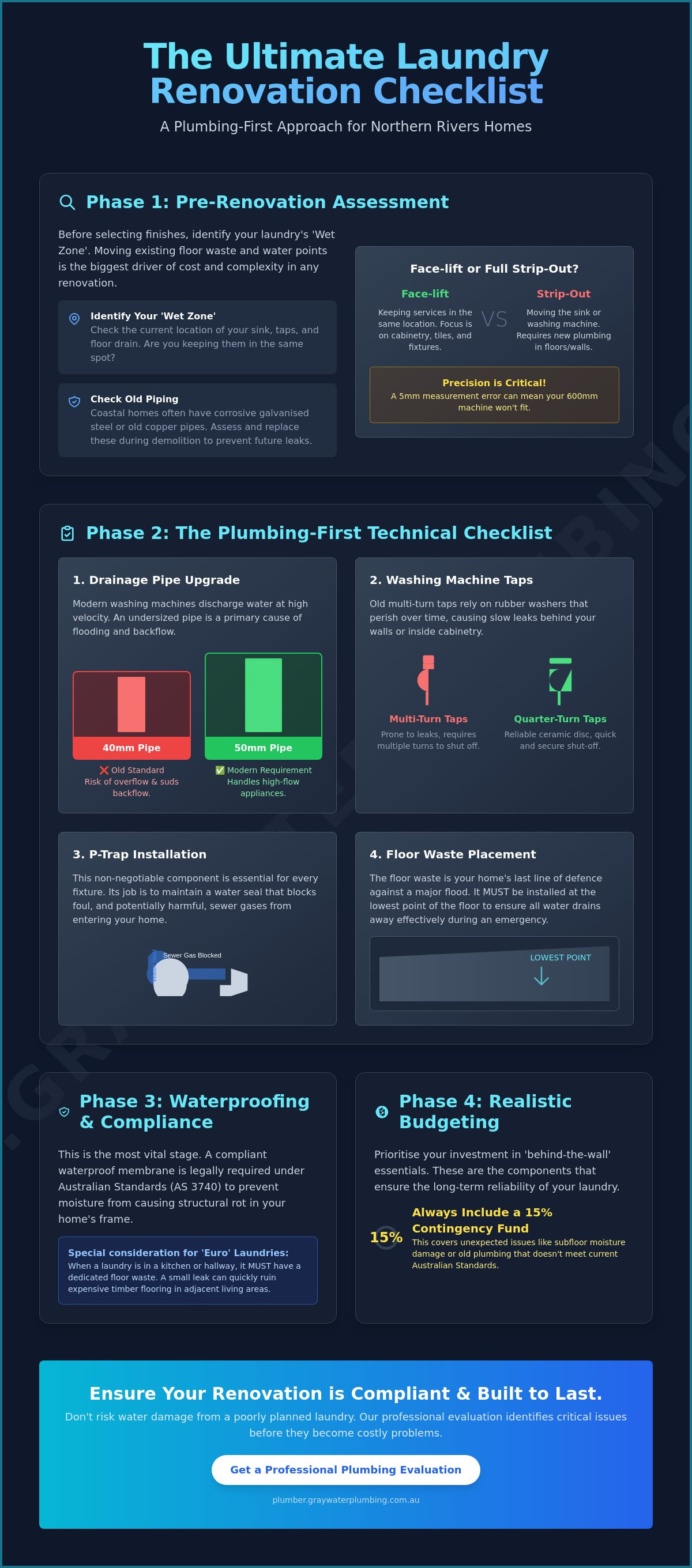
Before you select tiles or cabinetry, you must identify your 'Wet Zone'. This is the specific area where your floor waste and water points are currently positioned. In most laundry renovations, moving these primary service points is the most significant driver of both time and cost. If you are planning a modern laundry room that shifts the sink to an entirely different wall, you are committing to a full strip-out rather than a cosmetic face-lift. Measuring your space requires extreme precision. In the Australian building industry, a discrepancy of just 5mm can be the difference between a standard 600mm washing machine fitting into its cavity or being left protruding into a walkway.
Coastal properties in regions like Yamba and other Northern Rivers coastal towns face unique challenges with aging infrastructure. Older homes in these areas often rely on galvanised steel or early copper piping. These materials are particularly susceptible to corrosion from the salt air and internal mineral buildup over decades. We recommend a professional assessment of these lines before any new walls are installed. It's far more practical to replace a brittle pipe during the demolition phase than to cut into fresh joinery a year later to rectify a preventable leak.
Evaluating Your Current Plumbing Capacity
Listen for gurgling sounds or slow drainage in your existing tub before the work begins. These symptoms often point to partial blockages or inadequate venting that must be resolved during the rough-in stage. You should also evaluate the proximity of your hot water system. If the unit is located on the opposite side of the home, you may experience significant heat loss and delays in water delivery. While Graywater Plumbing specialises in plumbing, it's also wise to verify that your electrical board can handle the high-wattage requirements of modern heat-pump dryers and high-efficiency washing machines.
Setting a Realistic Renovation Budget
A successful project relies on professional transparency regarding costs. We utilise a cost-plus material structure to ensure you understand exactly where your investment is allocated. When setting your budget, prioritise 'behind-the-wall' essentials like high-grade waterproofing and compliant pipework. These components ensure the long-term reliability of the space. We always advise clients to include a 15% contingency fund. This buffer is designed to cover unexpected repairs, such as discovering subfloor moisture damage or historical plumbing that does not meet current Australian Standards (AS/NZS 3500).
The Plumbing-First Checklist: Drainage, Vents, and Water Lines
Modern high-efficiency washing machines discharge water at a significantly higher velocity than older models. If your existing drainage relies on a 40mm pipe, you may experience backflow or suds overflowing during the rinse cycle. Upgrading to a 50mm drain pipe is a standard requirement for laundry renovations to ensure your system can handle these high-flow volumes without stress. Every fixture must also include a correctly installed P-trap. This simple component maintains a water seal that prevents foul sewer gases from entering your living space, a common issue in older Coffs Harbour homes where seals have dried out or been bypassed.
Placement of the floor waste is another critical technical detail. It must be positioned at the lowest point of the floor's fall to ensure effective drainage during an appliance failure or flood. We also recommend replacing old-fashioned multi-turn taps with quarter-turn ceramic disc washing machine taps. These provide a more reliable shut-off and are less prone to the leaks associated with traditional rubber washers. If you are unsure about the state of your current connections, our team can provide a professional plumbing evaluation to identify the best layout for your home.
Drainage and Waterproofing Requirements
Professional waterproofing is arguably the most vital stage of the project. Under the Plumbing Code of Australia (PCA) and AS 3740, laundries are classified as wet areas that require specific barriers to prevent structural rot. This is especially true when integrating a 'Euro' style laundry into a kitchen or hallway. Without a dedicated floor waste and a compliant waterproof membrane, a minor leak can quickly damage expensive timber flooring or carpets in adjacent rooms. Verifying the licensing and qualifications of your tradespeople ensures these standards are met.
Hot Water and Gas Fitting Considerations
Small laundries often lack functional bench space because of bulky internal hot water units. Relocating these systems to an external wall or an under-bench position can transform the room's ergonomics. If you prefer gas-powered dryers, which are increasingly popular in the Northern Rivers for their efficiency, you must engage a licensed gas fitter to install the necessary lines. Optimising your pipe runs is also essential; short, direct paths ensure hot water arrives at the tap instantly, reducing water waste. This methodical approach to laundry renovations prevents the frustration of waiting for hot water while also improving the overall energy efficiency of your household.
Laundry Layout and Ergonomics: Traditional vs. European Designs
A successful layout depends on the 'Golden Triangle' of laundry: the logical flow between sorting, washing, and drying. When planning laundry renovations, you must ensure these three zones are positioned to minimise unnecessary movement. Ergonomics play a vital role here. While the standard Australian bench height is 900mm, we frequently see homeowners opting for 950mm. This extra 50mm provides better comfort for folding clothes and allows for more clearance when installing high-capacity front-loading machines. You should also verify that appliance doors have a full 180-degree swing without hitting walls or cabinetry.
Living in the Northern Rivers often involves an active, outdoor lifestyle. Incorporating a 'mudroom' element into your laundry is a practical way to manage this. Adding dedicated hooks for damp towels or wetsuits and a low-level bench for removing sandy boots prevents mess from migrating into the rest of your home. This regional adaptation turns a simple utility room into a hardworking transition space between the outdoors and your clean living areas.
The European Laundry: Pros and Cons
The European laundry, or 'Euro laundry', involves tucking your appliances into a hallway cupboard or a kitchen nook. It's an excellent space-saving solution for smaller coastal homes. However, these compact setups present unique challenges regarding hidden moisture and ventilation. To ensure appliances sit flush against the back wall, we recommend installing recessed tap boxes and slimline P-traps. These specialised plumbing fixtures allow for a tidy finish within a shallow cavity. Without adequate mechanical ventilation, these enclosed spaces are prone to mould growth, so an integrated extraction fan is a non-negotiable requirement.
Traditional Laundry Rooms for Families
For larger families in regional NSW, a dedicated laundry room remains the gold standard. These spaces allow for maximum storage, including overhead cabinetry and tall broom cupboards for bulky cleaning equipment. The traditional utility sink, or 'soaking tub', remains a staple in our region. A large 45-litre stainless steel tub is essential for hand-washing delicate items or soaking heavily soiled workwear. To combat the high humidity of the Northern Rivers, your design should balance natural ventilation from louvred windows with high-powered extraction fans. This dual approach ensures the room dries out quickly after a heavy washing day.
Selecting Fixtures and Appliances for Longevity
The coastal air in Coffs Harbour is notoriously harsh on metallic finishes. When planning laundry renovations, the material of your sink is a primary consideration for long-term reliability. While granite composite sinks offer a modern aesthetic, high-grade 304 or 316 stainless steel remains the benchmark for durability in regional NSW. Stainless steel is non-porous and resists the pitting often caused by salt spray. Choosing a sink size that matches your largest household washing load is essential; a 45-litre tub is usually sufficient for king-sized bedding, whereas smaller 30-litre tubs are better suited to compact European layouts.
Your choice of washing machine also dictates specific plumbing requirements. Front-loaders are generally more water-efficient, but they require a precise standpipe height to prevent siphoning issues. Top-loaders discharge water at a higher volume and speed, making the 50mm drainage upgrade mentioned in previous sections even more critical. If you are moving from a top-loader to a front-loader, your plumber needs to adjust the wall-mounted taps to ensure they sit at a height that doesn't interfere with the machine's vibration or the installation of a benchtop.
Tapware and Sink Selection
Pulldown mixers are the superior choice for laundry tubs because they allow you to rinse the entire sink and fill buckets with ease. We recommend selecting WELS-rated taps with at least a 4-star rating to reduce water consumption and lower your utility bills. You should avoid cheap, unbranded fixtures found in discount retail outlets. These often use inferior ceramic discs that may leak within a year, leading to hidden water damage behind your cabinetry. Investing in reputable brands ensures that replacement parts are readily available if maintenance is required in the future.
Appliance Integration and Drainage
Heat Pump dryers have become a popular choice for Northern Rivers homeowners due to their energy efficiency and lack of external venting requirements. Unlike traditional vented dryers, these units produce condensate water. While most come with a manual tank, we recommend direct-connecting the dryer drainage to your waste pipe. This eliminates the need to empty the tank after every cycle and prevents accidental overflow issues. If your laundry is located on an upper timber floor, vibration-dampening pads are a necessary addition to prevent structural noise. Many homeowners choose to align these upgrades with bathroom renovations to streamline trade schedules and ensure a consistent aesthetic across all wet areas. If you are unsure which fixtures suit your existing pipework, we can provide a detailed fixture assessment to ensure your new appliances operate at peak efficiency.
Organising Your Trades: The Professional Renovation Process
A disciplined sequence of trades is the foundation of successful laundry renovations. Managing a renovation requires a methodical approach to ensure each stage is completed to Australian Standards before the next trade arrives on site. We follow a predictable, professional cadence that begins with the demolition of the old space and moves through four distinct phases. This systematic progression prevents the need for costly rework and ensures the final result is both functional and compliant with local Northern Rivers building codes.
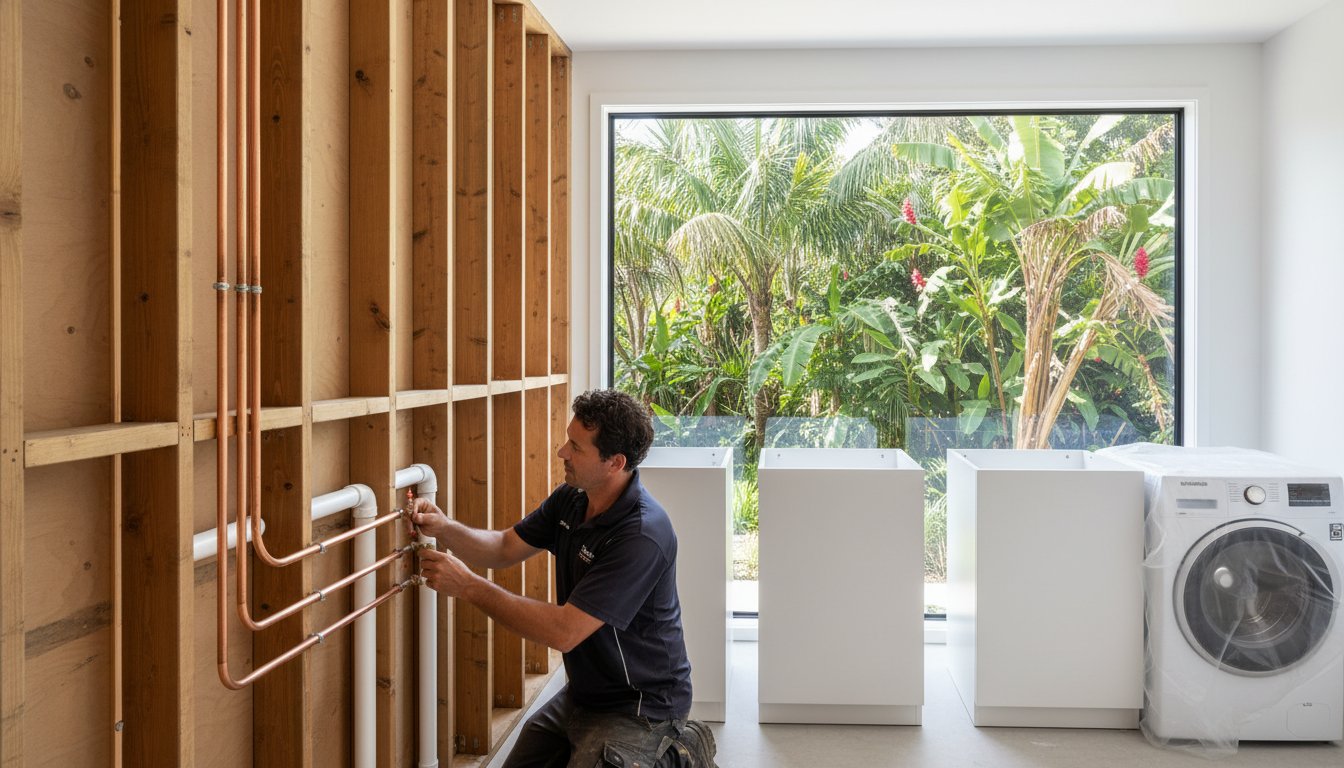
- Step 1: The 'Rough-in'. Once the old laundry is stripped out, the plumber moves or replaces pipework while the wall cavities are still exposed. This is the only time to upgrade to 50mm drainage or relocate water points for a new layout.
- Step 2: Electrical and Waterproofing. New power circuits are installed for high-wattage appliances, followed by the application of a waterproof membrane. This stage is critical for protecting the structural integrity of your home.
- Step 3: Tiling and Joinery. After the waterproofing has cured, tiles are laid and cabinets are installed. The room finally begins to take its visual shape during this phase.
- Step 4: The 'Fit-off'. This is the final plumbing stage where taps, sinks, and appliances are connected and tested for leaks under full pressure.
The hallmark of a quality local tradesperson is a clean and organised worksite. We take pride in maintaining a tidy environment from the first day of demolition through to the final fit-off. This level of care reflects our professional transparency and respect for your property. A well-managed site reduces the risk of accidents and ensures that every component, from the subfloor to the finishing trim, is installed with precision.
Why Hire a Licensed Plumber for Your Reno?
Under NSW Government regulations, any residential building work valued at more than A$5,000 requires a licensed contractor. Hiring a professional is about more than just skill; it is about accountability. We provide compliance certificates that are essential for your home insurance and future property sales. These documents prove that your laundry renovations meet the Plumbing Code of Australia (PCA). Attempting DIY plumbing in wet areas carries immense risk. A small, undetected leak behind new joinery can cause thousands of dollars in structural rot and mould damage before it becomes visible.
Getting Started with Graywater Plumbing
Our team brings the same level of pragmatic expertise to renovations as we do to new home plumbing projects across the region. We operate with a transparent, time-based labour and cost-plus material structure, ensuring you are never surprised by hidden fees. This honest framework allows us to focus on the quality of craftsmanship rather than high-margin transactions. Whether you are planning a project in Yamba, Grafton, or Byron Bay, we are ready to provide a steady, reliable partnership. Contact us today to book a consultation and receive a direct, no-nonsense quote for your laundry project.
Secure the Future of Your Northern Rivers Home
Successful laundry renovations depend on a methodical approach that prioritises technical compliance over aesthetic finishes. By focusing on high-capacity drainage, professional waterproofing, and an ergonomic layout, you protect your home from moisture damage while creating a space that handles daily washing loads with ease. We believe that professional transparency is essential for a stress-free experience. As licensed Northern Rivers plumbing experts, we provide radical transparency in billing through our cost-plus material structure and time-based labour rates. This ensures you only pay for the work actually performed on your property.
We also offer 24/7 emergency support for peace of mind; a dependable partner is always available if an issue arises. If you're ready to transform your utility room into a durable, well-organised space, we're here to provide the disciplined craftsmanship required to meet Australian Standards. Book Your Laundry Renovation Consultation with Graywater Plumbing Today. We look forward to helping you build a laundry that stands the test of time.
Frequently Asked Questions
Do I need council approval for a laundry renovation in Northern NSW?
Most internal laundry renovations do not require a full Development Application (DA) if you are not altering the building's footprint or structural walls. However, if you are relocating the laundry to a different part of the home or changing external drainage, you may need a Complying Development Certificate (CDC). We recommend checking with your local council or a private certifier to ensure your specific project meets all regional planning requirements.
Can I move my washing machine to the other side of the room?
You can certainly relocate your washing machine, but this requires a professional 'rough-in' to move the water supply and drainage lines. This process involve opening the walls and potentially the subfloor to ensure the new 50mm drain pipe has the correct fall for efficient water discharge. While moving services increases the initial labour cost, it often results in a far more functional layout for small coastal homes.
What is the average time a laundry renovation takes to complete?
A standard renovation typically takes between two and four weeks to complete from the initial demolition to the final fit-off. This timeline accounts for the necessary drying times for waterproofing membranes and the sequential scheduling of different trades like tilers and joiners. We maintain a methodical pace to ensure each stage is fully compliant with Australian Standards before the next trade arrives on site.
Is it worth upgrading my pipes during a laundry facelift?
Upgrading your pipes during a cosmetic facelift is a proactive step that prevents future structural damage. Replacing old galvanized or copper lines with modern PEX or PVC ensures your new cabinetry isn't ruined by a pinhole leak shortly after the project is finished. This preventative care is far more cost-effective than performing emergency repairs on a finished room, especially in older properties across the Northern Rivers.
What are the common signs of plumbing failure in an old laundry?
Common signs of failure include gurgling sounds in the pipes, slow-draining tubs, or persistent damp smells. If you notice water pooling around the base of your machine or unexplained moisture in adjacent cupboards, your drainage system or waterproofing has likely reached the end of its lifespan. These issues often indicate hidden blockages or brittle pipes that require professional assessment before they cause significant water damage.
Can Graywater Plumbing help with the design as well as the pipes?
We specialise in the plumbing-first design of your space, ensuring your layout is both compliant and technically sound. While we do not sell retail plumbing supplies, we work alongside your chosen builder or cabinet maker to ensure the plumbing infrastructure supports your aesthetic vision perfectly. Our focus is on the functional elements, such as water point placement and drainage capacity, that ensure long-term reliability.
How do I prevent mould and dampness in a small European laundry?
Preventing mould in a compact European laundry requires high-powered mechanical extraction fans that vent directly to the outside. Since these spaces are often tucked into cupboards or hallways, we also suggest using heat pump dryers and ensuring there is a sufficient gap under the doors to allow for constant airflow. Consistent ventilation is the only way to manage the high humidity levels common in our coastal environment.
Should I install a floor waste if I don't currently have one?
You should always install a floor waste if you are performing a full strip-out during laundry renovations. Under current Australian Standards (AS 3740), a floor waste is a critical safety feature that prevents a burst hose or appliance failure from flooding the rest of your home. It provides an essential secondary drainage point that protects your property value and ensures compliance with modern building codes.