On Monday morning, a homeowner in Lismore discovered their invigorating shower had turned into a pathetic, weak trickle. You've likely noticed your washing machine is taking twice as long to fill, or perhaps you're worried that a sudden drop in low water pressure signals a hidden burst pipe beneath your garden. It's a common headache that can disrupt your entire household routine, especially with the current temporary water restrictions in the Northern Murray-Darling Basin that began on 17 April 2026.
We understand how unsettling it is when your home's vital systems don't perform as they should. You deserve a reliable plumbing system that meets the AS/NZS 3500.1 standard of at least 150 kPa at your outlets to ensure appliances function correctly. This guide will help you determine if your flow issues stem from local supply changes, such as the new Water NSW Regulation 2026, or internal fixture failures that need professional attention. We'll walk you through the diagnostic process, explain the impact of the Plumbing Code of Australia 2025 standards effective since 1 May 2026, and show you how to restore your home's water performance safely and efficiently.
Key Takeaways
- Learn how to perform a simple "Bucket Test" to accurately measure your flow rate and see if it meets the 150 kPa minimum standard.
- Understand how internal components like Pressure Limiting Valves (PLVs) or sediment build-up in older pipes can cause low water pressure.
- Identify external factors, including your home's elevation and potential street-side leaks, that might be affecting your council water supply.
- Distinguish between whole-house issues and individual fixture problems caused by modern WELS-rated water restrictors in showers and taps.
- Discover how a methodical diagnostic approach and proactive maintenance plumbing can identify hidden leaks and restore your home's water flow.
Understanding Low Water Pressure: How to Test Your Flow at Home
Before you can fix a problem, you need to understand what you're actually measuring. While many homeowners use the terms interchangeably, there is a distinct difference between pressure and flow. To get a better grasp of the physics involved, it helps to look at What is water pressure? in a technical sense. Simply put, pressure is the static force that pushes water through your pipes, measured in kilopascals (kPa). Flow is the actual volume of water coming out of your tap, measured in litres per minute (L/min).
You might have high pressure but poor flow if your pipes are restricted by mineral scale or a partially closed valve. Conversely, a house at the top of a hill might have low pressure but excellent flow due to large pipe diameters. In Northern NSW, we generally look for a benchmark of approximately 20L/min at your external taps. If your flow falls significantly below this, you're dealing with low water pressure that likely requires a systematic investigation.
The most critical first step is testing your front garden tap. This tap is usually the closest point to the water meter and the council main. If the flow is strong at the front tap but weak in the kitchen, the issue is internal to your property. If the front tap is also a trickle, the problem probably lies with the council supply or a leak between the meter and your house.
The 60-Second Bucket Test
You don't need expensive gauges to diagnose your home. A standard 10-litre bucket and a stopwatch are all you need for a reliable DIY test. Follow these steps to get an accurate reading:
- Ensure all other taps, showers, and appliances in the house are turned off.
- Head to your front garden tap and turn it on to full power for a few seconds to clear any air.
- Place the 10-litre bucket under the tap and start your timer the moment the water hits the bottom.
- Stop the timer as soon as the bucket is full.
To calculate your flow rate, use this formula: (Bucket Volume / Seconds) x 60. For example, if it takes 30 seconds to fill a 10-litre bucket, your flow rate is 20L/min. If it takes 60 seconds, you're only getting 10L/min, which explains those frustratingly weak showers.
Town Water vs. Rainwater Tanks
In rural pockets of Northern NSW, many homes rely on rainwater tanks or a hybrid system. If you're on tank water, low water pressure is often caused by the pump or the pressure controller rather than the pipes themselves. A faulty pressure switch might fail to trigger the pump when a tap opens, or a clogged suction line could be starving the pump of water.
For gravity-fed systems, elevation is the only factor that matters. Every 1-metre increase in the height of your tank above your taps adds roughly 10 kPa of pressure. If your tank is only 2 metres above your shower, you'll never achieve a high-pressure experience without an inline booster pump. We often find that "flow issues" on rural properties are simply a matter of a blocked leaf strainer or a pump that has reached the end of its service life.
Common Internal Culprits: Why Your Taps are Trickling
If your bucket test showed plenty of flow at the front garden tap but poor results at the kitchen sink, the bottleneck is within your property walls. This narrows down the search significantly. Often, a sudden drop in low water pressure isn't a city-wide crisis but a specific component in your plumbing system reaching its use-by date. Identifying these internal culprits early can prevent more expensive repairs or water damage later on.
Faulty Pressure Limiting Valves (PLV)
Modern homes and those with recently updated hot water units rely on a Pressure Limiting Valve. These devices ensure the street pressure, which can fluctuate wildly, stays below the 500 kPa limit mandated by the Plumbing Code of Australia. This protects your tapware warranties and prevents burst flexi-hoses under your vanities. However, the internal springs and diaphragms in a PLV wear out over time. You might hear a fluttering or vibrating sound when you turn on a tap, or notice the pressure slowly fades away after a few seconds of use. These valves typically require replacement every 5 to 10 years to maintain consistent performance.
Corrosion and Sediment in Older Homes
If you live in one of the heritage cottages in Grafton or a 1950s build in Yamba, your home might still have galvanised steel pipes. Over decades, these pipes rust from the inside out. This corrosion creates a rough internal surface that catches sediment and eventually closes off the pipe's diameter. Rust flakes can also break loose, travelling through the system to clog up your tap aerators and showerheads. If you find small brown or metallic grains in your tap filters, it's a clear sign your pipes are deteriorating. While cleaning the aerators provides a temporary fix, a partial re-pipe is often the only permanent solution for restricted flow in older properties.
Don't overlook the simple things first. Check your main stop-cock near the meter and any internal isolation valves under your sinks or laundry tubs. It only takes a quarter-turn of a handle to restrict your flow by half. Sometimes, these valves are accidentally bumped or weren't fully reopened after previous maintenance. Another hidden factor is water hammer. The shockwaves from vibrating pipes can loosen internal valve components or cause debris to shift, leading to sudden flow restrictions. If you're unsure where your internal valves are located, a quick visit from a local maintenance plumber can identify these bottlenecks in minutes.

External Factors: Neighbourhood and Council Issues
If your bucket test showed poor results at the front garden tap, the problem is likely outside your control. Geography plays a significant role in Northern NSW. Your property's elevation relative to the local council reservoir determines your base pressure. If you live on a ridge in Maclean or higher ground in the Byron hinterland, you're naturally further from the source. This results in less gravitational "push" than a home in a low-lying area. Peak-hour usage also impacts the local grid. Between 6:30 am and 8:30 am, the collective demand from thousands of households can cause a noticeable dip in low water pressure. If your flow returns to normal by lunch, it's simply the grid catching up with demand.
Identifying street-side leaks is another vital step. Look for unusually lush, green patches of grass on your nature strip or damp soil near the pavement during dry periods. These are classic signs of a burst council main. These leaks bleed off volume before the water reaches your property line. It's important to remember the division of responsibility. The council is responsible for everything up to and including the water meter. Anything from the meter into your house is your responsibility to maintain.
Council Outages and Street Main Breaks
Before calling a plumber, check the service status on the Clarence Valley Council or Byron Shire websites. They list planned maintenance and known emergency repairs. If a main was recently repaired, you might experience air pockets or sediment in your lines. This debris can clog your meter's internal strainer. The easiest way to confirm a street-wide issue is the "neighbour check." Ask the person next door if their taps are also weak. If the problem is isolated to your lot, the bottleneck is likely at your meter assembly.
Meter and Main Tap Issues
Go to your water meter and ensure the main isolation valve is turned fully anti-clockwise. Sometimes these valves are left partially closed after council work. While you're there, check the meter assembly for visible leaks or dampness. A critical diagnostic step is watching the meter dial while every tap in the house is off. If the dial is still spinning, you have a leak on your side of the line. In this scenario, professional leak detection is the most efficient way to find the source without digging up your entire front lawn. Identifying a hidden leak early prevents the ground from becoming saturated, which can eventually lead to foundation issues.
Troubleshooting Specific Fixtures: Showers, Kitchens, and Hot Water
If your bucket test showed a healthy flow at the garden tap, but you're still struggling with low water pressure in the master ensuite, the problem is likely isolated to a specific fixture. This is actually good news; it's often a simple maintenance task rather than a major infrastructure repair. Many modern taps come with Water Efficiency Labelling and Standards (WELS) restrictors. While these are great for the environment, they can make your shower feel underwhelming if they become partially blocked with fine grit or mineral deposits.
Hot Water System Flow Issues
It's common for homeowners to notice that their hot water pressure is lower than the cold. This usually points to the tempering valve or the cold water expansion valve. Tempering valves are mandatory safety devices that mix hot and cold water to prevent scalding. Over time, the internal thermal element can fail or become encrusted with mineral scale, which significantly restricts the flow of hot water to your taps. If your cold water is gushing but the hot is a trickle, the tempering valve is the primary suspect.
Sediment build-up inside your hot water unit also plays a role. In areas with "hard" water, minerals settle at the base of the tank and can eventually block the outlet pipe. Interestingly, we sometimes find that a blocked drains Ballina issue is mistaken for a pressure problem. If an appliance like a dishwasher or washing machine takes too long to complete a cycle, it might be due to slow drainage rather than a slow fill. A backup in the waste line prevents the unit from cycling correctly, mimicking the symptoms of a supply issue.
Showerhead and Aerator Maintenance
The easiest DIY fix for low water pressure at a single point is cleaning the aerator. These small mesh screens at the tip of your kitchen or basin taps catch pipe scale and sand. You can usually unscrew them by hand or with a pair of pliers and rinse them out. For showerheads, calcium build-up is the main culprit. You don't need harsh chemicals; simply remove the showerhead and soak it in a bowl of plain white vinegar for six hours. This dissolves the mineral deposits that clog the tiny spray nozzles.
If cleaning the external parts doesn't work, the blockage might be deeper. Modern mixer taps contain ceramic cartridges with tiny internal filters. If grit gets past your main meter strainer, it can lodge inside these cartridges. At this point, you'll need to decide between replacing the internal cartridge or the entire fixture. If your tapware is more than 10 years old, a full replacement is often more cost-effective than sourcing specific spare parts. If these DIY steps don't resolve the trickle, you should book a fixture assessment with our team to identify the exact point of restriction.
Professional Solutions: How Graywater Plumbing Restores Your Flow
When DIY checks and aerator cleanings don't resolve your low water pressure, a professional diagnostic approach is the next logical step. We don't rely on guesswork or "quick fixes" that fail six months later. Instead, we follow a disciplined sequence that mirrors a well-organised service call: assessment, explanation, and resolution. This methodical process ensures we identify the exact cause of your flow restriction, whether it's a failing component or a hidden leak deep within your property's infrastructure.
Our local knowledge of Northern Rivers water quality is a significant advantage. The mineral content in our regional supply can be tough on tapware and valves, particularly in coastal areas like Yamba and Ballina. We focus on proactive maintenance plumbing to prevent these issues from escalating. For those investing in new home plumbing, we ensure every installation meets the latest Plumbing Code of Australia 2025 standards, which came into effect on 1 May 2026. This includes installing high-quality, lead-free components that are certified to handle local conditions.
Advanced Diagnostics and Repairs
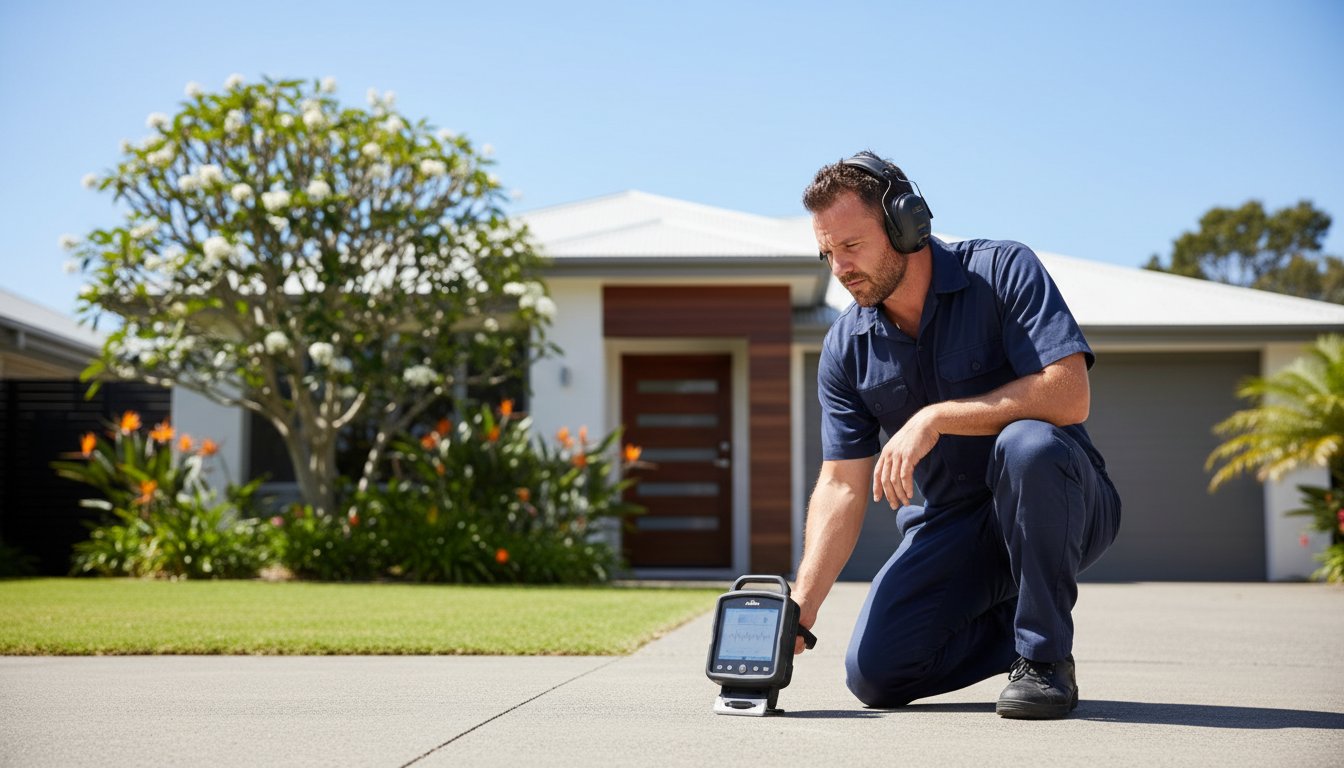
We use precision pressure gauges to map the "pressure drop" across your entire system. By testing at the meter, the hot water unit, and individual outlets, we can pinpoint exactly where the restriction occurs. If we suspect a burst pipe is the culprit, we utilise ultrasonic leak detection technology. This allows us to find hidden leaks under concrete slabs or garden beds without unnecessary digging. Once the problem is located, we discuss the most cost-effective solution for your budget. This might involve a simple valve replacement, pipe relining to fix internal corrosion, or a targeted section replacement to ensure regional compliance with AS/NZS 3500 standards.
Transparent Billing: No Hidden Surprises
We believe in radical transparency, which is why we've built our reputation on a "straight-shooting" fee structure. Unlike many in the industry, we don't use ambiguous flat-rate pricing that often hides significant profit margins. Instead, we use an Hourly Labour and Material Markup model. You pay for the actual time our tradespeople spend on your property and a fair, transparent markup on the materials we use. This approach fosters trust and ensures you only pay for the work performed.
Our goal is to build long-term relationships with our customers through integrity and accountability. By booking a comprehensive maintenance audit, you can catch low water pressure issues before they turn into plumbing emergencies. We'll check your tempering valves, inspect your meter assembly, and ensure your system is operating at peak efficiency. This disciplined approach provides the security of knowing your home's water system is in expert hands.
Restore Your Home’s Water Performance
Managing low water pressure effectively requires a methodical approach, from performing your own bucket tests to understanding the impact of regional water quality on your fixtures. By identifying whether the restriction is a single-tap issue or a whole-house problem, you can take the right steps to maintain your home's efficiency. Proactive maintenance is always more cost-effective than reactive repairs, especially when dealing with the high-pressure standards required by the Plumbing Code of Australia 2025.
If your DIY troubleshooting hasn't restored your flow, our team is ready to help. We are specialists in hot water systems and precision leak detection, offering a 24/7 Emergency Service across Northern NSW for your peace of mind. We pride ourselves on being straight-shooting local experts, which is why we use an upfront Hourly Labour and Material Markup billing model. This ensures you receive fair, transparent pricing without the hidden margins found in flat-rate quotes. Contact Graywater Plumbing for an honest, transparent pressure audit today and let us get your plumbing back to its optimal state. You deserve a reliable system that works exactly when you need it.
Frequently Asked Questions
Is low water pressure a sign of a leak?
Yes, a sudden drop in flow is often a primary indicator of a hidden leak on your property. You can verify this by checking your water meter while all taps and appliances are turned off. If the dial is still spinning, water is escaping somewhere on your side of the line, which requires immediate professional detection to prevent structural damage or high water bills.
Can I adjust my own water pressure at the meter?
No, the valve at your water meter is an isolation valve designed only to turn the supply fully on or fully off. It doesn't function as a pressure regulator. Attempting to "throttle" the valve by leaving it partially closed will only restrict the volume of water available and can damage the valve seat over time, leading to future leaks at the meter assembly.
Why is my hot water pressure lower than my cold water pressure?
This discrepancy is usually caused by a faulty tempering valve or a cold water expansion valve. These safety components regulate water temperature and pressure before it reaches your taps. If the internal thermal element fails or becomes blocked with mineral scale, your hot water flow will decrease significantly while the cold supply remains normal.
How much does it cost to fix low water pressure in Northern NSW?
Costs depend on whether the fix involves a simple valve replacement or a complex leak repair. As of May 2026, standard hourly rates for plumbers in Australia range between $80 and $200 per hour. We provide a transparent breakdown using our Hourly Labour and Material Markup model so you see exactly what you're paying for without hidden margins.
Will a new showerhead fix my low water pressure?
A new showerhead will only help if your existing fixture is blocked by calcium build-up or sediment. If the low water pressure is a whole-house issue, a new fixture won't solve the underlying problem. Many modern WELS-rated showerheads include flow restrictors that can actually make a weak supply feel even less powerful than your old unit.
What is a Pressure Limiting Valve and do I need one?
A Pressure Limiting Valve (PLV) is a device that keeps your internal water pressure below 500 kPa to protect your pipes and appliances. Under the Plumbing Code of Australia 2025, you need one if the street main pressure exceeds this limit. It prevents burst flexi-hoses and ensures your tapware and hot water unit warranties remain valid.
Can the council increase the water pressure to my house?
Local councils generally cannot increase pressure for a single property because the grid is designed for the entire neighbourhood's requirements. If your pressure is low due to your property's high elevation, the council is only required to meet basic minimum standards. In these cases, installing a private booster pump on your side of the meter is the standard solution.
What should I do if my water pressure suddenly drops to zero?
You should immediately check if your neighbours are also without water to determine if it's a council main break. If the issue is isolated to your home, turn off your main isolation valve at the meter to prevent potential flooding from a burst pipe. For an emergency assessment in May 2026, expect a call-out fee between $150 and $250 to identify the cause of the low water pressure or total loss of flow.