The cheapest quote for your new hot water unit is often the most expensive mistake you'll make this year. Most homeowners in Northern NSW dread the opaque pricing and "hidden extras" that frequently follow an emergency plumbing call-out. It's frustrating to deal with an unexpected cold shower only to be met with a bill that feels like guesswork. We believe you deserve a clearer path to reliable, efficient hot water without the stress of ambiguous costs.
This guide provides a transparent comparison of hot water system services to help you secure the most cost-effective solution for your home in 2026. With water heating accounting for up to 27% of a typical Australian household's energy use, choosing the right technology is a significant financial decision. We'll show you how to combine Federal STC and NSW ESS rebates to potentially save between A$1,100 and A$2,600 on high-efficiency systems. We also break down the current installation costs for heat pumps and solar units while explaining how our hourly labour and material markup model ensures you pay a fair price for expert craftsmanship.
Key Takeaways
- Learn why moving from emergency replacements to proactive maintenance plumbing can significantly extend the life of your unit and prevent costly household flooding.
- Compare the performance and running costs of different technologies to choose the most efficient hot water system services for your family's daily needs.
- Maximise your budget by accessing combined federal and state rebates that can reduce the upfront cost of high-efficiency systems by as much as A$2,600.
- Understand the impact of coastal salt air on your equipment and how to ensure your installation complies with the latest AS/NZS 3500.4:2021 standards.
- Discover how a transparent "Hourly Labour and Material Markup" fee structure ensures you receive fair billing without hidden margins on unit sales.
Hot Water System Services: Moving from Emergency to Maintenance
Most homeowners in Grafton only think about their plumbing when the tap runs cold or the garage starts flooding. Waiting for a burst tank is the most expensive way to manage your home's plumbing. A reactive approach often leads to emergency call-out fees and the stress of a cold house during the morning rush. Professional hot water system services should focus on prevention rather than just responding to a crisis. By shifting to a maintenance-first mindset, you can significantly extend the lifespan of your unit and avoid the A$1,000 to A$2,500 bill for a sudden electric storage replacement.
Understanding the different water heating technologies in your home is the first step toward better maintenance. Whether you have a gas continuous flow unit or a large electric storage tank, the internal components require regular attention to remain efficient. A comprehensive system audit goes beyond a simple "quick fix." It involves testing the tempering valve to ensure your family is safe from scalding and verifying that the unit meets current AS/NZS 3500.4:2021 standards. This proactive care is what separates a long-lasting installation from a ticking time bomb.
The High Cost of Reactive Repairs
Emergency repairs don't just cost more in labour; they carry the hidden price of collateral damage. A failed tank can leak hundreds of litres of water into your cabinetry, flooring, or subfloor before it is even noticed. Scheduled maintenance allows us to identify these issues early. We look for the subtle signs of failure, such as small weeping leaks or rust spots, which a hurried emergency contractor might overlook. Our transparent billing model means you pay for the time spent on a thorough inspection, not a marked-up emergency replacement unit. This approach de-escalates the stress of home maintenance by giving you control over the timing and cost of repairs.
Maintenance Milestones for Every Unit
To keep your system running reliably, you need to follow a strict service schedule. In the Northern Rivers, our water quality can vary. High mineral content or sediment can accelerate the corrosion of the sacrificial anode inside your tank. This small rod is designed to rust so your tank doesn't, but once it's gone, the tank is next. We recommend the following schedule for hot water system services:
- Six-monthly checks: Gently lift the lever on your Pressure Temperature Relief (PTR) valve to ensure water flows and the valve reseals properly.
- Five-year service: A licenced plumber should replace the sacrificial anode and the PTR valve to protect the tank lining.
- Annual audits: For households in coastal areas, a yearly check for salt-air corrosion on external fittings and gas lines is essential for safety and compliance.
By staying ahead of these milestones, you ensure your family has reliable hot water while keeping your long-term energy bills as low as possible.
Heating Technology Comparison: Gas, Electric, and Heat Pumps
Selecting the right technology for your home requires a clear look at both the initial purchase price and the long-term impact on your utility bills. In the Northern Rivers, your choice is typically between electric storage, natural gas, or high-efficiency heat pumps. A heat pump is an ambient-air energy harvester. According to the Australian Government's guide to environmentally sustainable homes, the system you install today will likely dictate your household's carbon footprint and energy expenses for the next 15 years. While electric storage remains the cheapest to install, it often carries the highest running costs, especially for larger families.
Electric Storage vs. Natural Gas
Natural gas is available in many established residential areas of Grafton, providing a reliable alternative to electric heating. Modern 4-star and 5-star gas units are significantly more efficient than older models, offering a lower carbon footprint and faster recovery times. For homes without gas mains, electric storage has traditionally been the default choice. Many residents still use off-peak electric heating to save money, but this strategy is becoming less effective as electricity tariffs continue to rise. If your family frequently runs out of hot water before the off-peak cycle begins, the "savings" are quickly lost to the inconvenience of cold showers or the high cost of boosting the tank during peak periods.
The Rise of the Heat Pump
Heat pumps are now the preferred choice for many hot water system services in Northern NSW because they perform exceptionally well in our warm, humid climate. These units work like a refrigerator in reverse, extracting heat from the surrounding air to warm your water. While the upfront cost is higher, typically ranging from A$3,500 to A$7,000 before incentives, the energy savings are substantial. A heat pump uses roughly 60% to 75% less electricity than a conventional electric tank. In 2026, homeowners can access significant financial support through the Federal STC and NSW ESS rebate schemes. These combined incentives can provide upfront discounts between A$1,200 and A$2,500, making the transition to renewable technology much more affordable.
When considering a heat pump, you must account for installation requirements such as airflow and noise levels. These units contain a fan and compressor, so they shouldn't be placed directly outside a bedroom window. If you're weighing up these options, our team can provide a transparent assessment of hot water system services to find the best fit for your property's layout and your family's budget. We focus on providing the facts about energy efficiency and regional compliance so you can make an informed decision without the pressure of a sales-driven pitch.

Storage Tanks vs. Continuous Flow: Which Suits Your Lifestyle?
Choosing between a storage tank and a continuous flow unit often comes down to your household's peak demand and physical space. While storage tanks have been the standard for decades, they suffer from standby heat loss. This occurs when energy is used to keep a large volume of water hot 24 hours a day, even when no one is home. By contrast, continuous flow units only heat water as it passes through the heat exchanger. When applying technical water heater selection criteria, you must consider if your property has the footprint for a bulky tank or if a wall-mounted unit would better suit your lifestyle.
In multi-bathroom homes, especially in high-demand areas like Byron Bay, calculating peak demand is vital. A family of five with three bathrooms running simultaneously requires a system that can maintain both temperature and pressure without compromise. If the system is undersized, you'll experience frustrating temperature fluctuations every time a second tap is opened. This is why we prioritise a methodical assessment of your household's habits before recommending any specific technology.
Continuous Flow: Performance and Gas Fitting
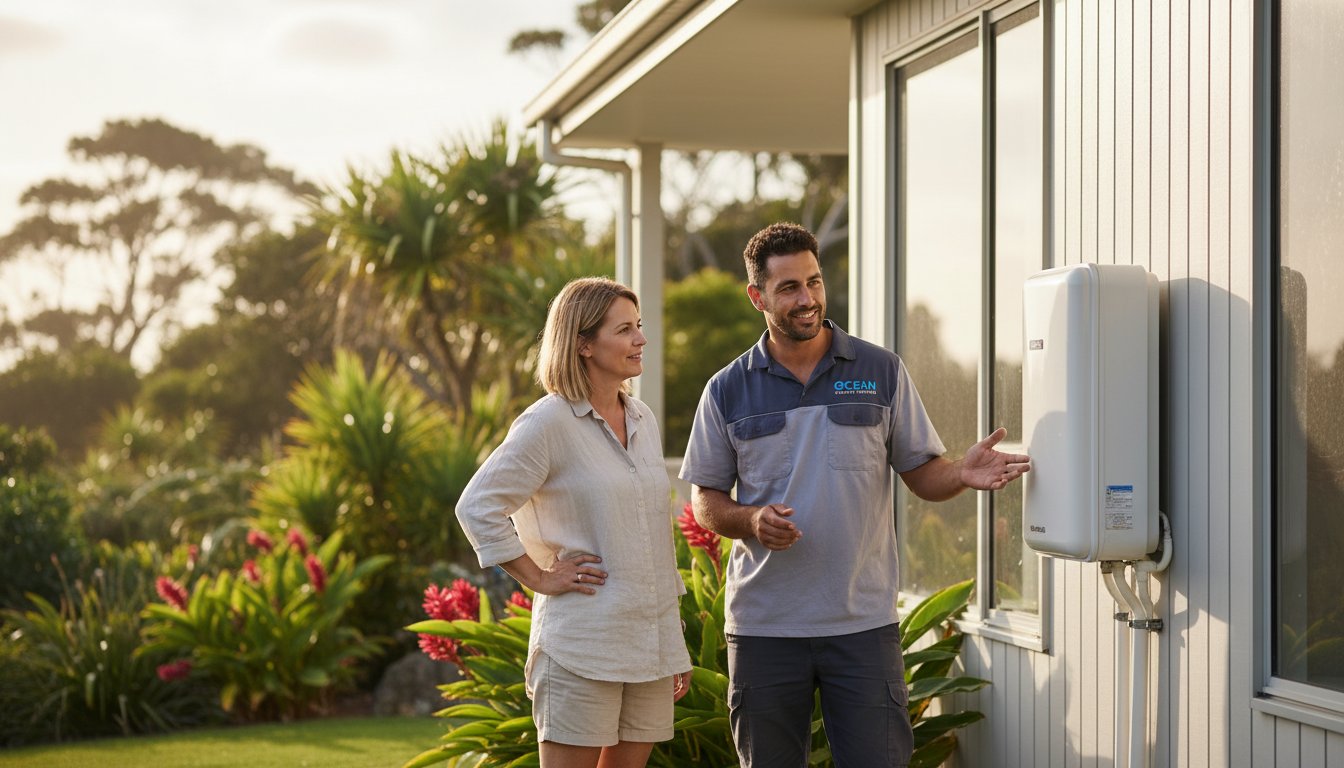
The "unlimited hot water" promise of instantaneous units is a significant drawcard. However, these systems require a high volume of energy in a very short window. This often means the existing gas lines in older homes aren't large enough to support the unit's burner. Professional hot water system services must include a thorough assessment of your pipework to ensure safety and performance. Our approach to gas fitting involves checking the megajoule (MJ) rating of the new unit against your current meter and pipe diameter. We also recommend installing digital temperature controllers. These allow you to set a precise limit, such as 42 degrees for a children's bathroom, preventing accidental scalding while maximising efficiency.
Storage Systems: Reliability and Capacity
Storage systems remain a reliable choice for homes where multiple taps are used at once. Unlike continuous flow units, which can sometimes experience a drop in pressure when a second shower is turned on, a storage tank provides a consistent head of pressure. For those planning new home plumbing, you have the choice between glass-lined enamel tanks or stainless steel. Enamel tanks are typically more affordable upfront but require a sacrificial anode that must be replaced every five years. Stainless steel tanks are more expensive but offer superior resistance to corrosion, which is a major benefit in our humid environment. Our hot water system services prioritise these durable materials to ensure your investment lasts as long as possible.
Northern Rivers Selection Guide: Coastal Air and Compliance
Living in the Northern Rivers means your home is exposed to a beautiful but challenging environment. The proximity to the ocean dictates which materials will survive and which will fail within a few years. When we provide hot water system services in this region, we have to account for more than just energy ratings. Salt air is a relentless corrosive agent that can penetrate the outer casings of hot water units, causing premature oxidation of the tank and electrical components. For residents in Ballina or Byron Bay, the local climate is a primary factor in the total cost of ownership.
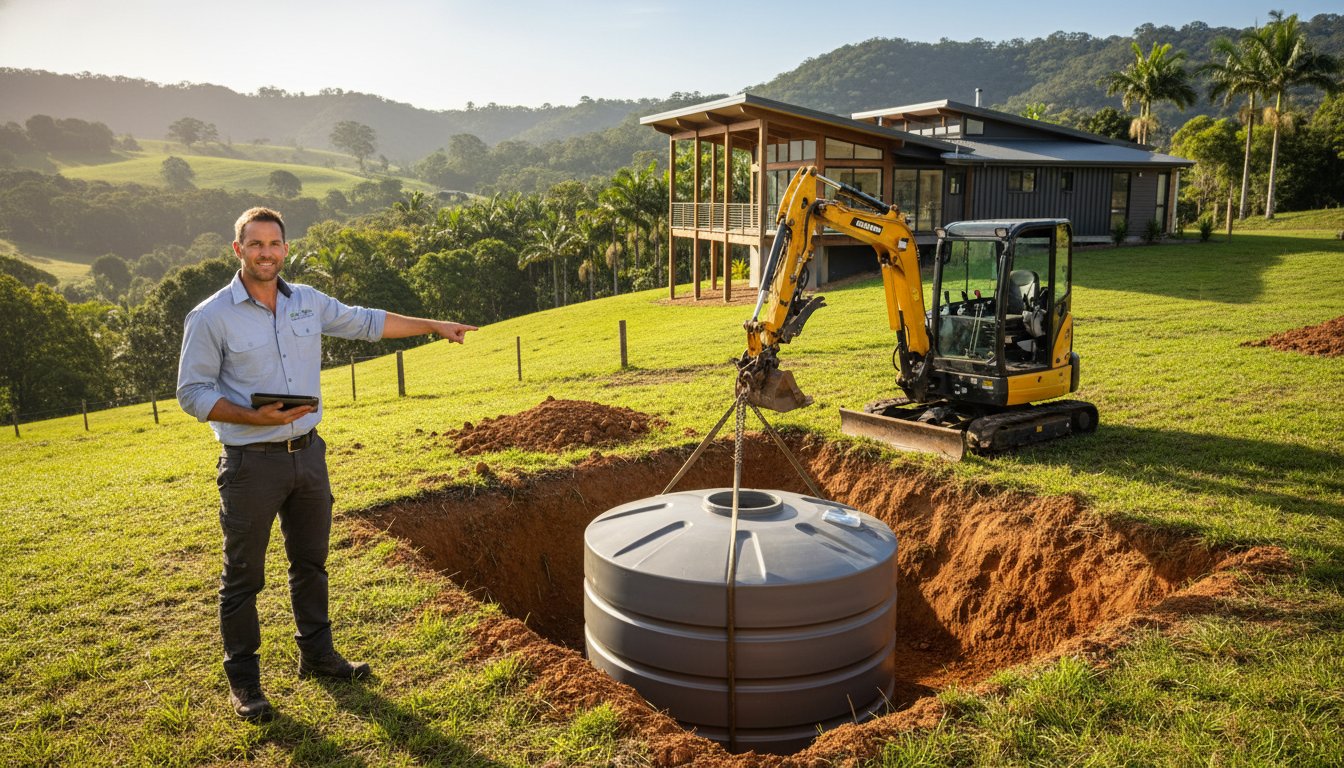
Compliance with NSW plumbing regulations and the AS/NZS 3500.4:2021 standard is not just a legal requirement; it is a safety essential. These standards ensure that your system is installed with the correct valves and drainage to prevent property damage and personal injury. If you are on a rural property, managing the discharge from your unit is critical, particularly regarding your septic tank installation clarence valley, as excessive hot water runoff can disrupt the delicate bacterial balance of your system.
Coastal Durability Factors
Stainless steel tanks are almost always worth the extra investment for coastal properties. While a standard vitreous enamel tank relies on a sacrificial anode to prevent rust, salt air accelerates this process significantly. In a town like Yamba, a standard unit might only last seven years before the tank fails, whereas the same unit could last 12 years inland in Grafton. Stainless steel removes the need for an anode and offers far superior resistance to the humid, salty conditions. We also recommend protecting external units with appropriate covers or positioning them in sheltered areas to mitigate damage from high winds and storm activity.
Compliance and Safety Standards
Safety is our priority during every installation. We strictly adhere to the requirement for tempering valves or Thermostatic Mixing Valves (TMV) to prevent scalding. These valves ensure that water is delivered to your taps at a maximum of 50 degrees Celsius, even though the water inside the tank must be stored at 60 degrees to kill harmful bacteria like Legionella. Indoor installations also require safe trays and dedicated drainage lines to prevent a minor leak from becoming a major flood. Using a licensed local plumber for your hot water system services ensures that these safety measures are met, which is often a prerequisite for your home insurance validity.
If you are unsure whether your current unit meets the 2026 safety standards, you can request a compliance audit from our team. We provide a matter-of-fact assessment of your system's health and safety features without any sales pressure.
The Graywater Approach: Transparency in Hot Water Services
Many plumbing companies treat their pricing like a trade secret. We believe that a reliable partnership starts with an honest conversation about costs. Our hot water system services are built on a foundation of radical transparency. We don't believe in "hidden" margins or inflated unit prices that make a bill impossible to decipher. Instead, we use a straightforward billing model that allows you to see exactly what you're paying for. This approach de-escalates the stress of home maintenance by replacing uncertainty with clear, factual information.
We operate on an "Hourly Labour and Material Markup" structure. This means the price you pay for your new hot water unit is the actual cost we pay, with a small, disclosed markup for handling and procurement. You then pay for the actual hours our tradespeople spend on your site. This ensures you aren't subsidising someone else's complex job through a flat-rate "standard" installation fee. It's a fair system that prioritises the quality of the work over the speed of the sale, ensuring every connection is tested and every valve is calibrated correctly.
Living in Northern NSW means preparing for intense weather events. We often integrate our hot water checks with roof & gutter repairs to ensure your entire home is ready for storm season. A leaking roof or blocked gutter can lead to electrical failures in external hot water units or flood the area surrounding your tank. By taking a holistic approach to maintenance plumbing, we identify these risks before they become emergency call-outs.
Radical Pricing Transparency
Knowing exactly what you pay for labour versus parts gives you the confidence to make informed decisions about your home. Fair billing leads to better maintenance outcomes because it encourages proactive care rather than waiting for a total system failure. We provide no-nonsense advice; if your unit only needs a new valve rather than a full replacement, that's exactly what we'll recommend. This ethical approach has been the cornerstone of our business since we began serving the community. We value long-term relationships over one-off high-margin jobs, which is why our customers trust us with their hot water system services year after year.
Local Experts You Can Trust
Our team has been serving Yamba, Grafton, Ballina, and Byron Bay with a commitment to high-quality craftsmanship and clean, organised worksites. We understand that a plumbing visit can be disruptive, so we ensure our work areas are left tidy and your home is respected. Whether it's a scheduled service or 24/7 emergency support during a crisis, we're your dependable local partners. We take pride in our deep roots in the local community and our specialised knowledge of regional compliance standards.
Organise a hot water system audit with Graywater Plumbing today to ensure your system is efficient, compliant, and ready for the years ahead.
Secure Reliable Hot Water for Your Northern NSW Home
Choosing the right hot water solution in 2026 involves more than just picking a brand. It requires a clear understanding of how regional factors, such as coastal salt air and local compliance standards, impact your unit's longevity. By moving away from reactive emergency repairs and embracing a proactive maintenance schedule, you can protect your home from water damage and keep your energy bills manageable. Whether you're upgrading to an efficient heat pump or maintaining an existing gas unit, the right technical advice ensures your family stays comfortable year-round.
Our team of licensed gas fitters and plumbers is dedicated to providing honest, high-quality hot water system services across the Northern Rivers. We eliminate the guesswork of traditional quotes through our upfront hourly labour and material markup model. If you face an urgent failure, our 24/7 emergency response ensures you aren't left in the cold. Book a transparent hot water service with our local team today to secure a reliable and efficient system for your home. We look forward to helping you make a practical, cost-effective choice for your household.
Frequently Asked Questions
Is it cheaper to repair or replace a 10-year-old hot water system?
It's generally more cost-effective to replace a 10-year-old hot water system rather than attempting major repairs. Most storage tanks have an expected service life of 10 to 12 years. Spending money on a new heating element or thermostat for a tank that is nearing the end of its structural integrity is often a poor long-term investment. Replacing the unit allows you to upgrade to more efficient 2026 technology and avoid the risk of a catastrophic burst.
How much does a typical hot water system service cost in NSW?
The cost of hot water system services in NSW varies depending on the complexity of the unit and the specific maintenance required. We utilise an hourly labour and material markup model to ensure you only pay for the actual work performed on your site. This transparent structure prevents the hidden margins often found in flat-rate quotes. Regular maintenance, such as valve testing and anode replacement, is a minor expense that protects you from the A$1,000 to A$3,500 cost of a full emergency replacement.
Can I swap from an electric storage tank to a gas continuous flow unit?
You can certainly swap from an electric storage tank to a gas continuous flow unit, provided your property has access to natural gas or LPG. This transition requires a licensed gas fitter to install new pipework and ensure the gas meter can handle the higher megajoule (MJ) requirements. Continuous flow units are wall-mounted and save significant space, making them a popular choice for modern renovations in Grafton and the surrounding Northern Rivers region.
What happens if my hot water system starts leaking from the bottom?
A leak from the bottom of a storage tank usually indicates that the internal cylinder has corroded and failed. Unlike a leaking valve, which can be easily replaced, a breached tank cannot be repaired and requires a full unit replacement. If you notice water pooling at the base, you should turn off the water supply and the power or gas to the unit immediately to prevent further property damage or electrical hazards.
How long do heat pump hot water systems last in coastal areas like Ballina?
Heat pump hot water systems typically last between 10 and 15 years in coastal areas like Ballina, provided they are maintained correctly. The salt air can accelerate corrosion on external fans and compressors; therefore, we recommend units with high-quality protective coatings or stainless steel components. Regular hot water system services are essential in these environments to clear salt buildup and ensure the electrical components remain sealed and functional against the humid conditions.
Do I need a council permit to install a new hot water system?
You generally don't need a council permit for a standard like-for-like hot water replacement in NSW. However, if the installation involves significant changes to the plumbing footprint or if you are in a rural area with a septic system, specific local regulations may apply. For example, the Clarence Valley Council has guidelines for managing hot water discharge to protect the bacterial health of septic tanks. We ensure all our work complies with the AS/NZS 3500.4:2021 standards.
What is the most energy-efficient hot water system available in 2026?
Heat pump technology remains the most energy-efficient option for most Australian households in 2026. These units use ambient air to heat water, consuming roughly 60% to 75% less electricity than a standard electric storage tank. While solar thermal systems are also highly efficient, heat pumps offer more consistent performance during the overcast days we occasionally experience in the Northern Rivers. They also qualify for the highest combined Federal and NSW state rebates currently available.
Why is my hot water pressure lower than my cold water pressure?
Lower pressure in your hot water lines is often caused by a partially blocked tempering valve or a dirty inlet strainer. These components are designed to protect your family from scalding and keep debris out of the tank, but they can become restricted over time. In older Grafton homes, the issue might also stem from corroded galvanised steel pipes that have narrowed internally. A quick system audit can usually identify the specific restriction and restore your shower's performance.