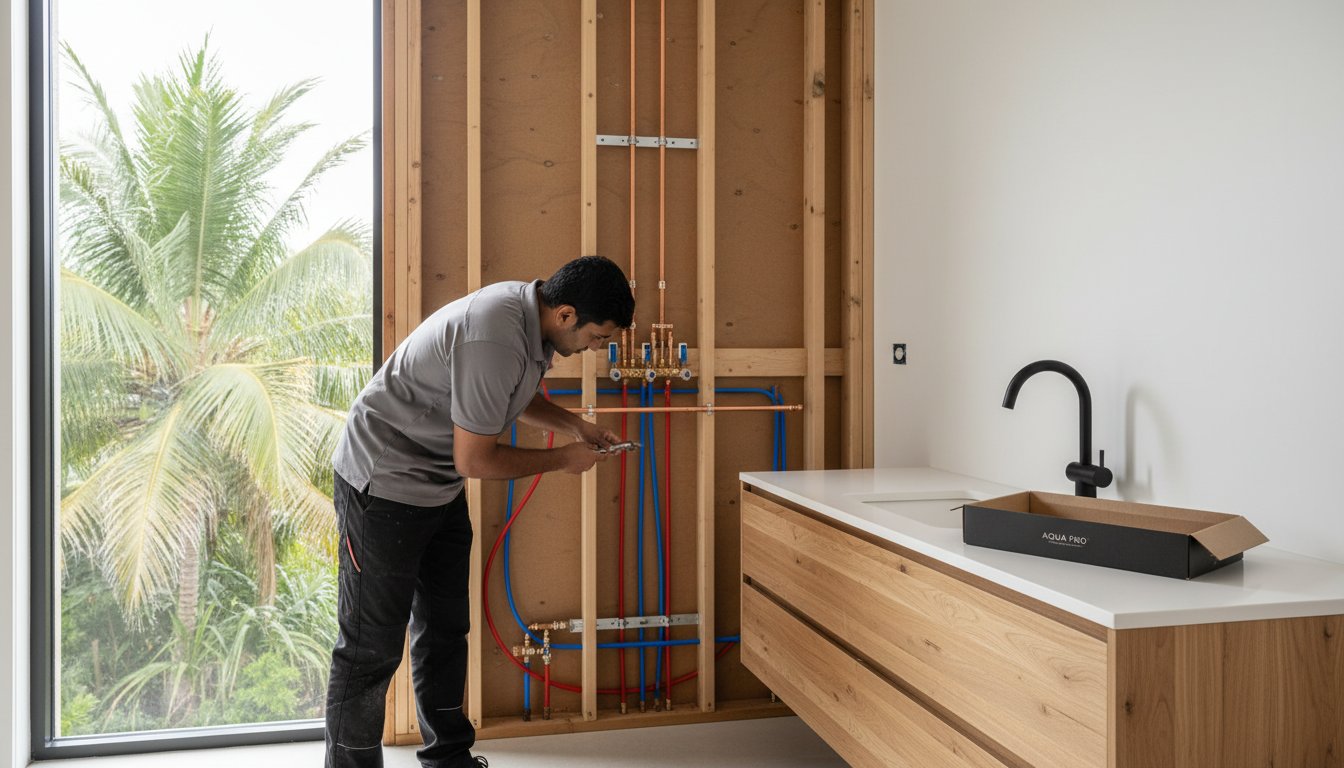
Your choice of premium stone or a designer vanity won't matter if the 40-year-old copper pipes behind the wall fail six months after the grout dries. While many homeowners start bathroom renovations with a Pinterest board, the real success of a project in Northern NSW depends on the infrastructure hidden behind the splashback. It's a common frustration to see a beautiful space undermined by poor water pressure or cheap fixtures that corrode in our salty coastal air within 18 months of installation.
We know you want a stunning result without the hidden costs or the headache of unreliable trades. You likely believe that a renovation should be a transparent process where the billing is clear and the workmanship meets every local council regulation. By focusing on a plumbing-first strategy, you can avoid the structural issues that often plague older Northern Rivers properties.
This guide shows you how to plan a stress-free renovation by prioritising plumbing integrity and coastal compliance. We'll preview the essential steps for 2026, from managing site-specific drainage to ensuring your project stays on track through a fair hourly labour and material markup model.
Key Takeaways
- Understand how to set clear goals for your project and why the unique coastal conditions of Yamba, Ballina, and Byron Bay require a specialised planning approach.
- Learn how to accurately measure your space and decide whether to retain or relocate existing plumbing points to optimise your new layout.
- Discover why salt air ruins standard tapware and how choosing PVD coatings over electroplating ensures your fixtures survive the Northern Rivers climate.
- Navigate the complexities of local council compliance, including Section 68 approvals and adhering to Australian Standard AS3500 for all bathroom renovations.
- See how a transparent "Hourly Labour and Material Markup" billing model provides a fair, straight-shooting alternative to traditional fixed-price quotes.
Starting Your Bathroom Renovation in Northern NSW: Why Planning is Key
A successful bathroom renovation in Northern NSW doesn't start with choosing tile colours. It starts with a clear plan and an honest assessment of your existing pipes. Whether you're updating a 1980s brick home in Ballina or a coastal cottage in Yamba, the local environment dictates your approach. Salt air in Byron Bay impacts the longevity of certain tapware finishes, while older regional homes often hide original galvanised piping that's reached the end of its 50-year lifespan. You must decide early if you're performing a cosmetic refresh or a full structural overhaul. A refresh might involve swapping a vanity and toilet in their existing spots. A structural renovation involves moving Plumbing systems to create a more functional layout, which requires deeper technical expertise.
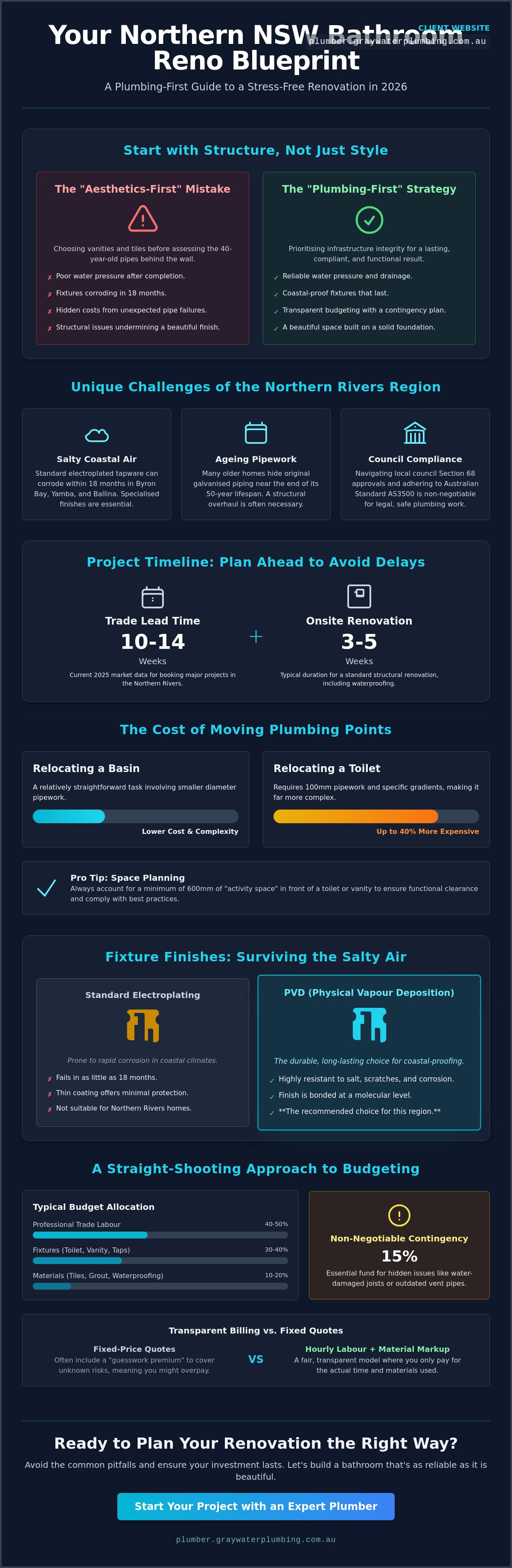
Current market data from 2025 indicates that tradespeople in the Northern Rivers region maintain a 10 to 14-week lead time for major projects. Planning your start date around this availability is essential to avoid a half-finished bathroom sitting idle for months. A standard structural renovation typically requires 3 to 5 weeks of onsite work. Rushing this timeline often leads to compromised waterproofing or poor drainage alignment.
Setting Your Renovation Goals
Identify the primary driver behind your project. Are you looking for a 15% increase in resale value, or are you creating a personal sanctuary? Many families in the Northern Rivers are now prioritising "ageing-in-place" designs. This includes walk-in showers without hobs and reinforced walls for future grab rails. Evaluate your current pain points. If your shower takes 60 seconds to get hot or the floor waste gurgles when the toilet flushes, your bathroom renovations must address these functional failures before you worry about the aesthetics. We help you balance your wish list with the physical reality of your home's footprint.
Budgeting for Transparency
We advocate for a straight-shooting approach to costs. A realistic budget allocates funds across three main areas: fixtures, materials like tiles and grout, and professional trade labour. We recommend a 15% contingency fund for every project. This isn't a suggestion; it's a necessity for covering hidden issues like water-damaged floor joists or outdated vent pipes found once the walls are stripped. Our billing model relies on hourly labour and material markup transparency. This ensures you aren't paying a "guesswork premium" often found in fixed-price quotes. Clear communication about costs prevents budget blowouts and keeps bathroom renovations on track from the first demolition day to the final fit-off.
How to Organise Your Bathroom Layout: A Step-by-Step Guide
Successful bathroom renovations in Northern NSW start with a logic-driven plan that prioritises pipework over paint colours. Before you select your tiles, you must decide if you're keeping existing plumbing points or moving them. Relocating a shower or toilet adds complexity and cost, so it's vital to consult a plumber early to verify if your dream layout is hydraulically feasible. We often see homeowners fall in love with a design that simply won't work because of the home's existing slab or drainage levels.
Accurate measurement is your best tool during the planning phase. You need to account for door swings, drawer clearances, and the 600mm of "activity space" required in front of a toilet or vanity. When you're sketching the floor plan, always prioritise the "wet zone" (the shower and bath) for optimal drainage flow. Keeping these high-use areas close to the main waste lines ensures gravity works in your favour and reduces the risk of future blockages. You should also review the NSW licensing requirements to confirm that your project meets state standards for structural plumbing work.
Step 1: Map Your Existing Plumbing
Locate your main stack and floor wastes before you commit to a new toilet position. Moving a toilet is usually 40% more expensive than moving a basin because it requires 100mm pipework and specific gradients that aren't always available in existing floors. The direction and spacing of your floor joists dictate whether pipes can be hidden within the floor cavity or if they require a new, visible bulkhead. Understanding these constraints early allows for a more transparent budget and prevents "surprises" once the demolition starts.
Step 2: Optimising Small Bathroom Spaces
For compact ensuites or older Northern Rivers homes, every centimetre counts. Using wall-hung vanities and toilets creates an illusion of floor space by keeping the ground clear, making the room feel larger and easier to clean. When selecting a shower screen, a fixed glass panel is often more practical than a pivot door that might strike the vanity or towel rail in a tight layout. Many local homeowners are now integrating new home plumbing principles into their renovations to ensure their drainage systems can handle modern high-flow showerheads and deep soaking tubs.
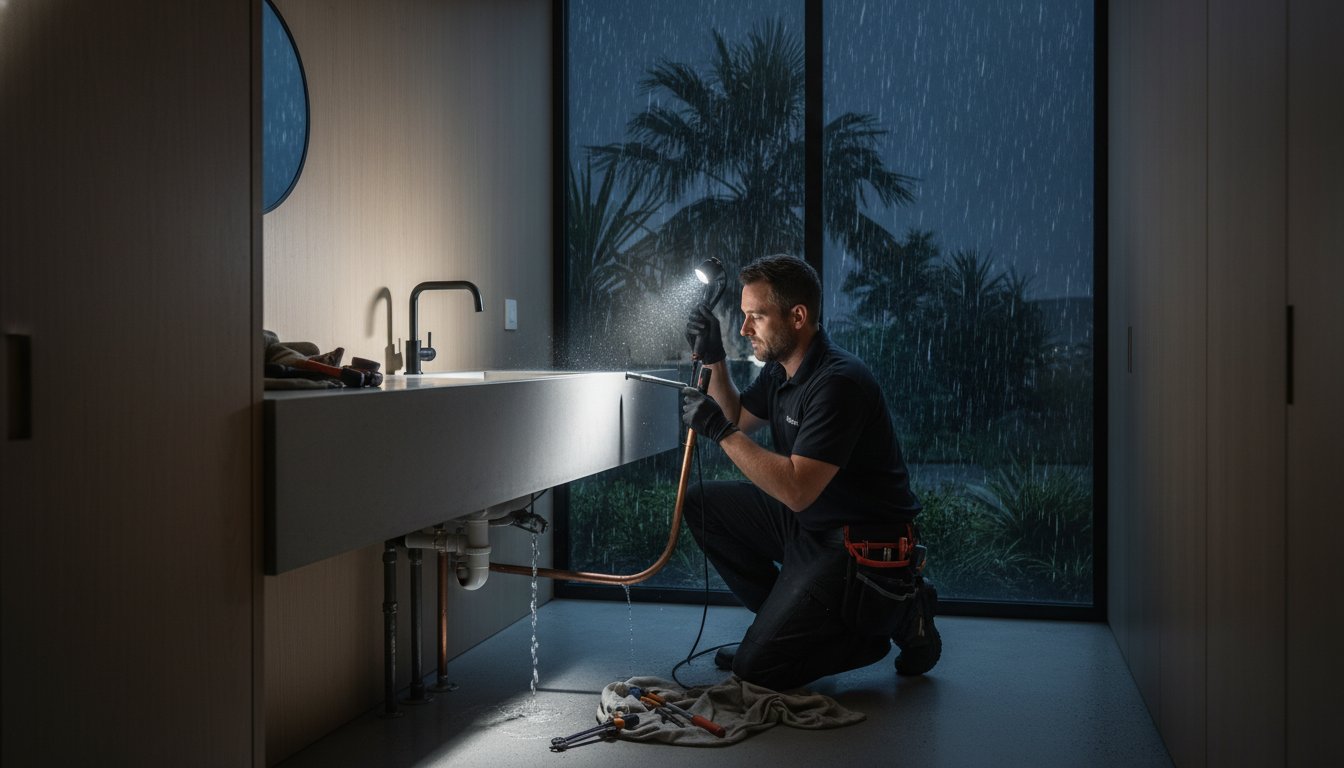
If you're unsure how your current pipework will handle a new configuration, arranging a professional site inspection is the most reliable way to avoid costly mid-project changes. We focus on providing a clear assessment of what's possible under your floorboards so you can renovate with confidence.
Selecting Fixtures for the Northern Rivers Coastal Climate
Living in coastal hubs like Byron Bay or Ballina means your hardware faces a constant battle against salt-laden air. Cheap tapware often fails within 18 to 24 months because of "pitting," where salt eats through thin surface coatings. For long-term reliability, we recommend PVD (Physical Vapour Deposition) finishes over standard electroplating. PVD is a vacuum-sealing process that produces a harder, more corrosion-resistant surface. It's the only sensible choice for bathroom renovations near the ocean.
Under the Water Efficiency Labelling and Standards (WELS) scheme, NSW homeowners must install fixtures that meet specific efficiency tiers. Most modern mixers require a minimum 3-star or 4-star rating to comply with local regulations. However, you must match these to your local water pressure. In parts of the Northern Rivers, older gravity-fed systems might struggle with high-efficiency "restrictor" showerheads. We check your static pressure before you buy to ensure your new rain shower actually performs as expected; there's nothing worse than a weak dribble in a brand-new bathroom.
Tapware and Finish Durability
Brass-based fixtures are the industry standard for a reason. They resist corrosion far better than zinc-alloy alternatives, which tend to become brittle and leak in humid coastal zones. When it comes to finishes, matte black looks modern but often shows white limescale spots from local water supplies. Brushed gold is popular in 2026, provided it's a PVD finish. For the lowest maintenance, classic chrome remains the easiest to keep clean and free from mould growth in our high-humidity summers.
Choosing the Right Basin and Toilet
Rimless toilets have become the gold standard for hygiene. They eliminate the hidden channel where bacteria and grime accumulate, making them much easier to sanitise. If you're looking at stone basins, remember they're significantly heavier than ceramic. You'll need to ensure your wall-hung vanity is rated for the extra weight. Finally, ensure your fixture installation aligns with your hot water system capacity. A high-flow "monsoon" showerhead can drain a standard 160-litre electric tank in minutes, so we often suggest upgrading to a continuous flow gas system or a larger heat pump during bathroom renovations to keep up with demand.
Navigating Compliance and Council Requirements in Northern NSW
Successful bathroom renovations in Northern NSW rely on more than just aesthetic choices. You must adhere to the Local Government Act 1993, specifically Section 68. This regulation requires council approval before you begin any work that connects to or alters the council’s water, sewerage, or stormwater mains. Failing to secure this approval can lead to heavy fines and may complicate the sale of your property in the future. All plumbing work must strictly follow Australian Standard AS3500. This code ensures that your pipes, venting, and drainage are installed to a high technical standard that prevents cross-contamination and system failure.
If you are planning bathroom renovations in rural parts of the Clarence Valley, septic tank systems require extra attention. Any modification to your internal plumbing that increases the load on an On-Site Sewage Management System (OSMS) typically triggers a council inspection. You must ensure your existing septic system can handle the flow from new high-pressure rain heads or deep soaking tubs. For those on tank or bore water, professional analysis from Sunshine Coast Water Testing ensures your supply is safe and fixture-friendly. We focus on maintenance plumbing and regional compliance to help you avoid the common pitfalls of rural upgrades.
Plumbing Standards and Certification
Every licensed plumber must issue a Compliance Certificate for work valued over a specific threshold or for any job involving the installation of a regulated device. This document is your legal safeguard. It confirms that the work meets all NSW Fair Trading requirements and Australian Standards. Using non-licensed labour is a significant risk that often leads to catastrophic failures. Most importantly, if you cannot produce a Compliance Certificate, your home insurance provider will likely reject any claims related to water damage or structural rot. Our approach is built on professional transparency, providing you with all necessary documentation alongside a clear breakdown of hourly labour and material markup.
Waterproofing and Drainage Compliance
Waterproofing is the most critical stage of a wet area fit-out. Under AS3740, the waterproofing membrane must be applied by a qualified professional who provides a certificate of compliance for your warranty. A non-negotiable step in our process is the 24-hour flood test. We plug the shower waste and fill the base with water to confirm the membrane is 100% watertight before a single tile is laid. This prevents the slow, hidden leaks that rot floor joists over time.
Correct floor grading is equally vital. In NSW, a shower area typically requires a 1:60 fall to ensure water reaches the floor waste without pooling. We also ensure backflow prevention devices are installed where required. These valves are a modern necessity to stop contaminated water from being siphoned back into your fresh water supply, protecting your family’s health and the local community's water integrity.
Ensure your renovation meets every local regulation by partnering with a licensed Northern NSW plumber today.
Executing Your Reno with Graywater Plumbing’s Straight-Shooting Approach
Executing your bathroom renovations shouldn't feel like a gamble. At Graywater Plumbing, we take a straight-shooting approach to every project across Yamba, Grafton, and the wider Northern Rivers. We don't hide costs behind vague, all-inclusive quotes that often leave homeowners guessing. Instead, we use a transparent Hourly Labour and Material Markup model. This ensures you only pay for the actual time our experts spend on your tools and the fair cost of the materials used. It is a system built on trust, designed to provide fair billing without the stress of hidden margins.
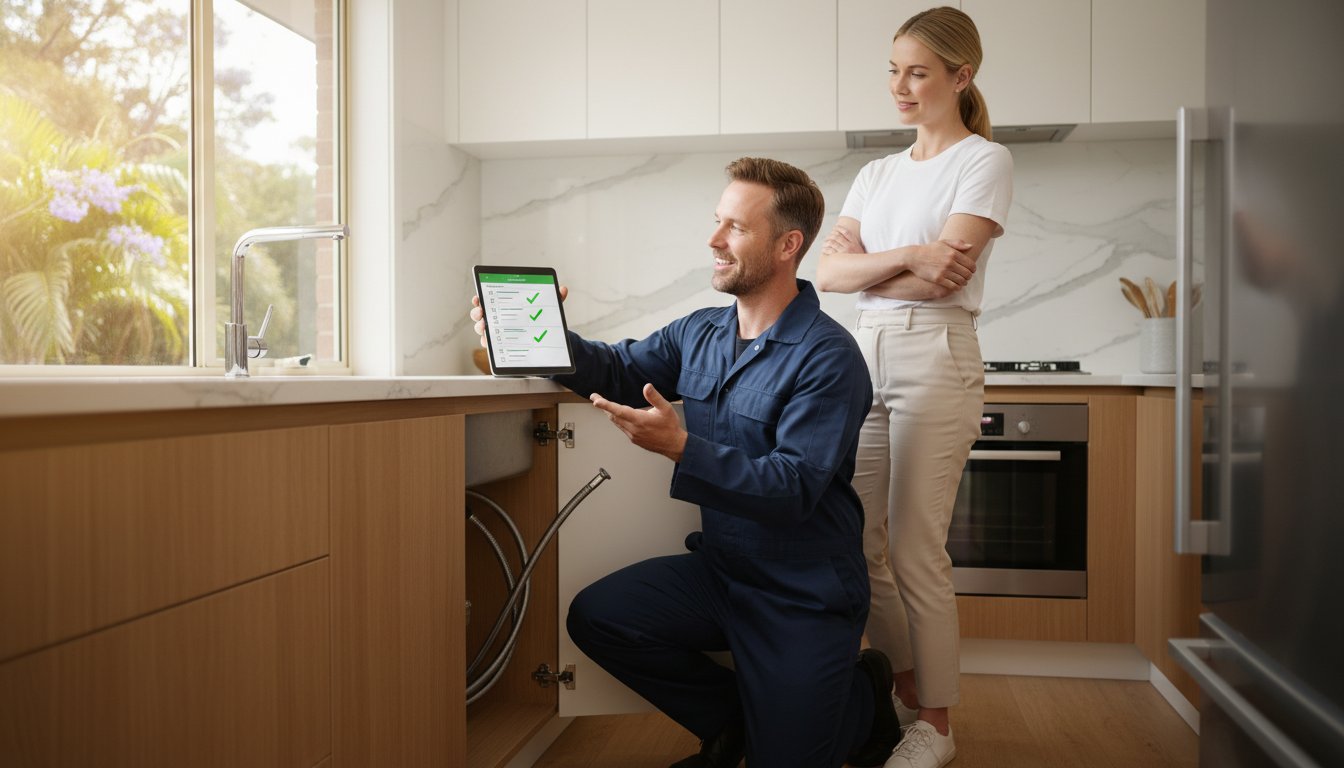
Our process is methodical and predictable. It begins with a comprehensive site assessment where we inspect your existing pipework. We prioritise maintenance plumbing during this phase. By identifying aging valves or potential weak points before the tiles go down, we prevent future leaks that could compromise your new investment. Our team manages the entire plumbing lifecycle, including:
- Initial Site Assessment: Identifying structural needs and drainage requirements.
- Rough-in Stage: Installing high-quality internal pipework and ensuring regional compliance.
- Final Fit-off: Precision installation of your chosen taps, toilets, and showerheads.
We know that a successful renovation requires a team effort. That is why we connect our clients with a trusted network of local Northern Rivers tilers and builders. These are professionals we work with regularly, ensuring a seamless workflow and a clean, organised worksite from start to finish.
The Graywater Difference: Radical Transparency
We believe in radical transparency as the foundation of our business. Because we use an hourly labour model, you won't find inflated margins on fixtures or supplies. You get direct communication with our local experts who understand the specific water pressure and drainage challenges in Grafton and Yamba. We take pride in our craftsmanship and our commitment to leaving every worksite tidy. This honest approach helps us build long-term relationships with homeowners who value integrity over high-pressure sales tactics.
Ready to Start Your Bathroom Transformation?
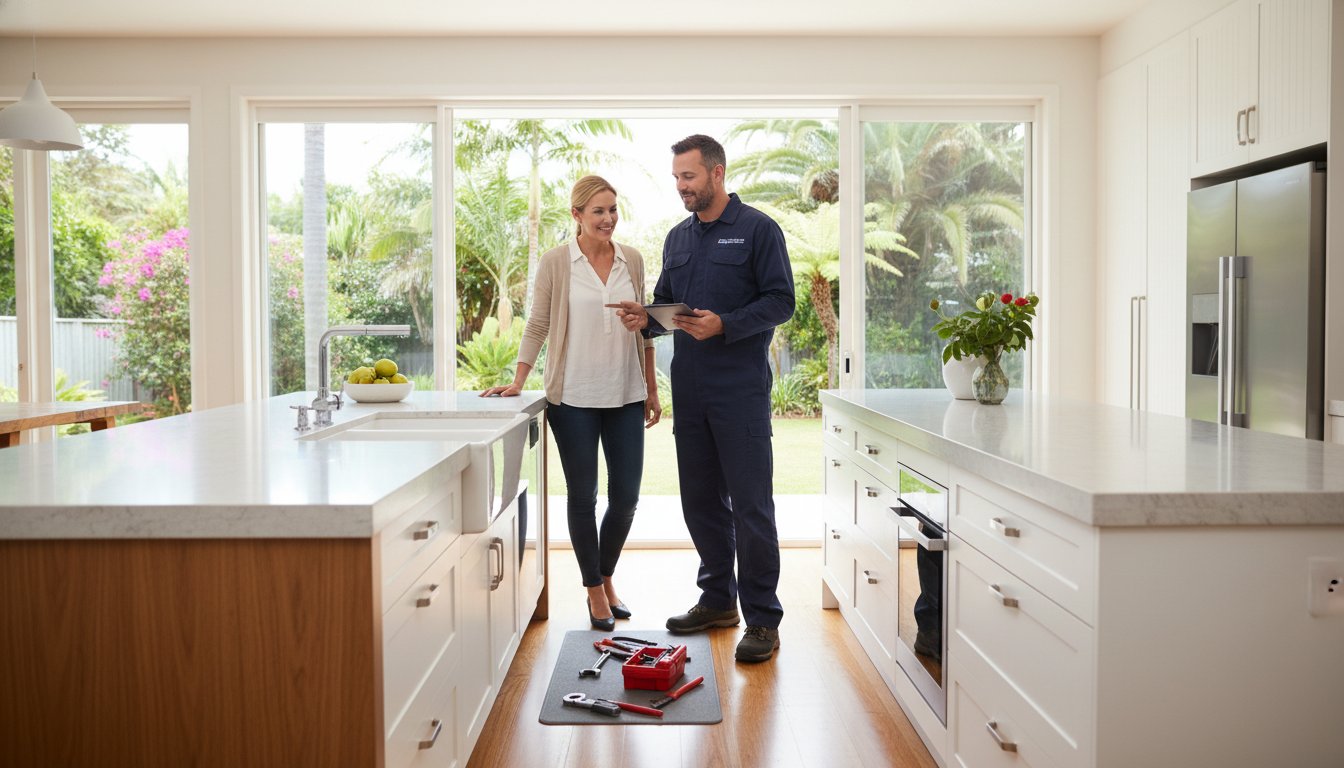
Planning is the key to a smooth project. Before your first consultation, it's helpful to have a basic floor plan or a list of the fixtures you want to install. You can book a professional site audit with us to get a clear technical overview of what's possible in your space. We'll walk you through the plumbing requirements and provide a realistic outlook on the timeline. If you are looking for a reliable partner for your bathroom renovations, get a transparent quote for your bathroom renovation today and experience the Graywater difference.
Start Your Northern NSW Bathroom Project Today
Successful bathroom renovations in the Northern Rivers require a balance of smart layout planning and materials that can handle our specific coastal salt air. By prioritising your plumbing footprint during the initial design phase and selecting fixtures rated for 2026 durability standards, you'll avoid expensive rework down the track. Navigating NSW compliance and local council requirements is also essential for protecting your property's long-term value.
At Graywater Plumbing, we simplify this complex process through our straight-shooting approach. As Licensed NSW Plumbers and Gas Fitters, we specialise in coastal plumbing durability to ensure your new fixtures withstand the local environment. We maintain trust through our transparent hourly labour and material markup billing model; you'll always know exactly what you're paying for without hidden margins or surprises. Our team is ready to provide the technical expertise needed to turn your vision into a practical, high-performing reality.
Take the first step toward a stress-free build. Book a Professional Bathroom Renovation Consultation to discuss your layout and plumbing requirements. We're here to help you get the job done right the first time.
Frequently Asked Questions
How much does a bathroom renovation typically cost in Northern NSW?
The average Australian bathroom renovation costs approximately A$27,000 according to the 2024 HIA Kitchens and Bathrooms Report. In Northern NSW, your final investment depends on whether you're performing a cosmetic refresh or a full structural overhaul. We use a transparent hourly labour and material markup model. This ensures you pay for the actual work performed on your property rather than an inflated fixed-price estimate.
Do I need council approval for a simple bathroom makeover in Ballina?
You generally don't need council approval for cosmetic bathroom renovations in Ballina that keep the existing layout. However, Section 68 of the Local Government Act 1993 requires approval for any substantial changes to water supply or sewerage footprints. We check the Ballina Shire Council Development Control Plan for every project. This ensures all plumbing modifications meet local compliance standards and avoids future legal issues during property sales.
How long will I be without a functioning bathroom during the renovation?
Most homeowners are without a functioning bathroom for 14 to 21 days during a comprehensive project. This timeline accounts for the essential curing periods required for waterproofing membranes and tile adhesives. We provide a detailed schedule before work begins so you can organise alternative facilities. Our methodical approach focuses on completing the plumbing rough-in and fit-off stages efficiently to minimize your household's downtime.
Can I move my toilet to the other side of the bathroom?
You can move your toilet to a different wall, but it requires careful management of the 100mm soil pipe and floor gradients. Relocating a toilet often involves cutting into the concrete slab or modifying floor joists to maintain the mandatory 1:40 drainage fall. This structural work increases the total labour hours for your bathroom renovations. We assess your floor structure early to provide a clear explanation of the technical requirements involved.
Why is waterproofing so important in a bathroom renovation?
Waterproofing is the most vital stage because it prevents structural rot and mould growth that can cost over A$10,000 to repair. In NSW, all wet area tiling must comply with the AS 3740-2021 standard to ensure long-term durability. We apply a high-grade membrane system and perform a 24-hour flood test before tiling starts. This disciplined process protects your home’s framework and ensures your renovation lasts for decades.
What is the best tapware finish for coastal homes in Byron Bay?
PVD (Physical Vapour Deposition) finishes or 316-grade stainless steel are the best choices for Byron Bay homes to resist salt air corrosion. Standard electroplated finishes often pit or peel within 18 months when exposed to the Northern NSW marine environment. We recommend PVD brassware because the coating is molecularly bonded to the fixture. This creates a surface that's virtually scratch-proof and highly resistant to the harsh coastal climate.
Should I hire a project manager or deal with individual tradespeople?
Hiring a lead contractor or project manager typically reduces the total construction time by 15 percent through better trade coordination. Managing six different trades yourself requires significant time and a deep understanding of the building sequence. We often act as the lead trade for plumbing-heavy projects. We coordinate with trusted local tilers and electricians to ensure the work flows logically from the initial demolition to the final fit-off.
How can I improve the water pressure in my renovated shower?
You can improve shower pressure by replacing old 15mm galvanised pipes with 20mm copper or PEX lines during the wall-out stage. Many older Northern NSW properties have restricted flow due to internal pipe corrosion or outdated pressure-limiting valves. We measure your static water pressure at the main meter first. If the pressure is low, we can install a booster pump or high-flow showerheads to ensure your new bathroom provides a premium experience.