Last Tuesday, a homeowner named Sarah in Mullumbimby woke up to the rhythmic drip of water hitting her bedroom floor after a typical 80mm Northern Rivers downpour. It is a stressful situation that often starts with a single popped screw or a small patch of rust accelerated by our salty coastal air. When it comes to fixing a metal roof in our region, acting quickly is the only way to prevent a minor nuisance from becoming a major structural headache.
You likely understand that a small leak never stays small for long in our humid climate. This guide provides a practical approach to identifying and repairing roof damage, helping you understand exactly what is happening above your ceiling before the next storm front arrives. We will explain how to assess common regional issues, determine if you need a patch or a replacement, and show you how a transparent hourly labour and material markup model ensures you receive high-quality work at a fair price.
Key Takeaways
- Understand how the unique Northern Rivers climate, from coastal salt air to intense summer storms, accelerates oxidation and compromises fastener integrity.
- Identify the critical roles of flashing and sealants in preventing leaks caused by the natural thermal expansion of metal sheets.
- Learn the safety risks and NSW Fair Trading regulations to determine when fixing a metal roof requires a licensed professional.
- Master simple maintenance steps, such as using non-corrosive cleaning solutions and replacing perished fasteners with regionally compliant hardware.
- Discover Graywater Plumbing’s transparent "Hourly Labour and Material Markup" billing model for reliable, proactive roof care in Yamba and beyond.
Common Metal Roof Issues in the Northern Rivers Region
Metal roofs in Northern NSW face a unique set of environmental pressures. Between the humid subtropics and the Pacific coastline, the local climate can be aggressive on building materials. Understanding the Anatomy of a Metal Roof is the first step in identifying whether you're looking at a minor maintenance task or a major structural failure. While modern coatings are resilient, the combination of high humidity and salt air in towns like Ballina creates a catalyst for rapid oxidation. We often see homeowners confuse surface-level aesthetic wear with "red rust," which indicates a total loss of structural integrity in the steel sheet.
The process of fixing a metal roof starts with a clear assessment of these regional factors. In our experience, preventative maintenance is always more cost-effective than reactive repairs after a storm. We focus on identifying small vulnerabilities before they turn into internal ceiling damage or compromised timber battens.
The Coastal Factor: Salt Spray and Corrosion
If your home is located within 1km of the ocean, your roof is in a high-corrosion zone. Salt spray accumulates on metal surfaces and traps moisture, which accelerates the breakdown of protective layers on older galvanised steel sheets. We regularly inspect older holiday homes in Yamba where "crevice corrosion" has taken hold. This occurs in the overlaps between sheets where salt stays trapped and damp, eating through the metal from the underside where it's hidden from view.
- Tea Staining: This is a brown surface discolouration that looks like rust but doesn't compromise the metal. It's common on roof flashings and usually requires a specialised cleaning and coating check.
- Red Rust: This is deep-seated corrosion. If you can see the metal flaking or bubbling, the protective zinc or aluminium-zinc layer has failed.
- Coating Failure: Older roofs may show "chalking," where the paint finish turns to a fine powder, leaving the raw metal exposed to the elements.
Storm Damage and Debris Accumulation
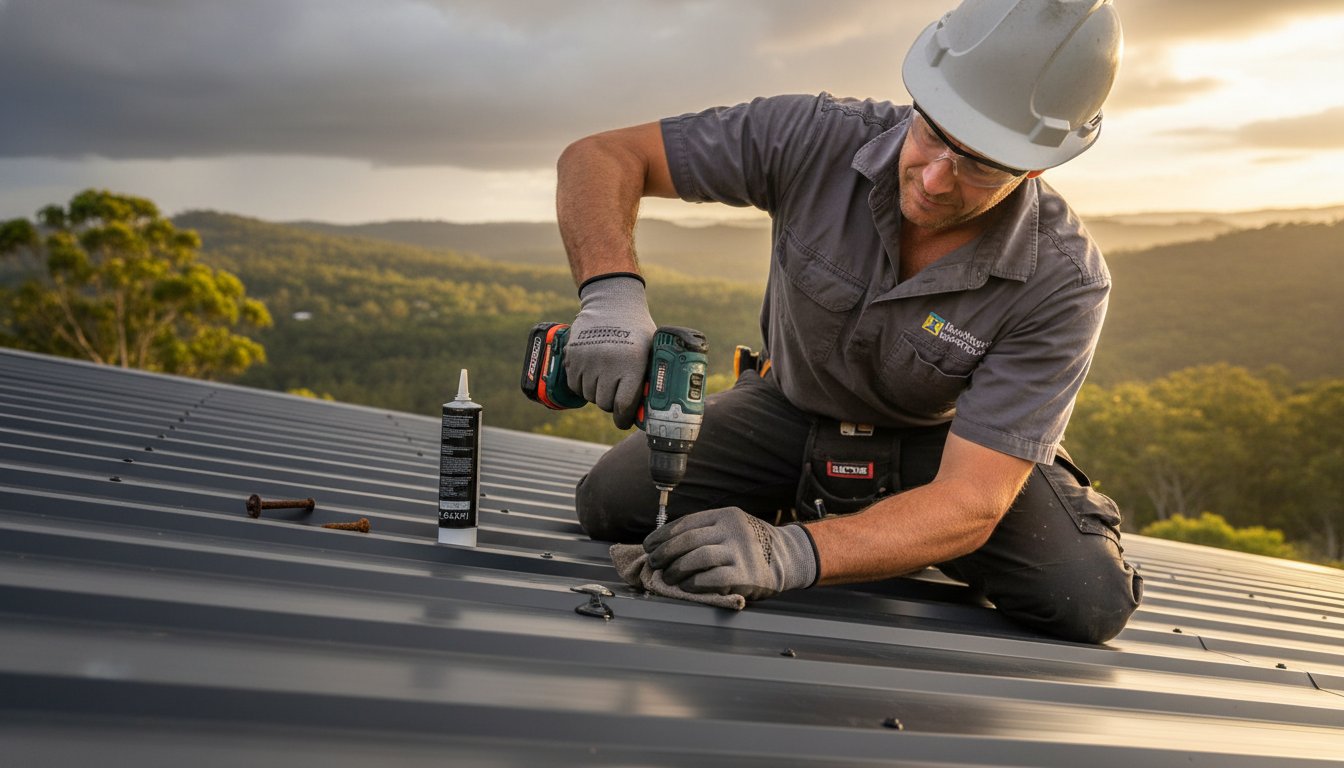
In hinterland areas like Bangalow, the primary threat often comes from above. Falling gum tree branches during summer storms can dent metal skins, creating small pools where water sits. These dents often lead to premature corrosion. However, the most common entry point for storm-driven rain isn't a hole in the sheet; it's a "popped" screw. Over time, the thermal expansion and contraction of the metal causes fasteners to back out, breaking the neoprene seal. When fixing a metal roof after a heavy Northern Rivers downpour, we often find that simply replacing aged fasteners with modern, cyclonic-rated screws resolves the leak.
Blocked gutters are another silent killer for local roofs. When gutters fill with debris from nearby trees, water backs up under the edge of the metal sheets. This constant moisture contact leads to "edge rust," which can rot out the ends of your roofing sheets while the rest of the roof looks perfectly fine. Regular gutter clearing is the most basic form of maintenance plumbing we recommend to extend the life of your asset.
Anatomy of a Metal Roof: Why Leaks Occur
A metal roof isn't a single, impenetrable shield. It is a complex assembly of overlapping sheets, flashings, and fasteners designed to shed water. When you're fixing a metal roof, you aren't usually repairing the steel itself; you're addressing a failure in the connections. In Northern NSW, the primary driver of these failures is thermal expansion. Metal sheets expand and contract significantly as they heat up under the subtropical sun and cool down at night. A 10-metre run of roofing can shift by as much as 10mm daily. This constant movement puts immense pressure on every screw and seam, eventually causing the "groaning" sounds many homeowners hear during the heat of the day.
Modern NSW homes rely on "sarking" as a vital second line of defence. This reflective foil laminate sits beneath the battens and serves two purposes. It acts as a radiant heat barrier and, more importantly, manages condensation. In high-humidity areas like Lismore or Ballina, moisture often forms on the underside of cold metal sheets. Sarking directs this liquid safely into the guttering. Without it, that moisture drips directly onto your insulation and ceiling plaster. Regarding materials, the choice between traditional galvanised steel and Colorbond® is significant. In coastal zones, standard galvanised steel can show signs of red rust within 10 to 12 years. Colorbond® Ultra is specifically engineered for these environments, often providing a service life exceeding 25 years even within 200 metres of the ocean.
Fasteners and Washers: The Weakest Link
The EPDM rubber washers under your roof screws are the most common point of failure. In the Byron Bay region, the UV index regularly hits 12 or higher during summer. This intense radiation causes the rubber to become brittle and crack within a decade. Many leaks are also caused by the "over-tightened screw" trap. If a tradesperson drives a fastener too hard, the washer deforms and creates a small, permanent puddle around the hole. This standing water eventually eats through the protective coating. You don't always need a ladder to find these issues; you can often spot "backed-out" screws using a pair of binoculars from the ground. Look for a visible gap or a shadow between the screw head and the roof sheet.
Flashing and Seams: Where Water Finds a Way
Flashings are the custom-folded pieces of metal that protect the "joins" of your roof, such as ridge capping and valleys. These components manage the bulk of water flow during a typical 50mm-per-hour Northern NSW downpour. Sealant is frequently used during installation, but it's never a permanent fix for a poorly fitted seam. If a joint relies solely on a bead of silicone, it will inevitably leak when thermal expansion pulls the metal apart. Common failure points include the areas around chimneys, skylights, and vent pipes where debris like gum leaves can accumulate. This trapped organic matter holds moisture against the metal, leading to pinhole corrosion. If you've noticed damp patches after a storm, our team provides maintenance plumbing assessments to identify these weak points before they cause structural damage. Fixing a metal roof early is always more cost-effective than a full replacement after years of neglect.

DIY vs. Professional Roof Repairs: When to Call a Plumber
Deciding whether to tackle fixing a metal roof yourself or hiring a professional involves more than just comparing upfront costs. In Northern NSW, our coastal environment and high rainfall mean that a small mistake can lead to rapid structural deterioration. While a DIY approach might seem like a way to save money, it often overlooks the underlying causes of leaks or corrosion. We find that a significant percentage of our emergency calls stem from DIY repairs that failed within 12 months of application.
NSW Fair Trading regulations classify roof plumbing as specialist work. This means that any task involving the installation, renewal, or repair of roof drainage systems must be performed by a licensed professional. Following the AS/NZS 3500 plumbing standards isn't just a suggestion; it's a legal requirement designed to protect the structural integrity of your home. At Graywater Plumbing, we operate on a transparent hourly labour and material markup system, so you know exactly what you're paying for without hidden fees or inflated quotes. For residents in Sydney looking for similar specialized expertise, Streamline Drains & Pipelines offers professional drainage solutions to ensure your property remains compliant and protected.
Safety First on the Roof
The physical risks of roof work are often underestimated. A standard 22-degree pitch is incredibly difficult to navigate without specialised equipment. Standard sneakers are a recipe for disaster on metal surfaces because they lack the high-friction grip required for corrugated iron. Professionals use specific roof boots that provide traction even on steep angles. You also need to be wary of "soft spots." These areas feel spongy underfoot and usually indicate that the internal timber battens have rotted away. Stepping on these spots can cause the metal to buckle or lead to a dangerous fall. We always work with a dedicated spotter on the ground to manage ladder safety and provide immediate assistance if a hazard arises.
When DIY Becomes a Liability
Poorly executed repairs can actually accelerate damage. One of the most frequent issues we see is the use of incompatible sealants. Standard silicone can trap moisture against the steel, which triggers rust from the inside out. We use high-quality neutral cure sealants specifically formulated for Australian conditions. Using the wrong materials can also lead to galvanic corrosion. For example, if you use lead flashing on a Colorbond roof, the two metals will react chemically, causing the roof to fail in as little as 24 months.
Uncertified repairs also carry a heavy financial risk regarding your home insurance. Most Australian insurers will deny a water damage claim if they discover the fault was caused by non-compliant DIY work. Investing in professional maintenance plumbing ensures that your repairs are documented and compliant. This proactive approach prevents a simple patch job from turning into a full roof replacement, which can easily exceed A$20,000 for a standard family home in the Northern Rivers region.
Step-by-Step Guide to Fixing Minor Metal Roof Damage
Before you begin the process of fixing a metal roof, you must prepare the surface correctly. The Northern NSW climate, particularly in coastal areas, often leaves a layer of salt spray and grit that prevents sealants from bonding. Scrub the repair area with a non-corrosive cleaning solution and a stiff brush. If you find surface rust, use a wire brush to remove the oxidation until you see clean metal. You should apply a specialised metal primer within two hours of cleaning to prevent flash rusting from the humidity.
A successful repair involves more than just plugging a hole. It requires a methodical approach to ensure the fix lasts as long as the roof itself. Follow these specific steps for common minor repairs:
- Clean the area thoroughly to remove lichen, salt, and debris.
- Identify the source of the leak, which is often a perished washer or a small puncture.
- Use only neutral-cure silicone to avoid chemical reactions with the metal coating.
- Check the repair during the first heavy rain event to confirm the seal is watertight.
Replacing Perished Roof Screws
Fasteners are the most common failure point on a metal roof. You need to select the correct gauge and length for your specific batten type, typically 12-gauge or 14-gauge screws at lengths of 50mm or 65mm. The EPDM washer should be compressed just enough to create a seal without bulging out past the metal cap; this is the snug but not squashed rule. If the original screw has stripped the timber batten, replace it with an oversized 14-gauge screw to ensure the threads bite into fresh wood.
Patching Small Holes and Punctures
When fixing a metal roof with small punctures, the size of the hole determines your method. Pinholes under 2mm can be managed with a bead of solar-rated, neutral-cure silicone. For larger holes, you must use a "lap patch" made from a matching piece of roof sheeting. Apply a generous bead of silicone to the underside of the patch and press it firmly over the hole. Always ensure the patch is positioned downstream of the water flow so the top edge doesn't catch debris or force water under the seal. This technique prevents "damming" where water pools behind the repair and eventually causes a new leak.
If your roof shows signs of widespread fastener failure or advanced corrosion, it's safer to have a professional inspection. You can book a roof maintenance assessment with Graywater Plumbing to ensure your home remains protected against the next East Coast Low.
Expert Roof and Gutter Maintenance in Yamba and Beyond
Northern Rivers homes face unique coastal and subtropical challenges. At Graywater Plumbing, we take a proactive stance on maintenance to keep your property secure. Whether you're in Yamba, Grafton, Ballina, or Byron Bay, our team provides the technical expertise needed for long-term roof health. We don't believe in waiting for a leak to start. Instead, we focus on preventing damage before it happens, ensuring your home remains a safe haven against the elements.
This commitment to property health should also extend to your home's internal systems; for expert residential water treatment solutions, Your Water Guy provides professional services to ensure your water quality is managed with the same care as your structural maintenance.
Transparent Pricing for Peace of Mind
We've built our reputation on a straight-shooting approach to billing. Many trades use opaque quotes that hide high margins. We do things differently by using an Hourly Labour and Material Markup model. This means you pay for the exact time our plumbers spend on-site and a transparent, fair margin on materials like specialised flashings or Colorbond sheets. You won't see any hidden markups here.
If a job takes two hours, you only pay for those two hours. This level of detail is particularly helpful for strata managers or homeowners filing insurance claims. We provide clear, professional reports that document every repair and maintenance task. This transparency fosters trust and ensures you aren't paying for "buffer" time that never actually happened.
Preparing Your Home for Storm Season
Storm season in Northern NSW brings heavy rain and high-velocity winds. There's a direct link between high-quality new home plumbing and robust roof drainage systems. A pre-season audit is the most effective way to avoid the stress of fixing a metal roof in the middle of a November downpour. Fixing a metal roof properly requires a deep understanding of local wind ratings and salt spray corrosion, which is why a professional check is vital.
During a standard roof and gutter audit, our team focuses on several critical areas:
- Replacing rusted or loose roofing screws and degraded rubber washers.
- Clearing heavy debris from box gutters and downpipes to prevent overflow.
- Inspecting flashings around flues and skylights for sun damage.
- Checking for signs of electrolytic corrosion where different metals meet.
A simple gutter clean or screw replacement costs very little compared to the A$5,000 or more you might face in emergency water damage repairs if a leak occurs. Don't leave your home's safety to chance. Our team is ready to help you organise a professional roof audit today. Contact the experts at Graywater Plumbing to ensure your property is ready for whatever the Northern Rivers weather throws at it.
Secure Your Northern Rivers Home Against the Elements
Maintaining a watertight property in the Northern Rivers requires a proactive approach to maintenance. Regular inspections help identify issues like capillary attraction or fastener fatigue before they lead to the significant structural damage often highlighted in NSW Fair Trading building reports. While small tasks might seem manageable, fixing a metal roof correctly involves adhering to the Plumbing Code of Australia to ensure your home remains compliant and insured. Most homeowners find that early intervention prevents the need for costly full-scale replacements later.
Graywater Plumbing offers a reliable solution for residents from Yamba to Tweed Heads. Our team consists of licensed NSW roof plumbers who operate with complete financial transparency. We use a straightforward hourly labour and material markup billing system, ensuring you don't face hidden costs or ambiguous quotes. Whether you need routine gutter maintenance or a 24/7 emergency storm response, we provide the technical expertise required to keep your roof in peak condition.
Book a professional roof inspection with Graywater Plumbing to protect your investment. It's a practical step that provides long-term security for your family and your home.
Frequently Asked Questions
Can I use any silicone to fix a leak on my Colorbond roof?
You shouldn't use standard acid-cure silicone because the acetic acid reacts with the protective zinc coating and causes rapid corrosion. For fixing a metal roof made of Colorbond, always use a neutral-cure, non-acidic silicone sealant that's specifically rated for metal roofing. This ensures the seal remains flexible and waterproof without eating through the protective layers of your steel sheets.
How much does it cost to fix a metal roof leak in the Northern Rivers?
Our billing follows a transparent model based on hourly labour and material markup rather than arbitrary flat-rate quotes. While total costs vary based on the specific damage, industry data from 2024 suggests trade rates in regional NSW typically range between A$90 and A$130 per hour. We provide a clear breakdown of every cent spent on materials so you aren't left guessing about the final invoice.
Is it safe to walk on a metal roof after it has been raining?
It's never safe to walk on a metal roof after rain because the surface becomes incredibly slick. Even a light morning dew increases the risk of a fall by 70 per cent compared to dry conditions. If you're fixing a metal roof, wait for the sun to completely dry the sheets and always use appropriate safety harnesses and non-slip footwear to prevent serious injury.
What is the difference between surface rust and structural corrosion?
Surface rust is a reddish-brown coating on the top layer that hasn't yet compromised the metal's thickness or strength. Structural corrosion occurs when the rust eats through the entire sheet, creating holes or perforations that allow water to enter your ceiling. If you spot bubbling paint or orange stains, it's a sign the sacrificial zinc coating has failed and needs immediate professional attention.
How often should I have my metal roof inspected in a coastal area like Byron Bay?
Homeowners in Byron Bay should have their roofs inspected every 6 months due to the high salt content in the coastal air. BlueScope Steel guidelines for properties within 1 kilometre of the ocean recommend frequent freshwater washing to prevent salt buildup. Regular maintenance plumbing checks help identify small spots of salt-induced corrosion before they turn into expensive structural failures.
Can a leaking metal roof cause a fire hazard with my electrical wiring?
A leaking roof poses a genuine fire risk if water enters your light fittings, ceiling fans, or junction boxes. When water bridges the gap between electrical contacts, it causes a short circuit that can ignite dry timber or insulation. If you notice water dripping from an electrical fixture, turn off the power at the mains immediately and call a licensed professional to assess the damage.
What should I do if my roof starts leaking in the middle of a storm?
Don't attempt to climb onto the roof during a storm to stop a leak. Your priority is internal damage control by placing buckets under drips and moving furniture away from the affected area. Once the wind and rain die down, contact a local expert to arrange a temporary tarp or emergency repair. Your personal safety is far more important than a wet carpet or ceiling.