Have you ever suspected that the "estimated" usage on your latest energy bill doesn't quite match the reality of what you've actually used? It's a common frustration for homeowners across the Northern Rivers, especially when a locked gate or confusion over the dials on your gas meter leads to a generic guess from your retailer. You deserve to know exactly what you're paying for, and more importantly, you need to be certain that your connection is safe and meets the AS/NZS 5601.1:2022 standards that became mandatory on 6 March 2025.
In this guide, we'll show you how to locate and read your equipment, distinguish your meter number from the MIRN, and identify the signs that suggest you need a licenced gas fitter. Whether you're on a reticulated network or managing LPG cylinders from local suppliers like Elgas or Supagas, mastering these basics ensures bill accuracy and household safety. You'll learn how to take control of your home's "cash register" and spot potential issues before they become expensive repairs.
Key Takeaways
- Identify the difference between your meter number and the MIRN to ensure you are monitoring the correct connection for your Northern Rivers home.
- Learn to read both metric and imperial gas meter displays to verify bill accuracy and avoid the common pitfall of paying for high "estimated" usage.
- Locate your meter quickly, whether you live in a detached house or a multi-residential complex, to simplify maintenance and access.
- Recognise the sights, sounds, and smells of a gas leak so you know exactly when it is time to call a licenced gas fitter for urgent repairs.
- Understand the boundary between the utility provider's equipment and your own responsibility to ensure your installation remains compliant with current NSW safety standards.
What is a Gas Meter and Why it Matters in Northern NSW
Think of your gas meter as the precise cash register for your home's energy consumption. It is the primary tool used by energy retailers to determine how much you owe each quarter. Unlike an electricity meter, which measures the flow of electrons in kilowatt-hours, a gas meter records the physical volume of gas passing from the supply line into your property. This measurement is usually taken in cubic metres or cubic feet, depending on the age of your equipment. It's a simple, mechanical process, but it's the foundation of your energy bill.
Beyond billing, this device is a critical safety component for your household. It acts as a primary diagnostic tool for identifying leaks. If you turn off every gas appliance in your home and the dials on the meter continue to move, you have a clear indication of a downstream leak that requires immediate attention from a licenced gas fitter. In towns like Yamba or Byron Bay, the setup you see at your front boundary often depends on the age of your street. Newer developments might feature sleek, modern meters, while older regional properties often have older imperial units that require a different approach to reading and maintenance.
Natural Gas vs. LPG Reticulation in the Northern Rivers
Most homeowners in Northern NSW don't realise that our regional infrastructure differs significantly from the natural gas grids found in Sydney or Brisbane. While some parts of our region use individual 45kg bottles, many newer estates utilise street-reticulated LPG. This means a large, central tank supplies gas to an entire block through underground pipes. If you are on a reticulated system, your gas meter must be specifically calibrated for LPG, which has a higher energy density than natural gas. Since 6 March 2025, all such installations must strictly adhere to the AS/NZS 5601.1:2022 standards to ensure the pressure regulators and meters are fit for regional conditions.
The Role of the Meter in Your Energy Bill
Your energy retailer doesn't actually bill you for the volume of gas the meter records. Instead, they convert those cubic metres into Megajoules (MJ). This conversion involves a "heating value" or "calorific value," which represents the amount of energy contained in a specific volume of gas. In April 2026, the wholesale spot price at the Wallumbilla Gas Supply Hub sat at A$10.00/GJ, but the retail price you pay includes the cost of this conversion and regional delivery. We take a straight-shooting approach to home maintenance; if you don't understand how your meter records usage, you can't effectively challenge a billing dispute. Tracking your own meter readings is the only way to ensure the heating value applied to your bill matches the physical reality of your consumption.
While keeping a close eye on your gas consumption is a smart move for your wallet, integrating renewable energy solutions is another effective way to manage rising utility costs. For homeowners looking to reduce their reliance on the grid, G-Solar & Electrical provides expert solar energy solutions tailored for both residential and commercial properties across Australia.
Identifying Your Meter Type: Metric vs. Imperial Systems
Across the Northern Rivers, you will typically find two different generations of gas infrastructure. Understanding which one is attached to your property is the first step toward accurate bill verification. Most modern homes in newer estates use metric units, but heritage areas in towns like Grafton still frequently feature legacy imperial systems. These older units are reliable but require a bit more effort to interpret correctly. Identifying your system at a glance allows you to cross-reference your bill without the frustration of mismatched units.
The easiest way to tell the difference is by looking at the faceplate. A metric gas meter will clearly display "cubic metres" or the "m3" symbol. It usually looks like a modern odometer with a digital-style rolling display. In contrast, an imperial meter will state "cubic feet" and often features a series of small, clock-like dials. The physical casing of imperial units is also typically larger and made of cast metal. Metric units are more compact and often finished in a light grey or cream powder coating, reflecting the modern materials used in their construction.
Metric Gas Meters (The Modern Standard)
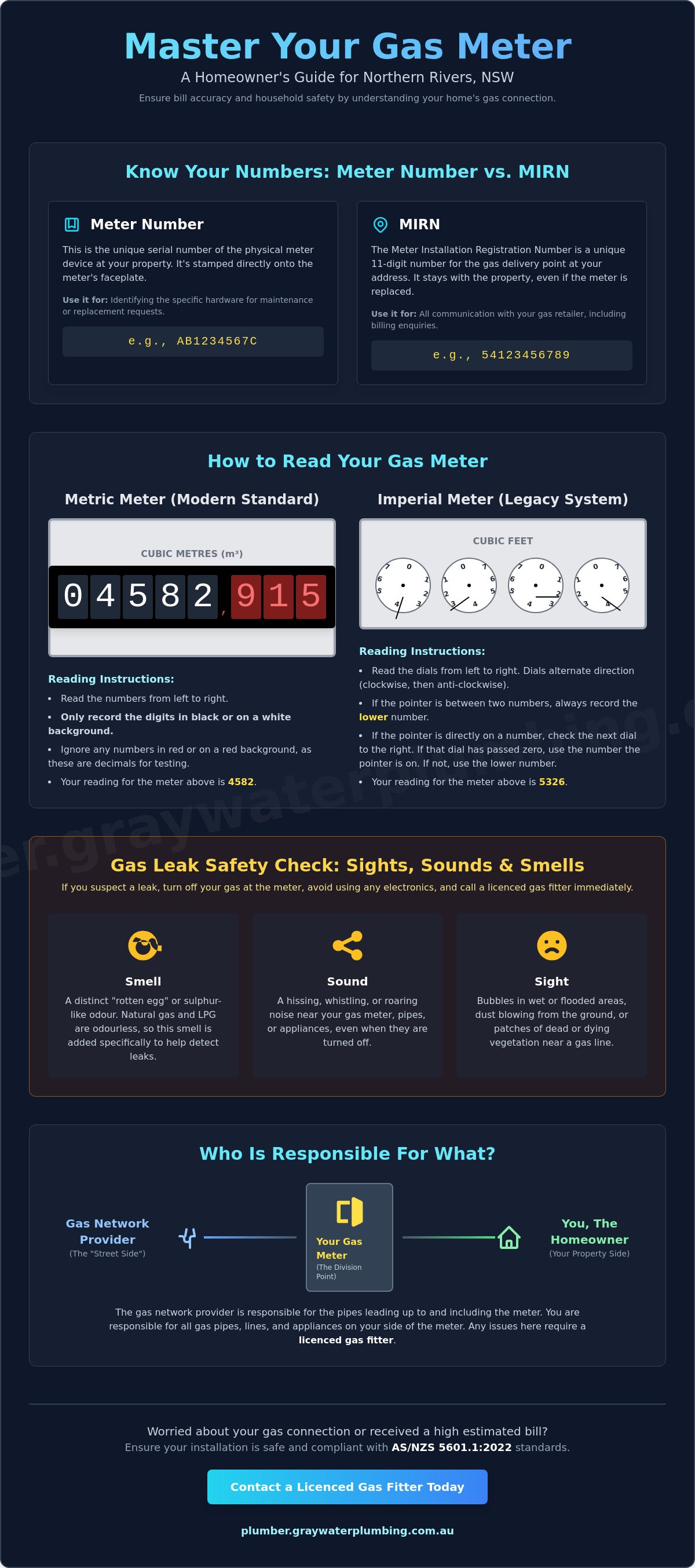
Metric meters are the current standard for all new installations and replacements in NSW. To read one, you simply look at the digital display from left to right. The main digits in black represent the cubic metres used. You should ignore the red digits at the end when providing a reading to your retailer, as these represent decimal fractions used for fine-scale measurement. If you are unsure about your meter's condition or want to ensure your setup meets the AS/NZS 5601.1:2022 standards, you can consult a licenced gas fitter for a professional assessment of your home's gas infrastructure.
Imperial Gas Meters (The Legacy Dials)
If your home still uses an imperial system, you'll see four or more clock-style dials. These can be confusing because the hands on adjacent dials spin in opposite directions. The first dial might turn clockwise, while the second turns anti-clockwise. You always record the lower number if the hand is between two digits. If the hand is between 0 and 9, you record 9. Because these meters measure in cubic feet, your retailer must perform a more complex conversion to Megajoules (MJ) on your bill. While these units are being phased out in favour of digital versions, many remain in service throughout regional NSW due to their robust construction.
How to Locate and Read Your Gas Meter Like a Pro
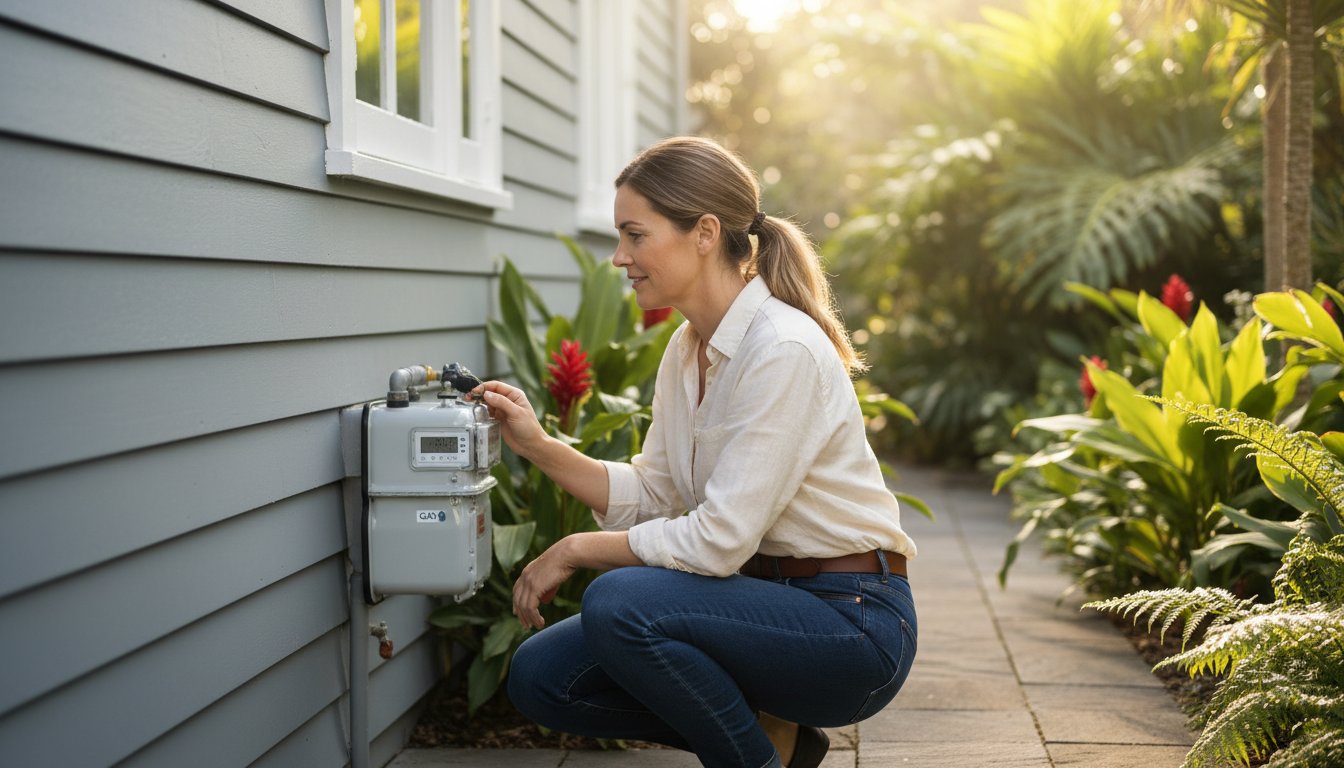
For most detached homes in Lismore or Ballina, your gas meter is positioned near the front boundary or mounted on a side wall. It's usually found close to the front door or tucked under a kitchen window for easy access. In multi-residential developments or apartment blocks common in Byron Bay, meters are often grouped together in a central utility bay or located in a dedicated cupboard on each floor. Finding your specific unit in these complexes requires matching the serial number on the device to the one listed on your latest energy bill.
Service Stream readers handle the physical checks across Northern NSW. If they can't access your property, your retailer will issue an estimated bill based on previous usage. To avoid this, keep the area around your meter clear of overgrown shrubs and ensure any gates are unlocked on scheduled reading days. If you have a dog, it's best to keep them secured away from the meter box to ensure the reader can complete their job safely and quickly.
Step-by-Step: Recording a Manual Reading
Recording your own usage is a straightforward process. For digital displays, follow the left-to-right rule and record only the black digits. You should ignore the red digits at the end, as these measure small fractions of a cubic metre. If you have a dial meter, look at each clock face in sequence. When a hand sits between two numbers, always record the lower number. If the hand is between 9 and 0, record 9. We recommend taking a clear photo of the display every quarter. This provides a timestamped record that serves as evidence if you ever need to contest an inaccurate bill with your provider.
Finding Your MIRN and Meter Serial Number
It's easy to confuse the Meter Installation Reference Number (MIRN) with the serial number. The MIRN is a unique 10 or 11-digit number assigned to your property's connection point. You'll find it on your gas bill, but it's rarely printed on the physical gas meter itself. The serial number, however, is stamped directly onto the faceplate of the device. This number is vital when you're planning new home plumbing or requesting a connection upgrade. Always use this serial number to verify you're being billed for the correct unit, especially in apartment blocks where several meters sit side-by-side.
Dealing with Estimated Bills and Meter Access Issues
Seeing the word "Estimated" on your energy statement usually means your retailer has guessed your usage rather than recording it. This happens when the reader from Service Stream, the primary contractor for meter services across Northern NSW, cannot physically reach your gas meter. While a single estimate might not seem like a problem, a string of them can lead to significant financial surprises. You're essentially delaying the inevitable payment for the gas you've already used, which can lead to a "catch-up" bill that is much higher than your usual quarterly expense.
Access blockers are the most common reason for these estimates. In our regional area, this often involves locked side gates, overgrown gardens, or a "protective" dog in the backyard. Even if you are home at the time, a reader will not enter a property if they feel unsafe or if a path is obstructed. If you receive an estimated bill, most retailers allow you to submit a "self-read" through their mobile app or website. You simply take a clear photo of the meter display and upload it to ensure your next invoice reflects your actual consumption.
The Cost of Inaccurate Estimates
The Australian Energy Market Operator (AEMO) provides the standards for how these guesses are calculated, typically using your historical data from the same period in previous years. However, these calculations cannot account for changes in your lifestyle. If you've recently installed new gas appliances or increased your household size, the estimate will likely be far too low. This results in a massive bill once a manual reading is finally taken. For business owners in the region, keeping a close eye on these figures is a vital part of a proactive commercial plumbing maintenance strategy to prevent unexpected overheads from ruining a monthly budget.
Organising Permanent Access Solutions
To avoid the hassle of manual submissions, you can organise a permanent access solution. Many homeowners in Lismore and Ballina install an industry-standard NMB master key lock on their gates. These locks allow authorised utility readers to enter your property using a master key while keeping your home secure from the general public. Under NSW regulations, your gas meter must remain visible and accessible at all times. If you're planning a renovation that might enclose your current supply, you should consider relocating the unit to a more accessible spot. If you're dealing with ongoing access issues or need to move your connection point, contact our team for a straightforward assessment of your options.
Gas Meter Safety: When to Call a Licensed Gas Fitter
Understanding the boundary of responsibility is the first step in maintaining a safe household. Your network provider or gas supplier owns the gas meter, the regulator, and the pipes leading from the street to the meter. Once the gas passes through the outlet of the meter and into your home's pipework, the legal responsibility shifts to you. This means any maintenance, leak repairs, or appliance installations on your side of the device must be managed by a licenced professional. Under the Gas and Electricity (Consumer Safety) Act 2017, performing your own gas work is not just dangerous; it is illegal in NSW.
Detecting a leak early can prevent a minor issue from becoming a significant hazard. If you suspect a problem, you can perform a simple "soapy water test" on the visible joints of your gas meter or exposed pipes. Mix a small amount of dish soap with water and brush it onto the connections. If bubbles begin to form and grow, you have a confirmed leak. While this DIY detection is helpful for identifying where the problem is, you should never attempt to tighten or repair the fittings yourself. Turn off the main gas valve immediately and call for professional assistance.
Warning Signs of a Faulty Gas Meter
Faults often announce themselves through specific sensory cues. You should be alert for an unusual hissing or whistling sound coming from the regulator. This often indicates a pressure issue or a failing diaphragm within the unit. Another unmistakable sign is the smell of "rotten eggs." Since gas is naturally odourless, suppliers add a chemical called mercaptan to make leaks obvious. You might also notice visible corrosion or white powdery deposits on the metal casing. In our humid Northern Rivers climate, salt air can accelerate the degradation of older units, making regular visual inspections a vital part of your home maintenance routine.
Professional Gas Fitting Services in the Northern Rivers
We believe in a straight-shooting approach to safety. When you suspect a leak or a faulty connection, our team conducts a thorough safety audit using electronic leak detectors to pinpoint the exact source of the failure. We operate on a transparent "Hourly Labour and Material Markup" pricing structure. This ensures you know exactly what you are paying for without any hidden fees or ambiguous quotes. Every repair we perform complies with the mandatory AS/NZS 5601.1:2022 standards, and we provide a compliance certificate for all major work to protect your property and insurance status. Smelling gas or need a professional check? Contact Graywater Plumbing for expert gas fitting and we will ensure your system is operating safely and efficiently.
Take Control of Your Home's Gas Supply
Mastering the basics of your gas meter ensures you never pay more than you should for energy. By keeping your meter accessible and performing regular visual checks, you avoid the frustration of estimated bills and maintain a clear understanding of your household's consumption. Remember that while the network provider manages the supply to your boundary, the safety of your internal pipework is your responsibility. Identifying a fault early can prevent expensive repairs and ensure your home remains compliant with the latest NSW safety regulations.
If you have spotted corrosion on your fittings or if that "rotten egg" smell persists, it's time for a professional assessment. Our fully licensed NSW gas fitters provide 24/7 emergency leak detection across the Northern Rivers. We pride ourselves on a straight-shooting approach, utilising transparent hourly labour rates and a clear material markup structure. You can Book a Licensed Gas Fitter for a Safety Audit today to gain total peace of mind. Keeping your family safe is a proactive choice, and we're here to help you make it.
Frequently Asked Questions
Where is my gas meter usually located in a Yamba home?
Your meter is typically positioned at the front boundary of your property or mounted on an external side wall near the front of the house. In newer Yamba developments, it is often placed within a dedicated box to protect the regulator from the elements and ensure clear access for Service Stream readers.
How often is my gas meter read by the utility company in NSW?
Utility providers in NSW generally schedule a physical reading once every 90 days to align with your quarterly billing cycle. These checks are performed to ensure your bill reflects actual usage rather than an estimate based on historical consumption patterns from previous years.
What is the difference between a gas meter number and a MIRN?
The meter number is a unique serial number stamped directly on the faceplate of the physical device. The Meter Installation Reference Number (MIRN) is a 10 or 11-digit code that identifies the specific connection point for your property. You'll find the MIRN on your energy bill, and it stays the same even if the gas meter itself is replaced.
Can I move my gas meter if I am renovating my Byron Bay house?
You can relocate your meter, but the work must be performed by a licenced gas fitter to ensure compliance with the AS/NZS 5601.1:2022 standards. Relocating a meter is a common requirement during Byron Bay renovations to improve accessibility or to accommodate new building footprints while staying within regional safety regulations.
Why is my gas bill estimated even though the meter is accessible?
Estimates occur if a reader cannot safely enter the site or if there is a scheduling conflict within the network. Even if your gate is unlocked, the presence of a dog or overgrown vegetation can prevent a reader from completing their task, leading the retailer to calculate a guess based on AEMO standards.
What should I do if I smell gas near my meter box?
Turn off the main gas isolation valve immediately and move to a safe location away from the property. Do not use any electronic devices or create sparks near the gas meter. Once you are safe, contact a licenced gas fitter for emergency leak detection to identify and repair the fault on your side of the connection.
Do I need a special meter for an LPG reticulated system?
Reticulated LPG systems require meters specifically calibrated for the higher energy density of LPG compared to natural gas. These meters ensure the volume recorded is accurately converted into Megajoules, which is essential for fair billing in regional estates that do not have access to a natural gas grid.
How do I convert my gas meter reading from cubic metres to Megajoules?
Retailers convert the volume in cubic metres to Megajoules (MJ) by multiplying the reading by a specific "heating value" and a pressure factor. As of April 2026, this heating value typically ranges between 38 and 40 MJ per cubic metre for natural gas, though this figure varies slightly depending on the gas composition in your specific regional network.