The most successful kitchen renovations in the Northern Rivers aren't built from the benchtop in; they're built from the pipes out. While it's tempting to focus on choosing the perfect splashback or a stone island, starting with aesthetics often leads to the hidden pipework issues and budget blowouts that cause the most stress. We know that coordinating different trades and trying to understand complex gas fitting regulations can feel like a full-time job. You want a functional, modern space that works perfectly from day one, without the worry of drainage problems or unexpected costs surfacing halfway through the project.
This guide explains why smart plumbing is the foundation of every high-quality kitchen and how it helps you avoid the most common mistakes made during the planning phase. You'll learn how to navigate local compliance standards and the latest NSW rules for trade supervision to ensure your project stays on track. We'll also look at how current design trends like induction cooktops and zoned layouts impact your utility connections. By taking a methodical, plumbing-first approach, you can eliminate the guesswork and ensure your new kitchen is as reliable as it is beautiful.
Key Takeaways
- Learn why prioritising pipework over aesthetics is the secret to successful kitchen renovations that stay on budget and avoid hidden leaks.
- Understand the technical requirements for gas fitting and water supply to ensure your new appliances are connected safely and efficiently.
- Discover how layout choices, such as island benches, impact under-floor drainage and can significantly alter your total project timeline.
- Identify the financial benefits of transparent billing structures and why a dedicated contingency fund protects you from unforeseen demolition issues.
- Gain insights into how local environmental factors in the Northern Rivers influence material selection for more durable plumbing systems.
Why Plumbing is the Foundation of Successful Kitchen Renovations
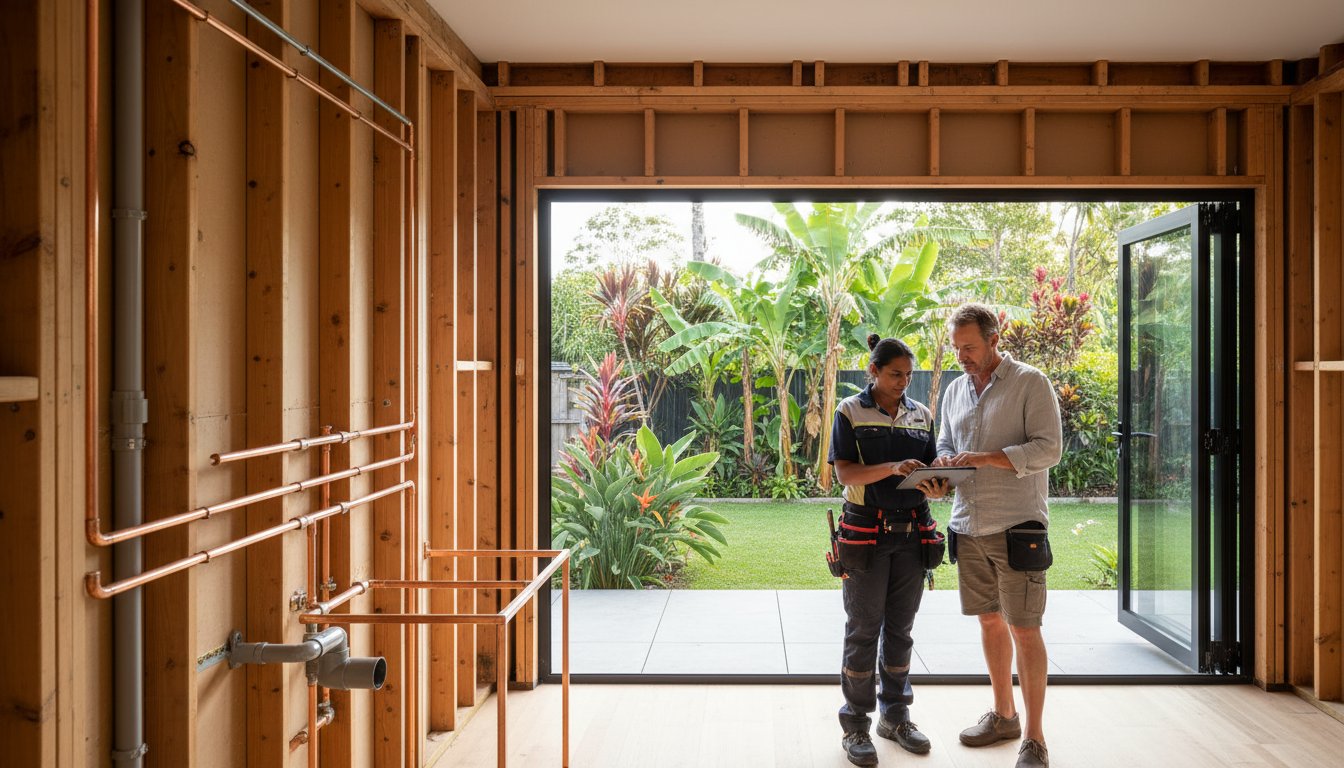
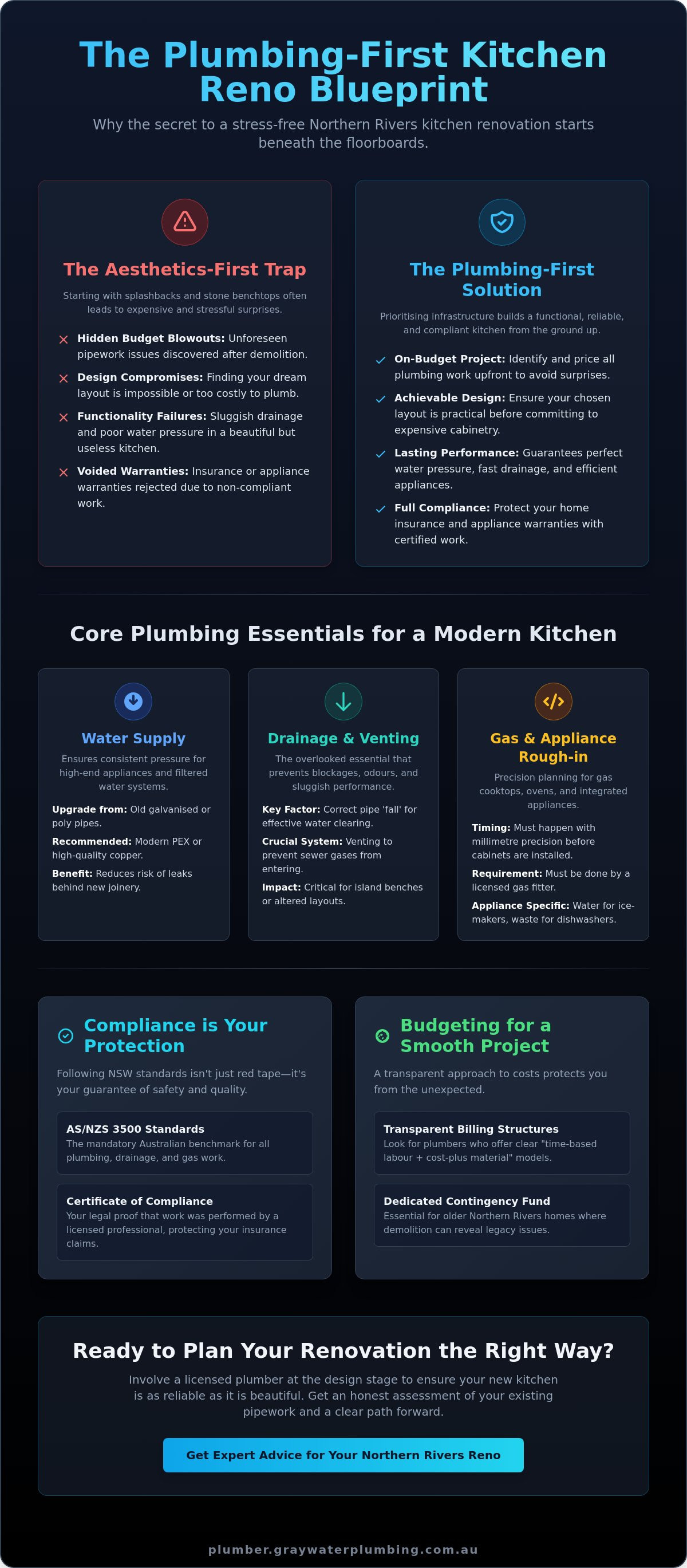
Many homeowners begin kitchen renovations by looking at stone samples and cabinetry finishes. While these choices define the look of the room, they don't define how it functions. A plumbing-first approach prioritises the infrastructure behind the walls. This is a practical method that ensures your layout is actually achievable before you commit to expensive cabinetry. When you plan from the pipes out, you avoid the frustration of falling in love with a design that is technically impossible or prohibitively expensive to plumb.
In older Northern Rivers homes, demolition often reveals legacy issues that aren't visible during a walk-through. You might find galvanised pipes that have narrowed over decades or drainage solutions from previous DIY attempts that no longer meet modern standards. These hidden problems directly impact water pressure and the efficiency of modern kitchen components like high-end dishwashers and filtered water systems. By involving a licensed plumber at the design stage, you get an honest assessment of the existing footprint. This allows for a clearer understanding of the financial process, especially when working with a time-based labour and cost-plus material structure. It's about transparency and grounded reliability from the start of the project.
The Risk of Aesthetic-Only Planning
Designers often focus on the "Golden Triangle" without considering what's beneath the floor. Moving a sink just 10 centimetres might seem like a minor adjustment; however, if that move requires chasing into a concrete slab in an older Byron Bay home, the labour requirements change significantly. Existing slab drainage has physical limitations that dictate where waste can go. You must ensure the fall is sufficient for water to clear the pipes effectively. A beautiful kitchen is useless if the drainage is sluggish.
Compliance and Warranty Protection
Every piece of plumbing and drainage work in NSW must comply with AS/NZS 3500 standards. This isn't just about following rules; it's about protecting your investment. If a leak occurs and the work wasn't performed by a licensed professional, your home insurance provider may refuse the claim. A licensed plumber will issue a Certificate of Compliance for gas and water work, which acts as your proof of quality. Additionally, professional installation is often a mandatory requirement to keep your expensive new appliance warranties valid. Taking a disciplined and systematic approach to compliance ensures your renovation is built to last.
Core Plumbing Components: Water, Gas, and Drainage Essentials
Successful kitchen renovations depend on more than just new cupboards. They require a robust internal system that can handle modern demands. If your home still uses old poly pipes or degraded copper, now is the time to upgrade. Modern PEX piping or high-quality copper ensures consistent pressure and reduces the risk of pinhole leaks behind your new joinery. We focus on these foundational elements to ensure your investment is protected from the inside out.
Proper drainage is often overlooked until it fails. Every sink and dishwasher connection needs the correct fall to prevent stagnant water and blockages. Venting is equally critical. Without it, sewer gases can enter your home through the drains. While international benchmarks like the Uniform State Plumbing Code provide a global perspective on these technical requirements, our local Australian standards (AS/NZS 3500) are what keep your home compliant and safe. Ensuring these essentials are met during the rough-in stage prevents the "sluggish drainage" issues mentioned previously.
Planning for appliances is a precise task. If you want a fridge with an ice-maker or a dishwasher in a specific spot, the rough-in must happen before any cabinets are installed. This stage includes positioning waste points and water inlets with millimetre precision. If you're unsure about the best placement for your specific appliances, consulting a specialist for kitchen renovations can prevent costly rework. We take a methodical approach to these rough-ins, providing clear expectations on the timeline and material requirements.
Modern Water Filtration and Instant Boiling Taps
Integrated water systems are becoming a standard feature in modern Ballina renovations. High-end units like Zip or Billi taps provide instant boiling, chilled, or sparkling water, but they require significant space under the sink. You'll need to account for the filtration unit, the chiller, and the necessary ventilation to prevent the system from overheating. Planning this space early ensures your cabinetry is built to accommodate these modern conveniences without cluttering your workspace.
Gas vs Electric Cooking: A Plumber’s Perspective
If you're switching from an electric cooktop to gas, the process involves running new gas lines from your meter or LPG bottles. This work requires a licensed gas fitter to ensure the pipe sizing is correct for the appliance's megajoule rating. Ventilation is another critical factor; specific clearance heights and rangehood capacities are required by law in Northern NSW. Safety is the priority here. Gas work is never a DIY job. It requires a professional to issue a compliance certificate, ensuring your home remains insured and your family stays safe.
Layout Logic: How Design Choices Impact Your Plumbing Bill
The "Golden Triangle" is a classic design principle that places the sink, fridge, and cooktop in a functional layout. While this helps with workflow, it doesn't account for the technical realities of pipe runs. In many kitchen renovations, homeowners want to move the "wet zone" to a completely different wall to achieve this triangle. If you're moving a sink along the same wall, the cost is usually manageable. However, relocating it across the room often requires significant structural work to maintain the necessary gravity-fed fall for drainage. This is where a simple design choice can lead to a substantial increase in labour and material requirements.
Tapware selection also plays a role in your initial rough-in costs. Wall-mounted taps offer a clean, modern look but require precise plumbing behind the splashback before any tiling or stone installation occurs. Deck-mounted taps, which sit on the benchtop or sink, offer more flexibility during the final fit-off. We recommend deciding on your tapware style early. This prevents the need to cut into new walls or cabinets later, which helps maintain our commitment to financial transparency and disciplined workmanship.
The Island Bench Sink Challenge
Island benches are a popular feature, but they present a unique technical hurdle for drainage. In homes with a slab-on-ground construction, installing a sink in an island requires "trenching" through the concrete to lay waste pipes. This is a labour-intensive process that involves cutting, digging, and then re-pouring the slab. If gravity drainage isn't possible due to the slab's depth or location, you might need a greywater pump system. Additionally, your dishwasher must stay next to the sink. Attempting to separate them in an island bench creates complex venting and drainage issues that often lead to stagnant water and unpleasant smells.
Butler’s Pantries and Second Sinks
Modern prep areas and butler's pantries require their own dedicated water lines and drainage points. If your pantry is located back-to-back with your main kitchen or shares a wall with your laundry, we can often link the systems to save on pipework. Planning these areas alongside your laundry renovations is a smart way to streamline the project. You should also consider hot water delivery times. If the pantry is far from your main hot water system, it might take several minutes for warm water to reach the tap. In these cases, we may suggest a compact point-of-use heater to ensure efficiency and convenience in your secondary workspace.
Budgeting for Kitchen Plumbing: Avoiding the Cost Creep
Financial transparency is the cornerstone of a stress-free project. During kitchen renovations, many homeowners are presented with fixed-price quotes that often include large buffers to cover unknown risks. We prefer a more direct approach using time-based labour and cost-plus material structures. This method ensures you only pay for the actual work performed and the specific parts used in your home. It eliminates the guesswork and fosters a relationship built on trust rather than hidden margins. When you understand exactly where your money is going, the financial process becomes a logical progression rather than a source of stress.
Even with a transparent structure, you should always maintain a "Demolition Discovery" fund. We recommend a 10% plumbing contingency specifically for what happens after the cabinets are removed. This isn't about being pessimistic; it's about being prepared for the technical realities of older Northern Rivers properties. Discovering a rusted-out waste pipe or an illegal gas connection from a previous owner is much easier to handle when the budget already accounts for the resolution. It allows us to fix the problem correctly the first time rather than applying a temporary patch that leads to future leaks.
Your choice of fixtures also dictates the labour requirements of the job. High-end European taps and mixers often feature unique mounting systems or different thread types that require specialised adapters. These components can significantly increase the installation time compared to standard Australian-spec fixtures. Similarly, moving a gas point for a new cooktop involves more than just a longer pipe. It requires pressure testing the entire line and ensuring the new location meets strict ventilation and clearance codes. If you are planning your budget and need a clear assessment of your current infrastructure, contact our team for kitchen renovations in the Northern Rivers.
Hidden Costs You Might Not Have Considered
During the strip-out phase, it is common to find old galvanised pipes that have reached the end of their functional life. Replacing these now is a proactive service that prevents you from having to tear out your new splashback in two years to fix a burst. You might also find that your current hot water system lacks the capacity for high-flow modern taps or an additional butler's pantry sink. Finally, remember that major structural plumbing changes often require local council permits and inspections, which carry their own administrative fees.
Ways to Save Without Cutting Corners
The most effective way to control costs is to keep your sink and dishwasher within their original footprint. This minimises the need for new under-floor drainage and reduces the time spent on pipework. Choosing standard "off-the-shelf" tapware sizes also ensures that rough-ins are straightforward and don't require custom offsets. Most importantly, coordinate with your plumber during the design stage. By mapping out the sequence of work early, you avoid "call-back" fees and ensure that every stage of the installation happens in a disciplined, systematic order.
Partnering with a Reliable Northern Rivers Kitchen Plumber
Local knowledge is a vital component of any building project in our region. In the Northern Rivers, water quality varies between shires, and high mineral content can impact the lifespan of specific tapware and hot water components. Soil types also play a significant role in how we support and install underground drainage. We understand these regional variables and apply this specialized knowledge to every project. This pragmatic approach ensures your plumbing is built to withstand local conditions for decades, rather than just meeting the bare minimum requirements.
Precision workmanship is our standard. We maintain clean worksites and follow a methodical rhythm that mirrors a well-organised service interaction. This means we coordinate directly with your builders and cabinet makers to ensure rough-in points match your joinery plans perfectly. When trades work in a disciplined and systematic way, the entire timeline remains predictable. You won't have to deal with the stress of modified cabinets or delayed tiling because a pipe was positioned incorrectly. We prioritise clear communication and a hardworking ethic to keep your project on track.
The Importance of Local Accountability
We serve Yamba, Grafton, and Byron Bay with a reputation for grounded reliability. We treat every kitchen like a new home plumbing project, applying the same rigorous standards to a renovation as we do to a fresh build. Our commitment to a transparent fee structure based on time-based labour and cost-plus materials ensures honesty in every transaction. You will always have a clear understanding of the financial process and the method of resolution for any technical challenges we encounter.
Ready to Start Your Kitchen Transformation?
If you're planning a larger scale project, we also specialise in bathroom renovations for whole-home upgrades. Starting with a pre-renovation plumbing audit is the best way to identify potential issues before the demolition begins. This proactive step helps you avoid costly mistakes and ensures your kitchen renovations are built on a solid foundation. Expert planning and professional transparency de-escalate the stress of property maintenance and lead to a functional, modern result. Contact Graywater Plumbing today to discuss your plans and book an assessment with a local authority you can trust.
Building a Kitchen That Lasts
Successful kitchen renovations aren't just about the final fit-off; they're about the disciplined planning that happens before the first cabinet is installed. By prioritising your water, gas, and drainage infrastructure, you eliminate the uncertainty that often leads to budget blowouts and technical delays. We believe in a methodical approach that focuses on the "bones" of the room, ensuring your layout is both functional and compliant with local standards. This plumbing-first strategy protects your investment and ensures your new space operates exactly as intended.
As specialists in high-end residential renovations, our team focuses on technical precision and financial transparency. This grounded reliability ensures your project remains a logical, stress-free progression from demolition to completion. Our licensed NSW gas fitters bring deep regional knowledge to every home, providing a level of accountability and craftsmanship that national retailers cannot match. We also provide 24/7 emergency support for the Northern Rivers, ensuring you have a dependable partner even after the renovation is finished.
The best way to secure your investment is to understand exactly what is happening behind your walls. Start your kitchen renovation with a professional plumbing audit from Graywater Plumbing to get a clear, honest assessment of your home's needs. We look forward to helping you create a space that works perfectly for years to come.
Frequently Asked Questions
Do I need a plumber to move my kitchen sink?
Yes, you must engage a licensed professional for any work that involves altering your home's water supply or drainage system. Moving a sink requires extending pipework and ensuring the new location maintains the correct fall for waste removal. In NSW, this work requires a compliance certificate to ensure your home insurance remains valid and the installation meets local standards.
How much does it typically cost to plumb a new kitchen in NSW?
The total cost depends on the complexity of your layout and whether you are relocating existing service points. We use a transparent time-based labour and cost-plus material structure so you only pay for the specific work performed on your site. Factors such as slab trenching for island benches or running new gas lines will influence the final labour requirements and material needs.
Can I install my own gas cooktop if I have the right tools?
No, gas fitting is a specialised trade that must be performed by a licensed professional by law. DIY gas work is illegal in NSW and carries extreme safety risks, including potential leaks or fire hazards. A licensed gas plumber will conduct mandatory pressure testing and provide the necessary compliance documentation to certify that the installation is safe and meets current regulations.
Should I replace my old pipes while the walls are open during a reno?
Replacing aged galvanised or poly pipes during the demolition phase is a smart preventative measure. It is far more efficient to upgrade your infrastructure while the wall cavities are exposed than to deal with a burst pipe behind your new splashback later. This proactive approach ensures the long-term reliability of your kitchen renovations and prevents costly emergency repairs in the future.
What is the best way to hide plumbing for an island bench?
The most effective method for concealing island plumbing is trenching through the concrete slab or running lines through the subfloor. For slab-on-ground homes, this involves cutting a precise channel to house the waste and water pipes. If your home's structure makes gravity drainage difficult, we can discuss alternative solutions like greywater pumps that sit discreetly within the island cabinetry.
How long does the plumbing phase of a kitchen renovation take?
Plumbing work occurs in two main stages: the rough-in and the final fit-off. The rough-in stage usually takes one to two days to complete before the cabinets are installed. Once your benchtops and cabinetry are in place, the final fit-off for taps and appliances typically takes another full day. This methodical schedule ensures every connection is tested and ready for immediate use.
Do I need a permit for kitchen renovations in the Clarence Valley?
While minor cosmetic updates might be exempt, any project involving structural changes or major plumbing relocations usually requires council approval. You should verify the specific requirements with the Clarence Valley Council before you begin demolition. Regardless of council permits, your plumber must lodge a "Notice of Work" for any regulated drainage or gas fitting tasks to ensure local compliance.
Can I use my existing hot water system for a new kitchen layout?
You can generally use your current system if it is in good condition and has the capacity to handle your new fixtures. However, adding a butler's pantry or high-flow taps may increase your demand for hot water. We assess your system's age and performance during the audit stage to determine if an upgrade or a compact point-of-use heater is necessary for your new layout.